.png)


Phynix is a seasoned journalist who revels in playful, unconventional narration, blending quirky storytelling with measured, precise editing. Her work embodies a dual mastery of creative flair and steadfast rigor.
June 15, 2026 at 3:31 AM IST
Dear Insighter,
There are weeks when the mind simply refuses to cooperate. The cursor blinks. You open and close the same tabs. Every idea feels promising for just about thirty seconds. By Wednesday, I had reached that stage where reorganising a bookshelf felt like meaningful progress.
So I did what any respectable procrastinator does, and picked up a book instead.
Asako Yuzuki's Butter had been sitting on my bedside table for weeks. Everyone seemed to offer the same review that it was brilliant, but longer than needed. Having finally worked my way through all 450-odd pages, I can confirm that both things are true.
The novel follows Rika, a journalist investigating Manako Kajii, a woman accused of seducing and killing men through food. It sounds ridiculous when described like that. It also sounds like a thriller. In reality, it is neither. The mystery matters less than the people and the murders matter less than the meals.
At one point, I found myself wondering whether anything was actually happening. Entire chapters disappear into conversations about food, loneliness, relationships and the quiet compromises people make with themselves. Yet somewhere along the way, without really noticing it, you become invested.
What stayed with me wasn't the crime story or even the feminist themes that run through the book. It was the confidence of a writer willing to take her time. Yuzuki never seems particularly concerned about getting to the point quickly. She trusts that if she keeps pulling on the thread, you'll keep following.
Most of what we consume today is designed to arrive at the conclusion as quickly as possible. Tell me in thirty seconds because I have somewhere else to be.
As I worked through this week's reading, I realised many of the stories were wrestling with a version of the same tension. Not patience exactly, but time. More specifically, the question of how long you can keep buying time before time stops being the solution.
As BasisPoint Groupthink notes, the RBI has revised core inflation higher by 30 basis points to 4.7% while continuing to signal restraint. The challenge is that inflation rarely remains confined to the categories where it begins. Food and fuel shocks eventually seep into transportation, services and manufacturing. Temporary pressures have a habit of becoming permanent expectations, which is why the central bank's attempt to look through the current bout of inflation is beginning to attract greater scrutiny.
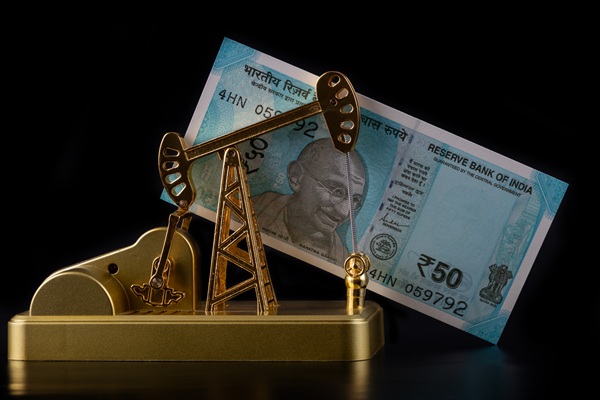
Rupa Rege Nitsure argues that the RBI has chosen to buy time. Rather than reaching immediately for rate hikes, it has focused on measures that keep foreign capital interested and the rupee relatively stable. That works, at least for now. Yield Scribe offers a different interpretation, suggesting that markets have become fixated on inflation when the bigger concern is funding and external balances.
As Yashveer Singh points out, India's government bonds no longer offer a particularly compelling yield advantage once hedging costs are taken into account. Foreign investors can appreciate India's long-term story while still preferring American returns. That observation sits at the heart of what Srinath Sridharan and Anand Venkatanarayanan identify as the real challenge facing policymakers. The RBI has bought time, but it has not solved the problem. The centre of gravity is gradually shifting from Mint Street to North Block, where the harder decisions around reforms, competitiveness and growth ultimately reside.
Arvind Chari frames the issue through the lens of the Impossible Trinity, the idea that no country can simultaneously maintain an open capital account, manage its exchange rate and retain complete monetary-policy independence. Every crisis eventually forces a choice. Chari's prescription is to focus on restoring double-digit nominal growth and consider more ambitious reforms, including changes to capital gains taxation. V. Thiagarajan reaches a similar conclusion from a different direction. Drawing on examples ranging from Brazil to Turkey, he argues that investors are often willing to tolerate difficult economic conditions. What they struggle to tolerate is uncertainty about the policy framework itself, because credibility remains the most powerful incentive any economy can offer.
That question of credibility surfaces repeatedly. Krishnadevan V's examination of SEBI's reform agenda highlights a regulator increasingly focused on speed, whether through faster onboarding, quicker settlements or more efficient price discovery. While each initiative has merit, financial history is littered with examples of systems that became faster long before they became safer.
His separate analysis of Rajesh Exports exposes a similar tension. Lower circuits are designed to protect investors from panic-driven price collapses, but when a stock remains locked at the lower circuit for multiple sessions, investors are not being protected so much as trapped.
Yet the Rajesh Exports story ultimately leads to a larger question that continues to haunt Indian finance. Seventeen years after Satyam, Krishnadevan revisits an issue that remains surprisingly unresolved: who audits the auditors? Every major accounting scandal eventually exposes the same structural tension. Auditors are paid by the companies they examine but are expected to safeguard the interests of investors who have no role in that commercial relationship.
Alpana Killawala raises a related concern in a different corner of finance. With the RBI considering new cooperative-bank licences after more than two decades, she asks whether India actually needs more banks or simply better-governed ones. The question is particularly relevant given the concentration of assets within a small number of stronger cooperative institutions.
The same distinction appears in the trade pieces by Rochelle Prakash and Deep Pal. India has signed an impressive number of trade agreements in recent years, covering economies that account for a significant share of global GDP. Yet utilisation rates remain well below those of countries such as Vietnam, Mexico and Chile. Trade policy often focuses on negotiating access, while the harder work lies in creating domestic conditions that allow businesses to actually use those opportunities.
G. Chandrashekhar's warning about Indonesia's growing resource nationalism reinforces the point. Commodities such as palm oil, coal and critical minerals are increasingly becoming instruments of state policy rather than simple trade flows. Indonesia's decision to tighten control over key exports is a reminder that the global economy is becoming less efficient, more fragmented and considerably more political.
That reality hangs over the energy debate as well. Michael Debabrata Patra reaches back to Kautilya's Arthashastra to argue for significantly larger strategic petroleum reserves. Given India's dependence on the Strait of Hormuz and the growing uncertainty surrounding West Asia, the insurance value of stockpiles becomes increasingly difficult to ignore. Anuj Agarwal offers a useful counterpoint, noting that high prices eventually create the conditions for their own reversal through new supply, alternative routes and changing consumption patterns. The forces driving prices higher today may ultimately produce lower prices tomorrow.
Shilpashree Venkatesh broadens the discussion further by reminding readers that India is not the India of 1991. Foreign-exchange reserves are larger, energy sourcing is more diversified and institutions are considerably stronger. Yet that does not mean vulnerability has disappeared. It has merely changed shape. The next external shock may arrive through semiconductor supply chains, critical minerals, logistics disruptions or cyber vulnerabilities rather than crude oil.
Nilanjan Banik captures the contradiction at the heart of the Indian economy. Domestic indicators remain broadly encouraging. Growth is holding up, consumption remains resilient and tax collections continue to reflect underlying economic strength. Yet external pressures continue to mount through currency weakness, capital flows and a far more uncertain global environment. His argument is that policymakers should focus their attention on the variables they can actually influence, particularly MSMEs, Global Capability Centres and the broader startup ecosystem.
Then there's the Karnataka minimum-wage debate. Arvind Mayaram views the state's 60% wage increase as part of a broader effort to create a more inclusive growth model in which rising incomes support stronger domestic demand. Sharmila Kantha worries about the burden such a sharp increase could impose on smaller businesses already operating on thin margins. Both recognise the importance of higher wages. The debate centres on how quickly economies can absorb the change.
Across the world, meanwhile, investors are rediscovering an old lesson. Dhananjay Sinha's analysis of the recent US jobs report shows how thoroughly markets have entered a period where good news can be interpreted as bad news. Strong employment data implies persistent inflation, persistent inflation implies higher interest rates and higher rates imply lower valuations.
That uncertainty flows naturally into Vivek Kaul's piece on SpaceX and the AI boom. His larger point is less about any single company and more about a pattern that recurs in every speculative cycle. Investors rarely recognise bubbles in real time because the underlying story is usually compelling. Railways transformed commerce. The internet transformed communication. Artificial intelligence may well transform productivity. The challenge lies in distinguishing between a genuine technological revolution and the valuations that inevitably become attached to it. By the time that distinction becomes obvious, markets have usually made the decision on investors' behalf.
The final piece came from Amitabh Tiwari's analysis of the Cockroach Janata Party. The movement occupies an intriguing political position, with high awareness, strong support among certain voter groups and a remarkably large pool of undecided voters. Whether it evolves into a durable political force or remains an interesting experiment depends less on what supporters think today than on choices yet to be made by voters who are still reserving judgement.
Perhaps that is why Butter lingered in my mind days after I finished it. The question Yuzuki leaves hanging over the novel is whether patience represents wisdom or merely a reluctance to confront reality. It is not a bad question for the week we have just had. The RBI is buying time while inflation edges higher. Policymakers are buying time while global trade becomes more fragmented. Investors are buying time while trying to determine whether today's AI enthusiasm is a revolution or another cycle of exuberance.
Somewhere in Tokyo, a fictional journalist is still trying to understand a woman through the meals she cooks. Here, policymakers, businesses and investors are engaged in a similar exercise, trying to determine which problems require action, which require restraint, and whether there is still value in waiting long enough to tell the difference.
Yours in the glorious, buttery uncertainty.
ALSO READ
● Behind the Suzlon 2.0 Vision Is the Outline of an InvIT by Dev Chandrasekhar: The wind major's swelling base of annuity assets points toward a future InvIT.
● Why India’s Pakistan Policy Needs a Serious Review by Ashok K. Kantha: The binary of punitive resolve versus naive accommodation has quietly impoverished our thinking.
● Over-The-Top Justice on OTT Courtroom Drama by Ninupta Srinath: When entertainment simplifies complex legal realities, what happens to society's understanding of justice?
● World’s Biggest AI Rulebook Is Already Being Rewritten by Pranav Rai: Europe's AI law shows why India may be right to build oversight capacity before rushing into a full statute.
● Google's Invisible Keywords Spell Visible Trouble, Court Limits Safe-Harbour Defence by Shruti Mahajan: The Hindware suit holds Google liable for trademark infringement even for invisible keywords.
● The Quiet Art of Reaching Out by Kalyani Srinath: Why do some bonds quietly disappear while others survive years of silence?
● The Unravelling of the Trinamool by Rajesh Ramachandran: Electoral defeat and internal revolt leave Mamata Banerjee confronting the gravest crisis of her career.
● Tracking Periods Is Easier Than Treating Women's Pain by Ketaki Thakur: Digital tools can track cycles, but they cannot replace a functioning healthcare system for women's pain.
● ₹370 Biryani and a Million Boys Who Don't Know What Enthusiastic Consent Sounds Like by Kirti Tarang Pande: We teach daughters how to stay safe; we spend far less time teaching sons how to hear no.
● SpaceX Is the New East India Company by Alessio Terzi and Stian Westlake: Like the chartered companies of old, SpaceX operates beyond the reach of any sovereign.
● Can Military Superiority Still Deliver Political Success? by Lt Gen Syed Ata Hasnain: Battlefield success is no longer a reliable path to desired political outcomes.
● The Limits of Military Technology? by Lt Gen Syed Ata Hasnain: Weapons evolve, but wars are still decided by human endurance, conviction, and will.
More From BasisPoint