.png)


Michael Patra is an economist, a career central banker, and a former RBI Deputy Governor who led monetary policy and helped shape India’s inflation targeting framework.
June 10, 2026 at 3:37 AM IST
“A king should store all kinds of essential goods in abundance so that the state does not suffer during times of siege, war, or calamity.”
— Kautilya in Arthashastra, Book II, Chapter 4
The world is being inexorably sucked into a vortex of frozen conflicts. Nations go to war, but they don’t know how to end them. With international institutions losing their ability to enforce binding peace treaties, these high-intensity wars create persisting rivalries and "no peace" stalemates. The ongoing war in West Asia has transitioned into a classic frozen-conflict structure, with fragile truces wilting under volatile brinkmanship and underlying existential disputes remaining unresolved.
The Strait of Hormuz is turning into a maritime chokepoint, with ramifications for global energy markets, supply chains and, by extension, the global economy. Normally, about 20% of global petroleum consumption and 25% of liquefied natural gas transits through it. India relies heavily on the Strait of Hormuz, with about 42% of its crude oil and 55% of its LNG, by volume, passing through it. The ongoing frozen conflict is imposing additional costs on India as it seeks to diversify its supply routes and develop alternative maritime gateways. Furthermore, the Indian crude oil basket experiences frequent spikes, heightening risks to domestic inflation and putting pressure on household expenses. In addition, seafarer safety has become a living concern, given India’s significant commercial shipping presence in the Persian Gulf.
India’s Oil Dynamics
Building Buffers
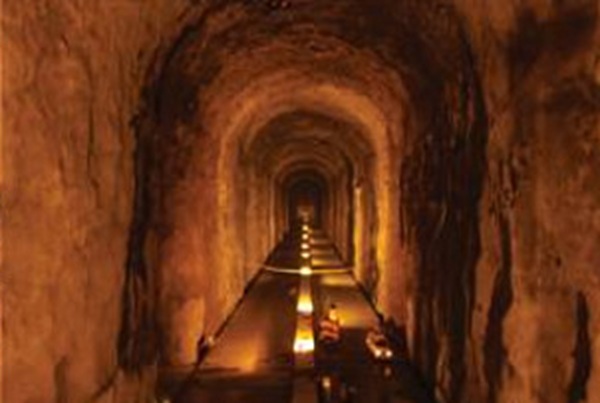
Strategic Petroleum Reserves (SPR), or government-controlled stockpiles of crude oil designed to cushion countries against severe supply disruptions, geopolitical crises, and sudden price shocks, have become a standard feature of energy security policy. They supplement commercial inventories and are an essential component of global energy security. Petroleum reserves are typically stored underground in caverns (like salt domes) or deep rock formations to ensure maximum safety, stability, and slow evaporation rates. During localised crises, blockades, or geopolitical tensions, millions of barrels are released into the commercial market to mitigate price and supply shocks, thereby ensuring continuity of industrial activity and smoothing consumption.
India’s SPR
Phase-I includes three sites at Visakhapatnam, Andhra Pradesh (1.33 million metric tonne capacity), Mangaluru, Karnataka (1.5 million metric tonnes) and Padur, Karnataka (2.5 million metric tonnes). The total cost of the three projects was ₹40.98 billion. Together they can provide approximately 10 days of national crude oil demand. Including commercial and refining inventories held by oil marketing companies, India’s total crude oil buffer provides about 74 days of cover. In Phase-II, an additional 6.5 million metric tonnes have been approved for execution at Chandikhol, Odisha (4.0 million metric tonnes) and Padur, Karnataka (2.5 million metric tonnes) by expanding the existing site.
Adequacy of SPR
While the 90-day rule is legally binding only for full members who are also part of the Organisation for Economic Co-operation and Development (OECD), the IEA actively collaborates with major emerging economies like India, an associate member since 2017, to encourage similar levels of energy security.
The largest government-controlled strategic inventories are held by China (about 1.4 billion barrels), enough to support approximately 130 to 140 days of net imports. China’s storage spans dozens of massive onshore storage sites managed by the State and by major commercial operators.
It is followed by the United States (about 410 million barrels), covering about 20 days of total national consumption, though it varies significantly based on demand spikes. This SPR consists of massive underground salt caverns located across Texas and Louisiana.
Japan holds the third-largest SPR (about 260 million barrels). Its coverage exceeds 90 days of net imports and can last several months, reportedly up to a year, depending on usage). The European Union’s OECD members are mandated to hold at least 90 days of their average net oil imports in reserve, which works out to 179 million barrels. South Korea’s SPR exceeds 90 days of net imports in massive underground storage facilities on its coastline, significantly bolstering its energy security and that of the Asia-Pacific region.
India’s Target SPR
To begin with, India must rapidly move towards the IEA benchmark of 90 days of net imports. This is likely the driving spirit underlying Phase-II, referred to earlier. The 90-day norm must operate as a minimum SPR floor to be maintained at all times.
Going forward, India must target a higher SPR of between six months and one year of net oil imports, including commercial refinery inventories. At current estimates, the cost of an SPR equivalent to six months of imports will be about 65% of the outgo for one year’s POL imports; it is a worthwhile investment with multi-year benefits. India's crude oil import dependency has reached a record of approximately 90% of its requirements. Today, India is the world’s third-largest oil consumer. Although the conflict in West Asia is forcing India to diversify, it is still heavily reliant on the region for its crude, gas and fertiliser requirements.
Higher buffers can shield the economy from price shocks and second-round effects spreading to transportation and manufacturing. More importantly, as we have seen in recent days, these reserves can stand in good stead to avert supply disruptions. The existence of sizable reserves will also position India better in the international oil market, enabling efforts to purchase strategically when prices are low. Accordingly, SPR inventories above the minimum floor must be actively deployed to smooth supply fluctuations and iron out price spikes, and they must be replenished.
In these troubled times, it is wise to pay heed to Benjamin Franklin’s classic advice: "By failing to prepare, you are preparing to fail."
More From BasisPoint