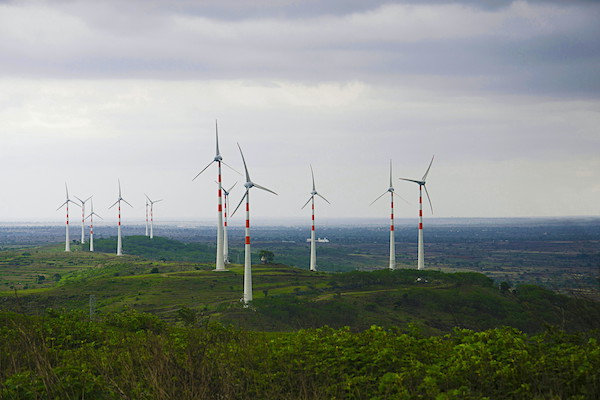
On June 3, Suzlon Energy filed a document with the stock exchanges that amounts to a manifesto. Branded "Suzlon 2.0", it recast the thirty-year-old company from a maker of wind turbines into what it now calls a "wind-first full-stack renewable energy solutions company". Underneath the corporate language, however, sits a shift in how Suzlon wants to make money, and how it wants the market to value it.
Suzlon wants to sell 10 gigawatts (GW) of renewable capacity a year, up roughly fourfold from today. It wants its order book, the confirmed work it has yet to deliver, to grow from about 5.9 GW, as of end March 2026, to 15 GW. And it wants its assets under management, the installed fleet of turbines it maintains for a fee, to rise from around 21.5 GW to 70 GW.
To deliver this, the company has split into four businesses. RE Tech builds the turbines and now sources solar panels. RE Projects is the construction arm that assembles a whole site. RE Asset Management keeps installed turbines spinning for a recurring fee. And RE DevCo, the unit that the management is most excited about, handles the slow work that comes before anyone builds anything, acquiring land, securing a grid connection, and clearing government permits.
The strategic bet sits on the last two. Take the annuity first. Selling turbines is lumpy: an order lands, revenue spikes, then the company has to go and win the next one. Servicing a fleet is the opposite: steady income arrives every year whether or not new orders come in. This kind of revenue investors pay a premium for. Suzlon already maintains over 15 GW in India with its machines available more than 95% of the time.
Taking that serviced base to 70 GW would change the quality of its earnings, not just the quantity; it shifts how the company might be judged on the rent it collects from an installed fleet rather than the one-off sale of equipment.
That ambition raises a possibility the company has not spelt out. A large pool of operating assets throwing off steady, contracted cashflows is the raw material for an infrastructure investment trust, or InvIT. It’s a listed vehicle, a little like a mutual fund, that holds completed infrastructure and passes the income through to unitholders.
Road developers and power transmission firms have used them to sell mature assets into a separate pool, free up capital, and recycle it into new building. Once enough of the fleet under management has been assembled, an InvIT would let Suzlon crystallise the value of that annuity stream rather than merely report it as service revenue. It is a natural endgame for a company that says it wants to be a landlord, even if management has kept the focus on building the fleet rather than packaging it.
DevCo is the riskier wager. In Indian renewables, the hardest part of a project is often not building it but getting it ready to build. This involves land to assemble, a connection point to secure, and a thicket of approvals to clear. A developer who can hand a customer a ready-to-build site has solved the expensive problem, and Suzlon wants to be that developer for 60% of its future volumes. The logic may be sound. The catch is that this is a capital-hungry, execution-heavy business. Suzlon has never run it at scale; besides, it carries land and permit risk that selling turbines never did.
What makes the ambition credible at all is the starting point, the year just ended being the company's best on record, a long way from the debt restructuring that nearly killed it a decade ago.
Even so, given Vision 2.0’s likely roads lead to an InvIT. The question is what that leaves behind. Floating the fleet would hand Suzlon a lump of cash today to pour into DevCo and new building, which is precisely the fuel a plan this capital-hungry needs. But it would also move the recurring service income off Suzlon's own books and onto those of the trust's unitholders, keeping only a sponsor stake and a management fee. The annuity the rebrand asks investors to pay a premium for is the same annuity an InvIT carries away. Whether Suzlon is ultimately worth more as the landlord collecting rent or as the developer recycling capital is the question the 2.0 vision does not answer.
.png)