.png)


Phynix is a seasoned journalist who revels in playful, unconventional narration, blending quirky storytelling with measured, precise editing. Her work embodies a dual mastery of creative flair and steadfast rigor.
October 19, 2026 at 4:13 AM IST
Dear Insighter,
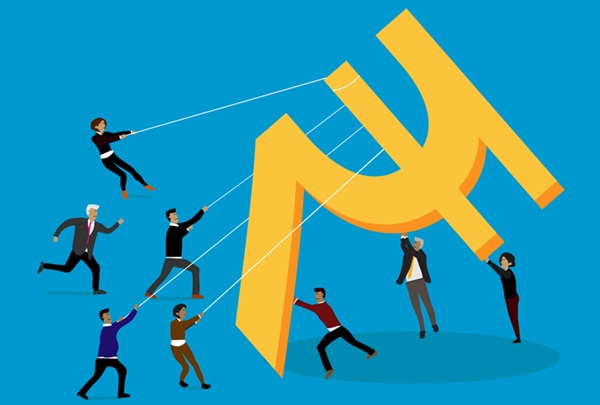
There's a particular kind of desperation that comes from watching someone fight yesterday's war with tomorrow's weapons. The Reserve Bank of India, to its credit, has been admirably transparent about its battlefield. The rupee has been sliding towards ₹97 to the dollar, foreign exchange reserves have been bleeding, and the central bank has responded with the regulatory equivalent of throwing everything at the wall. Foreign Exchange Risk Reserve, hedging restrictions, tighter liquidity and enough circulars to wallpaper the RBI's Mumbai headquarters.
The problem is that wars are rarely won by the side with the most elaborate defensive fortifications. They're won by the side that understands what it's actually fighting.
Michael Debabrata Patra reminds us that monetary policy has never operated in a domestic vacuum. The exchange rate, he notes, has always been the silent variable that shapes everything else, whether as a nominal anchor, a transmission channel or an "elusive lodestar" that policymakers chase but never quite catch. The Bretton Woods era tied everyone to the dollar's gold content; the floating era freed monetary policy to pursue domestic goals. But freedom, as any adult knows, is just another word for having to make your own mistakes.
India, it seems, has been making a few. The RBI's recent measures to defend the rupee borrow heavily from China's playbook. FERR is a direct descendant of the People's Bank of China's 2015 instrument. As Kalyan Ram notes, the mechanics are similar: impose a 20% reserve requirement on banks providing forward dollar cover to importers, making hedging more expensive, and hope this breaks the feedback loop in which forward buying weakens the spot rate, encouraging still more forward buying. The PBOC used this tool when the yuan was under pressure and reserves were draining. It worked, temporarily. Then it was removed, restored and removed again: an instrument of cyclical management rather than a structural cure.
Whether India can replicate even this limited success is an open question. Anil Katia points out that FERR applies to contracts above $2 million in which corporates buy foreign currency against rupees, while exporters selling dollars forward are excluded. The asymmetry is deliberate: to discourage importer hedging while encouraging exporters to sell dollars forward. But as V Thiagarajan argues, this punishes prudence while encouraging leverage. A businessman managing genuine trade flows, an importer who needs to protect against currency risk, now faces higher costs, while those who simply gamble on the rupee's direction face no such burden.
The deeper problem, as Dhananjay Sinha observes, is that India has already tried the big-bang approach. The RBI mobilised nearly $143 billion through foreign currency deposits and external borrowings, a sum that would have been unimaginable a decade ago. Yet within weeks, the rupee was back under pressure, and the central bank was reaching for administrative restrictions again. This is borrowed stability, Sinha argues: reserves accumulated through liabilities that must eventually be repaid, rather than through stronger competitiveness. The 2013 taper tantrum taught us that temporary stabilisation does not alter long-term trajectories.
What makes this cycle particularly frustrating is that the RBI's diagnosis isn't wrong. As Kalyan Ram notes in a separate piece, the central bank's explanation of its measures was coherent and reasonable. The problem is that the explanation arrived after the confusion, not before it. Banks were left scrambling when the restrictions landed at midnight on a Friday. For two days, they struggled to understand what the measures meant, how to implement them and what to tell their customers. A central bank that regulates institutions cannot leave them guessing about its intentions.
And clarity is precisely what markets need. As Ashima Goyal notes, forward guidance has become more art than science in an era of permacrisis. Advanced economies used it intensively when rates were near zero and options were limited. Emerging markets, facing shocks large relative to their economies, have learnt to avoid tying their own hands. The RBI's shift to "calibrated tightening" in October was widely interpreted as a signal that rate cuts were off the table. But what if oil prices crash? What if growth slows? A data-dependent approach means keeping options open, not announcing a destination before you've seen the map.
The map itself, as Abheek Barua and Kalyan Ram discuss, may need redrawing. The world, they argue, is in a state of "permacrisis": a continuous series of shocks affecting supply chains, energy prices and geopolitical stability. These aren't textbook supply shocks that central banks can simply look through. They're structural, persistent and inflationary. The old trade-offs between inflation and growth assume a world where shocks are temporary and demand is the primary driver of prices. That world, if it ever existed, looks increasingly remote.
Meanwhile, the political economy of the rupee adds another layer of complexity. As Basis View notes, India's GDP ambitions come with a timetable: becoming the world's third-largest economy by 2027-28 and reaching $7.3 trillion by 2030. These aren't just projections; they're political promises. A government that claims credit for moving up the rankings would find it awkward to dismiss an unfavourable movement as merely a currency effect. This creates a subtle pressure: how much depreciation is acceptable, how quickly, and at what point does support become necessary? The RBI may not receive explicit instructions to defend a particular rate, but the political cost of postponing an advertised milestone shapes the tolerance for adjustment.
Sparsh Chhabra makes the case for calibrated tightening as a forward-looking response to widening inflation and unfinished cost pass-through. The RBI's task, he argues, is not to eliminate a supply shock through higher interest rates but to prevent that shock from changing the inflation process through expectations, wages and firm-level pricing.
Yet credibility, as Banker Emeritus notes, is not achieved by saying the words more often, intervening more frequently or insisting that markets are wrong. It is earned through institutions credible enough to speak less, frameworks predictable enough to intervene less and policies honest enough to acknowledge their costs.
The rupee is only one part of a wider question: whether India's policy responses are building lasting capacity or merely buying time. The same tension appears in its growth strategy, corporate investment and financial markets.
Arvind Virmani, in conversation with Rakesh Khar, remains comfortable with a 7% growth baseline, arguing that India's underlying potential has strengthened. But he also makes the case for deeper trade agreements, stronger state-level reforms and a sharper focus on learning rather than credentials. The metric he believes will matter most for Viksit Bharat 2047? Productivity.
Arvind Mayaram is less sanguine. India's growth push, he argues, has relied on tax cuts, subsidies, capex and trade deals, but these measures look more like crisis responses than a sequenced strategy. The 2019 corporate tax cut followed the IL&FS-triggered NBFC crisis. The PLI scheme followed COVID and the border confrontation with China. The 2025 income tax relief followed a market correction and a consumption slowdown. GST 2.0 followed the US tariff shock within weeks. Each responded to a specific, dated shock rather than a pre-announced sequence. A named destination, whether Atmanirbhar Bharat or Viksit Bharat 2047, is not a route.
The private sector, meanwhile, has been slower to respond than policy hoped. Dhananjay Sinha notes that despite improved corporate finances, tax cuts and infrastructure spending, private capex remains subdued. The gap between plans and execution is telling: overall capex realisation fell from about 112% in 2022-23 to 96.3% in 2024-25. Corporate tax concessions can improve the return on a proposed factory, but they cannot settle the question of who will buy its output.
The external sector offers little comfort. Ajay Srivastava's warnings about export competitiveness, the fertiliser subsidy overrun documented by B Sharathbabu and MS Ramaratnam, and the gold market's curious divergence, where prices fall but ETF inflows surge, all suggest an economy navigating multiple crosscurrents. Atul Prakash notes that gold ETFs attracted record inflows even as prices fell 8.5%, suggesting investors are buying insurance against risks that yields alone cannot capture. V Thiagarajan reminds us that bonds were never an all-weather hedge; the stock-bond correlation that worked for two decades was an anomaly, not a rule. Diversification remains essential, but the framework must fit the regime ahead, not the one left behind.
Ujval Nanavati observes that FPIs have been selling aggressively while mutual funds have more than matched them. But the relationship between flows and returns is more complicated than it appears. Vivek Kaul is blunter: as long as retail investors stay in la-la land, it's always summer for the OPM wallahs, the people managing other people's money. Small-cap funds attracted ₹90.4 billion in net inflows in September 2026, while large-cap funds received just ₹8.6 billion. Retail investors may be taking on more risk than they should, while fund managers have little incentive to sound the alarm when their job is to keep money flowing in rather than warn about valuations.
SEBI's auction rethink, as Basis View notes, raises similar questions about the uses and limits of precision. A closing price designed for one purpose may not serve another. Goodhart's law applies: once a number becomes consequential, behaviour changes in ways that affect its reliability.
Nowhere is the tension between legal form and economic substance clearer than in the Yes Bank AT-1 bond case. The Supreme Court's judgment, as Chandrika Soyantar and Rahul Ghosh analyse, quashed the write-off of ₹84.15 billion in bonds, finding that the administrator exceeded his authority and acted after the relevant window had closed. The rescue was necessary; not every action taken in its name was lawful.
The ruling, however, leaves the recovery question open. AT-1 coupons are non-cumulative and discretionary, and the bank's terms give it the power to cancel payments. The principle is clear: loss-absorbing capital can absorb losses, but only through lawful processes. Anil Katia notes that any resulting cost would fall on a bank whose ownership has substantially changed since 2020. The original principal is about a sixth of shareholders' funds; the interest is harder to calculate. Six and a half years on, bondholders may recover value, but the broader question remains: how should AT-1 be designed and bank rescues implemented so that loss allocation is clear and lawful from the outset?
The question of who ultimately bears the cost is not confined to financial markets. It is playing out in the consumer economy, too.
The quick commerce boom raises a parallel question for FMCG brands. Krishnadevan V asks whether platforms are bringing companies new customers or charging them to reach customers they already had. Blinkit, Instamart and Zepto offer convenience and reach, but they also redirect purchases from kirana stores to apps where brands must pay for placement and visibility. A sale gained by the app is not necessarily a sale gained by the company.
The rupee may recover. The reserves may stabilise. FERR may be unwound. Borrowed reserves can buy time, but they cannot indefinitely finance the gap. Borrowed playbooks can provide tactics, but they cannot substitute for strategy.
India's 2047 dream, as Rajeev Verma argues, depends on a productivity revolution: better jobs, higher value addition and sustained improvements in living standards. These are also what make growth more durable and currency defence less dependent on borrowed time. The demographic window will not remain open indefinitely.
Until next time, may we spend less time buying time, and more time fixing what needs fixing.
Also Read:
- India Eases TV Ad Rules But Broadcasters Still Have To Sell Attention by Krishnadevan V: More ad inventory is not the same as more attention, or more revenue.
- THE TRAGEDY OF TATA by Ashutosh Tyagi: A Greek satire where independence needs permission and every governance crisis becomes a lawyer's annuity.
- The Houthis Are No Longer Just Iran's Proxies by Lt Gen Syed Ata Hasnain: Precision warfare and shifting alliances are redrawing the Red Sea's balance of power.
- India's Chemical Ambitions Need Cheaper Feedstocks, Not Just Tariff Walls by Ritesh Kumar Singh: Tariff walls can protect an industry, but they cannot supply it with cheap feedstock.
- ITLA: Can India Turn Transport Infrastructure into Economic Gains? by Shilpashree Venkatesh: Roads and ports are only as good as the coordination that connects them.
- India's Services Exporters Face a Declaration Raj by Anand Venkatanarayan and Arjun Raghavendra M: New paperwork for small exporters is a compliance tax wearing a policy smile.
- India's Hidden Connectivity Shock by Sagari Gupta: Fuel prices are only one headwind; troubled airspace and security risks are clipping airlines' wings, too.
- Cost of Sustainability Must Not Become the Cost of Digital Exclusion by Rabi N. Mishra and Komal Gupta: Making UPI sustainable is fine, unless it pushes small merchants back to cash.
- Beyond the ₹100,000 Limit: Rethinking How UPI Classifies Small Merchants by Rabi N. Mishra: A fixed threshold is a blunt instrument in a digital economy that keeps changing shape.
- US Waives Russian-Oil Tariffs: Temporary Relief for India, but Uncertainty Remains by Ajay Srivastava: A waiver buys time, not certainty, and temporary relief is no basis for permanent concessions.
- A Divided US Congress Won't Shield India From Trump's Tariffs by Nilanjan Banik: A Democratic House may annoy Trump procedurally, but tariffs and dollar strength will still bite.
- Punjab 2027: Does a SAD-BJP Reunion Make Sense? by Amitabh Tiwari: A reunion can revive the brand, but vote transfer is the only metric that matters.
- How the SIR Row Could Work in the BJP's Favour by Rajesh Ramachandran: Anger over voter exclusions can be reframed as an identity contest, if the Opposition lets it.
- What Swades Still Asks of Us by Nashit Sekhani: Two decades on, the film's harder question remains: what does patriotism demand after pride?
- Sarci Sense: When Did We Stop Being Easily Delighted? by Srinath Sridharan: We have more access than ever, and somehow less wonder, a strange trade indeed.
- Why Is Silence So (In)convenient? by Kalyani Srinath: In a world of instant connection, silence remains the most difficult message to send.
More From BasisPoint