.png)

Anil Katia is a former banker and policy analyst.
October 15, 2026 at 1:39 PM IST
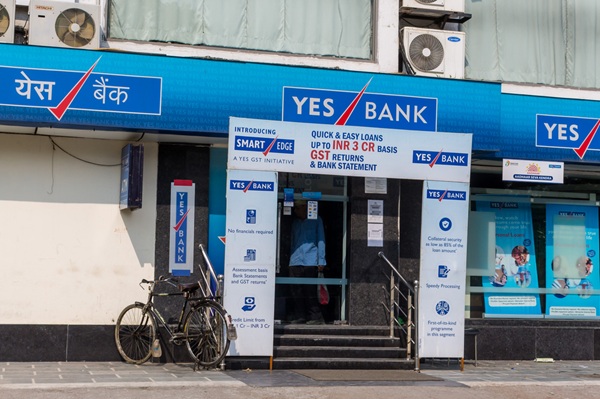
On Thursday, the Supreme Court dismissed the appeals of YES Bank, the Reserve Bank of India and the Centre against the Bombay High Court’s 2023 ruling, and the write-off of ₹84.15 billion of the bank’s Additional Tier 1 bonds, ordered by its administrator in March 2020, stands quashed. For bondholders, among them provident funds, mutual funds and individual investors, including retirees who say the bonds were sold to them as safe, deposit-like products, it marks a major legal victory after a wait of six and a half years.
Also Read:
The Trishanku Bonds: Suspended Between Debt and Equity
The court’s 35-page judgment rests on three findings. First, the Centre had consciously dropped the write-down clause from the final reconstruction scheme notified under Section 45 of the Banking Regulation Act, and the administrator could not reinstate it on his own. Second, under the RBI’s own master circular, any write-down had to take place before the scheme came into force, not the day after. Third, at the point of non-viability, the power to write down the bonds lay with the RBI, and the administrator could not exercise it.
The judgment also reproduces an RBI note to the government that deserves more attention than it is likely to get. YES Bank had issued AT-1 bonds in three series, and each promised something different. The first, ₹2.8 billion issued in December 2013, could be written down only after the bank’s common equity had been written down. The second, ₹30 billion issued in December 2016, could be written down or converted into equity. The third, ₹54.15 billion issued in October 2017, could only be written down. One bank, one class of capital, three different answers to the basic question of who loses first.
The RBI treated the 2013 series, the only one that put shareholders first, as not Basel III-compliant and left it out of the reckoning. Its note also warned that the mix of terms across the series could lead to litigation. It did, for six and a half years.
The dispute arose from a gap between the draft rescue plan and the final notified scheme. The RBI’s draft reconstruction scheme proposed writing down the AT-1 bonds. Holders of three-quarters of the bonds, through their trustee, agreed instead to convert them into equity, and the RBI incorporated that proposal in its final draft. The scheme notified by the Centre on 13 March 2020 dropped any treatment of the bonds. On 14 March, the RBI-appointed administrator wrote down both remaining series anyway, including the one that allowed conversion.
The judgment is also critical of the regulator and the bank. It describes the RBI as “a mere bystander” while YES Bank’s core capital ratio fell to 0.6%, and finds that the bank sold these high-risk bonds to individual investors in breach of the master circular, which confines them to institutions.
The rescue of YES Bank protected depositors and allowed the bank to recover. The government and the bank have argued that the write-off was integral to it, since the rescuing banks would not otherwise have put in capital. The court accepted that both steps may have been necessary, but held that necessity could not override the manner the rules prescribe.
Bondholders have prevailed on questions of authority, timing and the terms of their bonds, not on any ruling on whether they should have lost everything while existing equity survived. The court said so expressly: the question, it held, was not whether the bonds could or ought to have been written down, but the manner in which it was done. The broader question remains open.
The more immediate question is who bears the financial consequences.
A loss does not disappear because a court rules on it. In March 2020, cancelling ₹84.15 billion of liabilities strengthened YES Bank’s balance sheet at the moment rescuers were putting money in. The verdict revives the bondholders’ claims, although the remedy and its financial effects remain to be established. Any resulting cost borne by the bank would affect today’s shareholders, who are largely not the people who owned it when the losses were incurred.
YES Bank’s ownership has been transformed since 2020. Under the reconstruction, the State Bank of India invested ₹60.5 billion for a stake of about 48%, alongside HDFC Bank, ICICI Bank, Kotak Mahindra Bank, Axis Bank and others, at ₹10 a share. In 2025, Japan’s Sumitomo Mitsui Banking Corporation bought 20% of the bank for ₹134.82 billion, taking 13.19% from SBI and 6.81% from seven other banks, and became its largest shareholder.
The RBI cleared SMBC to go up to 24.99%. The initial transaction left SBI with about 10%, alongside a large base of retail and institutional shareholders.
That ownership change affects where any resulting cost would fall. The shareholders of the bank that actually incurred the losses, the pre-2020 equity, were not wiped out in the reconstruction, although subject to a three-year lock-in on three-quarters of their shares, and have since been heavily diluted. The rescue banks came in at ₹10 a share and, based on the deal value, sold part of their holdings to SMBC at roughly ₹21.50.
Any resulting bill would therefore logically fall largely on SMBC, the rescue banks that stayed, and investors who bought in after the rescue. This, unless, the buyers had something in the agreement to indemnify themselves against the pending judgement.
Ownership changed while the liability was contested. The claim was publicly disclosed, so institutional buyers could have priced the risk; how fully investors did so is unclear.
How large is the bill? The original principal is clear: ₹30 billion issued in December 2016 at 9.5%, and ₹54.15 billion issued in October 2017 at 9%.
The interest is not. The stated coupons imply about ₹7.7 billion a year, or roughly ₹50 billion over the period, without compounding. But AT-1 coupons are, by design, non-cumulative and discretionary. The court has directed that coupons be paid in terms of the bonds’ information memoranda, so what is due will turn on those terms. The arithmetic illustrates scale; it does not establish an entitlement to arrears.
Against shareholders’ funds of ₹523.38 billion at the end of June 2026, the original principal alone is about a sixth. That comparison indicates the scale of the claim, not a settled capital charge.
Six and a half years on, bondholders may well recover value. But any resulting cost would fall on a substantially different ownership base. That raises a broader policy question, which the three term sheets make sharper: how should AT-1 be designed and bank rescues implemented so that loss allocation is clear and lawful from the outset? That is the subject of the second part.
More From BasisPoint