Central banks cannot regulate financial markets from an ivory tower. They need to understand how markets function, how regulations affect trading and whether interventions produce unintended consequences. Market participants possess operational knowledge that regulators may not obtain from data or internal analysis.
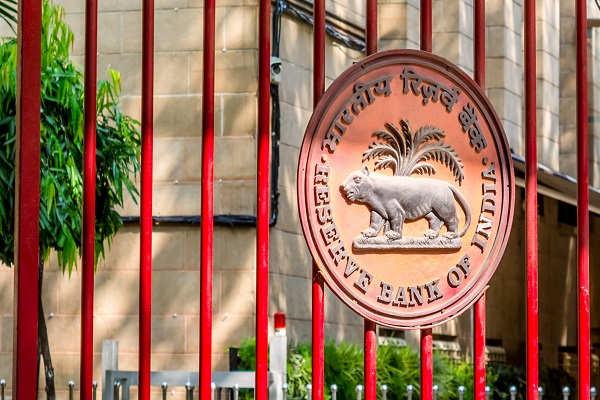
The Reserve Bank of India's newly constituted Technical Consultative Committee for Financial Markets can serve a useful purpose. The question is whether its design and safeguards are sufficiently clear.
Announced on November 4, the committee is chaired by the Deputy Governor in charge of the Financial Markets Regulation Department and has seven external members from banking, financial markets, market infrastructure and academia. Its mandate covers the efficiency, liquidity and resilience of money, government securities, foreign exchange and derivatives markets; trading, clearing and settlement infrastructure; implementation of RBI measures; unintended market frictions; and emerging risks. It is expected to meet at least quarterly.
There is a sound case for bringing technical expertise into regulation.
Financial markets are increasingly complex and interconnected. Changes in liquidity operations can affect money-market rates, government securities and currency markets. Changes to derivatives or settlement arrangements can alter incentives and create operational difficulties.
Consultation can help RBI identify these effects, distinguish market dysfunction from resistance to regulation, and improve implementation. A standing forum may provide continuity that ad hoc consultations may not!
Institutional purpose
Yet what does the committee add to existing structures? India has the Financial Stability and Development Council, chaired by the Finance Minister, and its Sub-Committee, chaired by the RBI Governor. The latter brings together financial regulators and government departments, supported by technical groups dealing with inter-regulatory coordination, financial inclusion and literacy, early warnings and fintech. Financial regulators also engage with banks, primary dealers, market associations and other stakeholders.
It is true that the FSDC is principally concerned with coordination and systemic stability across the financial sector, while the RBI’s new consultative committee appears directed at the detailed functioning of markets under RBI's remit.
These roles are not identical. A committee could bridge broad inter-regulatory coordination and routine consultations, giving recurring attention to market infrastructure and operational issues.
Is there a need to explain this additionality more clearly?
Is the new RBI technical consultative committee intended to gather market intelligence, review implementation, develop technical recommendations or advise on prospective policy? Each purpose has different implications for membership, procedures and transparency.
The composition makes those questions important. External members bring experience from institutions that participate in, intermediate or support the markets under discussion. That is a strength: practical knowledge is what the committee seeks. But members may also have institutional interests in particular regulatory outcomes.
This is not evidence of improper conduct, nor does it make market participants unsuitable advisers. It does call for safeguards proportionate to the information they may encounter.
The concern extends beyond leakage of a final policy decision. Discussions about RBI's assessment of vulnerabilities, operational priorities or possible regulatory changes could themselves be commercially relevant.
A member's institution might gain insight unavailable to competitors, even if no decision has been settled. In markets where expectations influence prices, such an advantage could matter. This should not be exaggerated into an allegation of front-running; it is a governance issue the committee's rules must address.
Information Safeguards
International practice offers useful, if not identical, comparisons. The Bank of England's Market Participants Group provides market intelligence to Monetary Policy Committee (MPC) members, supplementing the Bank's staff-led market intelligence. The European Central Bank uses contact groups for bond, money and foreign exchange markets, among others, to monitor market functioning and understand monetary-policy transmission.
The Federal Reserve Bank of New York sponsors the Treasury Market Practices Group, which develops voluntary practices for trading, clearing and settlement. These models show that consultation is common, but intelligence gathering, technical dialogue and industry standards are different from confidential advice on regulatory decisions.
RBI could strengthen the Committee by publishing a code of conduct covering confidentiality, declarations of interests, recusal when a matter directly affects a member's institution, and restrictions on use or onward sharing of non-public information.
It should clarify whether members may brief treasury, trading or senior management teams, and what controls apply. Confidentiality alone may not prevent information from being used internally. Rules should also address personal dealing and institutional safeguards, while remaining enforceable.
Representation and accountability matter too. Seven external members cannot capture every perspective in a diverse market. Rotating participation or issue-specific consultations with mutual funds, insurers, pension funds, smaller banks, non-bank market makers, corporates and investors could widen the evidence base.
Non-sensitive agendas, summaries of recommendations and an account of RBI's response could be published without disclosing market-sensitive information.
The consultative committee should be judged by the quality of its advice and whether it improves market functioning. A central bank needs to listen to market participants but retain independent judgement and serve the system as a whole.
Besides, ‘financial market regulation” dealing with traded instruments more often than not affect prices of interest-bearing assets i.e. affect monetary policy. Thus, there is a need to interpret recommendations of the committee and reconcile such committee recommendation with monetary policy which again cannot be outsourced. The efforts are currently on to outsource "market expertise" but at some level it still requires maturing strong internal expertise to reconcile all the different strands.
Consultation should illuminate policy choices, not confer influence or informational privilege. How do we ensure that the committee complements existing institutions and that those invited into the room do not gain an unfair advantage over those outside it?
.png)