.png)

Gurumurthy, ex-central banker and a Wharton alum, managed the rupee and forex reserves, government debt and played a key role in drafting India's Financial Stability Reports.
September 18, 2026 at 3:56 AM IST
A regulator can be right on the rule/policy changes and still raise questions about the timing. In markets, regulatory certainty is not merely about what the rule says; it is also about when the rule is applied and timing of policy changes.
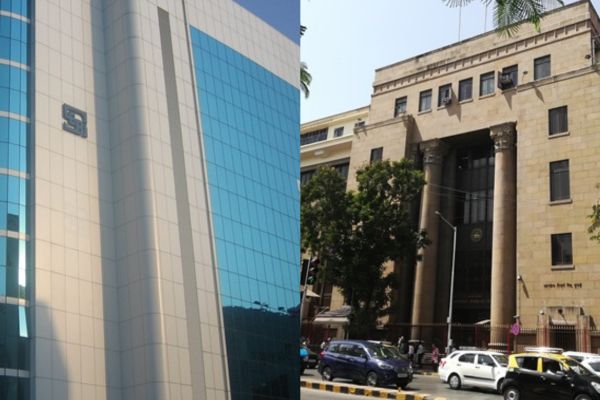
The more interesting question arising from the RBI's rejection of Tata Sons' application to surrender its Core Investment Company registration is therefore not whether the central bank has the power to regulate Tata Sons. It plainly does.
The question is whether an application made under one regulatory framework can fairly remain pending for more than two years while the framework itself evolves—and then be decided under the changed circumstances.
Tata Sons applied on March 28, 2024, to surrender its Certificate of Registration as a CIC. It had repaid more than ₹210 billion of debt and had become debt-free. The RBI has now rejected the application and directed Tata Sons to comply with the regulatory framework applicable to Upper Layer NBFCs, bringing the question of mandatory listing back into focus. Tata Sons' assets stood at about ₹2.01 trillion as of March 2026, well above the ₹1 trillion threshold subsequently relevant to the framework.
Tata Sons can reasonably contend that its application should have been considered against the regulatory framework prevailing when it applied. The application remained pending while the RBI's regulatory framework evolved, including changes concerning what constitutes access to public funds and the treatment of large investment holding companies.
That does not automatically mean Tata Sons must prevail. A regulatory change can legitimately apply to an existing entity. Nor does regulatory delay by itself create a right to deregistration.
But it raises an uncomfortable question:
If the regulator had decided the application when it was made, would the case have been judged in the same way?
That is a question of regulatory process rather than merely regulatory substance.
The issue becomes more interesting because Tata Sons can point to the treatment of another large holding company. Shanghvi Finance, the investment company of Sun Pharma founder Dilip Shanghvi, surrendered its registration after repaying its debt, and the RBI cancelled it in 2023. The two cases are not identical and cannot simply be equated. But the comparison raises a legitimate question about why one application could move through the system relatively quickly, while another remained pending for more than two years.
That matters because regulatory delay can itself have consequences.
Suppose an applicant makes a request when one set of circumstances prevails. If the regulator takes years to decide it and, in the meantime, the rules change or the applicant's circumstances change, the final decision may be legally defensible while still raising questions about procedural fairness and regulatory certainty.
The RBI, of course, has a substantive counterargument.
Systemic risk is not necessarily synonymous with debt on the holding company's own balance sheet. A large corporate holding structure can create indirect financial linkages. The fact that Tata Sons has repaid its own borrowings therefore does not necessarily extinguish every prudential concern. The RBI's framework takes a broader view of public-fund access and the interconnectedness of large financial entities.
That is a legitimate prudential argument.
But there is another question: what exactly is the risk that prudential regulation is trying to contain?
If the principal concerns are transparency, governance, valuation and protection of minority investors arising from a large unlisted holding company, how much of that belongs to prudential regulation and how much properly belongs to securities-market and corporate-governance regulation?
The answer need not be either RBI or SEBI. There can be legitimate regulatory overlap. But proportionality matters. A company that has become debt-free and whose investments are equity-backed presents a different risk profile from a leveraged financial intermediary. Regulation that treats both identically needs a clear explanation of the risk it is addressing.
And this brings us to SEBI's Closing Auction Session.
CAS was introduced on August 3 with the objective of improving closing-price discovery. But its early experience has exposed an important problem: market mechanisms do not operate in isolation. The interaction between the closing auction, derivatives positioning, liquidity and expiry-day incentives produced sharp price swings.
SEBI has now proposed changes to the settlement methodology, including alternatives that would either blend the final 30 minutes of regular trading with the 10-minute auction or temporarily use the previous 30-minute methodology for derivatives settlement. It might also be considering other changes to the auction process.
Again, the issue is not whether CAS was a bad idea.
Its objective, better price discovery, is entirely reasonable. The lesson is that even a theoretically sound market reform can have unintended consequences when introduced into a live market with complex incentives, and when overall sentiments are not favorable for Indian equity markets.
This is where timing becomes important.
India is seeking greater foreign portfolio investment at a time when global investors are already assessing currency risk, geopolitical uncertainty, valuations and the predictability of Indian policy. They do not experience the RBI, SEBI and the government as separate institutional boxes. They experience one regulatory environment called India.
Investors can live with stringent regulation. They can live with higher disclosure requirements. They can even live with rules they dislike.
What is harder to price is regulatory uncertainty.
A regulator therefore has two clocks.
The first is the regulatory clock: Is the rule being followed?
The second is the market clock: What signal does the decision send today, and what behaviour will it induce tomorrow?
The first is indispensable. The second is increasingly important.
This is where the question of bureaucratic versus technocratic regulation becomes relevant, not because bureaucrats are necessarily inferior regulators, or technocrats necessarily superior ones. That would be too simplistic.
Bureaucratic institutions have genuine strengths: process, continuity, consistency and fidelity to rules. But those same strengths can sometimes encourage a compliance-oriented mindset in which the question becomes “What does the rule require?”, rather than the broader question “What is the economic objective of the rule, and is this the right moment and manner in which to pursue it?”
Markets require both questions to be asked.
The best regulator is therefore not necessarily the one that enforces every rule most rigidly. Nor is it the one that grants exemptions most liberally. It is the one that understands that rules operate in time, markets operate on expectations, and regulatory decisions have consequences beyond the entity immediately being regulated.
The Tata Sons case and the CAS episode are very different. One concerns the prudential perimeter around a large corporate holding company; the other concerns market microstructure.
Yet they raise the same larger question.
Should regulators be judged only by whether their decisions are substantively defensible, or also by whether the timing, sequencing and transition of those decisions preserve regulatory certainty?
A decision can be legally defensible and economically rational. But if an application is left in limbo long enough for the regulatory landscape to change, the applicant may reasonably ask whether it was regulated by the rule, or by the passage of time.
And for a foreign investor deciding whether India is a predictable place to put capital, that difference can matter almost as much as the rule itself.
More From BasisPoint