.png)


Datametricx is a veteran journalist tallying the macro game, keeping score of the numbers that shape India’s economy and policy.
January 10, 2026 at 12:46 PM IST
In its first advance estimates of GDP, the National Statistics Office has projected that the Indian economy will grow 7.4% in 2025-26, up from 6.5% last year. This is marginally higher than the 7.3% projection in the Reserve Bank of India’s December monetary policy statement.
However, nominal GDP growth is projected to moderate to 8.0% in 2025-26 from 9.8% a year ago, primarily because of a sharp decline in the GDP deflator. The NSO has assumed the GDP deflator at 0.5%, the lowest in the current series.
Gross value added is estimated to grow 7.3%, driven by 9.1% growth in the services sector. On the expenditure side, growth is supported by a 7.8% rise in capital formation and a 7.0% increase in private consumption.
The first advance estimate assumes that GDP growth in the second half of the year will moderate to 6.9% from 8.0% in the first half. Although nominal GDP growth is well below the 10.1% assumed in the Budget, the projected fiscal deficit of ₹15.68 trillion is still expected to remain at 4.4% of GDP because the level of base-year GDP has been revised upward relative to the Budget projection. That said, slower nominal GDP growth implies that tax collections and corporate revenues are likely to remain under pressure in the current financial year.
Retail automobile sales jumped in December, helped by positive sentiment following recent tax relief measures, year-end offers and some buying ahead of expected price increases in January. Total retail sales grew 14.6% year-on-year to 2.03 million units, driven by a sharp rise in sales of passenger vehicles, commercial vehicles, three-wheelers, and tractors, according to the Federation of Automobile Dealers Associations. This marked the second-highest year-on-year growth in automobile sales over the past year, after the 40.5% rise in October.
Passenger vehicle sales rose 26.6% to 379,671 units, with rural growth at 32.4% and urban growth at 22.9%. Inventories of passenger vehicles fell further to 37-39 days, down from 44-46 days in November and 53-55 days in October.
Tractor retail sales surged 56.5% to 115,001 units, while commercial vehicle sales increased 24.6% to 83,666 units. Three-wheeler sales rose 36.1% year-on-year to 127,772 units in December. Two-wheeler sales grew 9.5% year-on-year to 1.32 million units, compared with a contraction of 3.1% a month earlier.
FADA expects January sales to follow a two-paced pattern — a seasonally softer first half, followed by a stronger second half, as buying typically picks up after Makar Sankranti and Pongal. The Reserve Bank of India’s interest rate cut and improving system liquidity could also provide a marginal lift sentiment.
Tractor despatches continued to boom. Domestic despatches rose 37.1% year-on-year to 69,890 units in December. The sector has been one of the biggest beneficiaries of the recent GST rate cut, with the tax on tractors with engines of up to 1,800 cc reduced to 5% from 12%. Total tractor sales, including exports, rose 34.9% to 79,705 units, while production increased 57.9% to 78,319 units.
Private-sector services activity slowed as growth in new business softened. The HSBC India Services PMI fell to an 11-month low of 58.0 in December from 59.8 a month earlier, with expansion in incoming new work and output easing to their slowest pace in nearly a year.
The India Composite PMI fell to an 11-month low of 57.8 in December, down from 59.7 in November. Despite the decline, it remained well above its long-run series average of 55.0.
Open-ended mutual fund schemes recorded net outflows in December, driven by debt fund withdrawals. These schemes saw a net outflow of ₹665 billion in December, compared with an inflow of ₹332 billion in November. Debt-oriented schemes alone recorded an outflow of ₹1.32 trillion, up from ₹257 billion in the previous month. Typically, mutual fund schemes, especially debt schemes, witness outflows in December as companies withdraw funds to meet advance corporate tax payments.
Open-ended equity fund schemes, however, saw inflows of ₹281 billion, down from ₹299 billion in November. Flexi-cap funds attracted the highest inflows at ₹100 billion, followed by mid-cap funds at ₹42 billion, and large- and mid-cap funds at ₹41 billion. Mutual fund flows have remained the main support for Indian equities amid sustained foreign portfolio investor outflows.
E-way bill generation in December rose to a record 138.39 million, suggesting a pickup in goods following recent reductions in goods and services tax rates. E-way bills — a document required for transporting goods worth more than ₹50,000 — rose 23.5% year-on-year in December, the third highest monthly growth in the past two years. Sequentially, volumes rose 6.5%. For April-December, e-way bill generation increased 21.0% to 1.15 billion.
After contracting for the previous two months, India’s electricity generation from conventional sources rose 4.3% year-on-year in December to 126.29 billion kWh, marking only the third year-on-year increase in the past nine months. The rise was led by a 12.7% increase in hydroelectric power generation. Thermal power, which accounts for over 80% of electricity generated from conventional sources, rose 4.7% to 113.29 billion kWh. Over the past few years, output from conventional sources, especially thermal plants, has been declining as a share of total power generation.
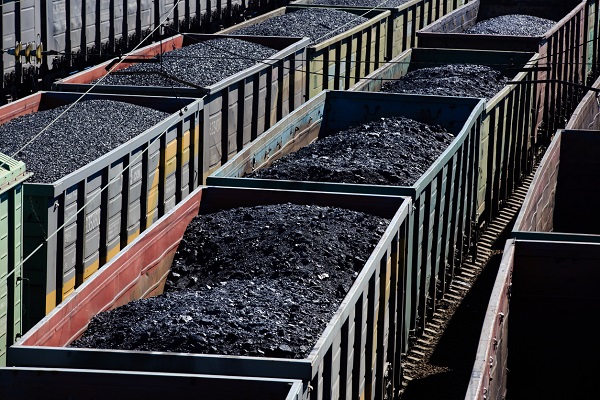
India’s coal production rose 3.6% year-on-year to 101.45 million tonnes in December. Coal despatches, however, declined for the fourth consecutive month, falling 11.5% to 90.17 million tonnes. Demand for coal has been weighed down by softer thermal power generation and higher renewable output. In December, coal despatches to the power sector declined 7.0% to 69.55 million tonnes.
Freight traffic at major ports rose 8.2% year-on-year to 672.99 million tonnes in April-December, driven by strong growth in crude oil and petroleum products and container shipments. Crude and petroleum product volumes increased 10.0% to 203.06 million tonnes, while container traffic rose 10.3% to 157.65 million tonnes.
Growth in new-business premiums of life insurers rose to a 20-month high of 39.5% year-on-year to ₹422 billion in December, led by the state-owned Life Insurance Corp of India. LIC’s premium income surged 57.5% to ₹213 billion, while premiums of private insurers rose 24.9% to ₹209 billion. During April-December, total premiums grew 13.0% year-on-year to ₹3.11 trillion, with private insurers’ income rising 14.0% and LIC's income increasing 12.3%. LIC sold 11.68 million policies in the first nine months of the year, down 0.5%, compared with 6.82 million policies sold by private insurers, up 5.7%.
Gross direct premiums of general insurers, including stand-alone health insurers, rose 13.7% year-on-year to ₹284.45 billion in December. For April-December, premiums increased 8.6% to ₹2.50 trillion. The growth rate for April-December is not strictly comparable with earlier periods because the Insurance Regulatory and Development Authority of India excluded premiums from long-term general insurance policies from its calculations with effect from October 1, 2024.
India’s foreign exchange reserves fell $9.81 billion week-on-week to $686.80 billion as of January 2. The fall, the largest in over a year, was primarily due to RBI intervention in the foreign exchange market to defend the rupee and valuation losses on gold following softer prices. Foreign currency assets declined by $7.62 billion to $551.99 billion, while gold reserves fell by $2.06 billion to $111.26 billion. Overall, reserves have risen by $18.48 billion so far in 2025-26, reflecting earlier valuation gains in gold.
After above-normal rainfall in the monsoon and post-monsoon seasons, the winter season has begun on a subdued note. The country received a cumulative rainfall of 0.9 mm during January 1-10, down 82% from the long-period average of 4.8 mm for the period.
Reservoir storage levels, however, remained healthy and well above historical averages. As of January 8, 166 reservoirs held 138.83 billion cubic metres of water, 6% higher than a year earlier and 23% above the 10-year average.
Rabi acreage has edged up slightly from a year ago. As of January 2, the area under rabi crops stood at 63.41 million hectares, a 2.7% increase year-on-year, with sowing covering 99.4% of the normal acreage of 63.78 million hectares for the season. Wheat acreage rose 1.9% to 33.42 million hectares, while pulses and oilseeds expanded by 2.6% to 13.43 million hectares and by 3.2% to 9.63 million hectares, respectively.
Coming up
- Jan 12 – Consumer Price Index for December
- Jan 14 – Wholesale Price Index for December
- Jan 15 – Merchandise trade data for December
- Jan 15 – Periodic Labour Force Survey for December
Tailpiece: India’s per capita national income rose to ₹219,575 in 2025-26, equivalent to about ₹18,298 a month. Growth in per capita national income, at 6.9%, was lower than nominal GDP growth of 8.0%, largely reflecting population growth.
More From BasisPoint