.png)


Kirti Tarang Pande is a psychologist, researcher, and brand strategist specialising in the intersection of mental health, societal resilience, and organisational behaviour.
September 27, 2026 at 7:07 AM IST
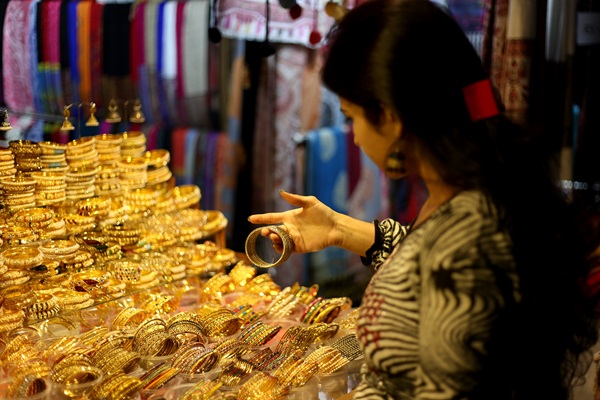
Pick any Indian household, jewellery is not just a vanity piece. It has a functional role to play as an emergency reserve. When income disappears, a business struggles, a medical emergency occurs, or cash is urgently required, the family can sell or pledge the gold.
In July 1991, India, in a sense, did at the level of the sovereign what countless families had done at the level of the household.
At that time, India had a foreign-exchange problem. The country needed to pay for things bought from abroad, especially oil and other imports; and meet external debt obligations. Those payments generally required foreign currency, particularly US dollars. But India's stock of usable foreign exchange had fallen dangerously low. International lenders and financial institutions were becoming less certain about India’s ability to meet its obligations. And in finance, once people begin worrying about whether you can pay, obtaining the money that would allow you to pay becomes harder.
Today, 35 years later, the world is once again behaving like the kind of place in which gold should shine. Oil is above $100 a barrel. Conflict in the Middle East continues to threaten energy supplies. Inflation has returned as a policy problem. Central banks are tightening. Yet on Friday, spot gold was around $4,291 an ounce, down roughly 2% for the week.
This looks like a contradiction only because most of us begin with a sentence we have been taught for generations: gold is a safe haven, but safe from what?
Psychologists Daniel Kahneman and Shane Frederick described something called attribute substitution: when the mind encounters a difficult question, it often answers an easier one instead. “What risk am I trying to protect myself against?” requires us to think about probabilities, time horizons, correlations and what might actually fail. “Which asset is safe?” gives us a category: gold, government bonds, property, cash.
Once the label sticks, the thinking can stop. Markets, however, don’t care about our labels.
The current gold price is a good demonstration. The geopolitical threat has not disappeared. But the route through which that threat is travelling has changed. Expensive oil raises inflation risk. Persistent inflation increases the likelihood that the Federal Reserve keeps rates high or raises them further. Higher Treasury yields increase what investors can earn from assets that actually pay interest; gold pays none. A stronger dollar adds another headwind because dollar-priced bullion becomes more expensive for buyers using other currencies.
The Federal Reserve raised its target rate to 3.75%-4.00% on September 16, and the combination of rising yields and expectations of further tightening has weighed on bullion since.
So the same war that can make gold attractive through fear can make it less attractive through interest rates. That is not gold failing as a safe haven. It is one risk colliding with another.
It is also why the old argument that “inflation is good for gold” needs qualification. Inflation can support gold when investors fear currency debasement, policy failure or the erosion of purchasing power. But inflation that persuades a credible central bank to tighten aggressively can lift yields and strengthen the currency, increasing the opportunity cost of holding gold. The destination may be inflation, but the road taken to get there matters.
Even gold itself is telling us that its definition of safety is more complicated than this week’s price suggests. August was one of gold’s strongest months in a quarter century, and global gold ETFs saw significant inflows; North American funds alone attracted $7.7 billion. More revealingly, the Dutch central bank recently moved about 86 tonnes of its gold between international storage locations specifically to improve liquidity, tradability and preparedness for severe crises.
Investors are not necessarily abandoning safety. They are disagreeing about which danger deserves protection first.
Cash is safe from tomorrow’s market crash but unsafe from years of inflation. A long-dated government bond may be safe from default but painfully exposed to rising rates. Property can preserve wealth across generations but cannot always be sold when liquidity is desperately needed. Equities can protect purchasing power over decades while being decidedly unsafe next Tuesday.
There is no asset called “safety”. There are only assets that protect us from particular forms of loss.
And this is where investors can borrow a useful habit from good decision-making under uncertainty. Before asking what to buy, define what you are afraid of. Is the danger a six-month drawdown, ten years of inflation, currency depreciation, a banking crisis, loss of income, geopolitical rupture or simply the possibility that you will need your money at precisely the worst moment?
Then ask the question we routinely forget: what new vulnerability does my protection create?
Every hedge has a failure mode. Gold has no yield. Cash loses purchasing power. Property sacrifices liquidity. Bonds carry duration risk. Equities carry volatility. Safety purchased against one future can leave us exposed to another.
In 1991, India did not need gold because gold was going up. It needed gold because the country possessed something the rest of the world would still trust when its immediate capacity to pay was under question. The gold bought India time. What India did with that time, the reforms that followed, mattered far more.
That may be the more durable lesson from both 1991 and today’s strangely falling safe haven.
Resilience does not come from finding one thing that cannot fail. Such a thing does not exist. It comes from knowing what can hurt you, building different forms of protection against different threats, and retaining enough room to adapt when the threat changes.
More From BasisPoint