.png)

Liquidity Signals Keep Transmission in Focus
RBI held rates steady, but without fresh liquidity measures, bond yields hardened, funding spreads remained wide, and transmission risks took centre stage.
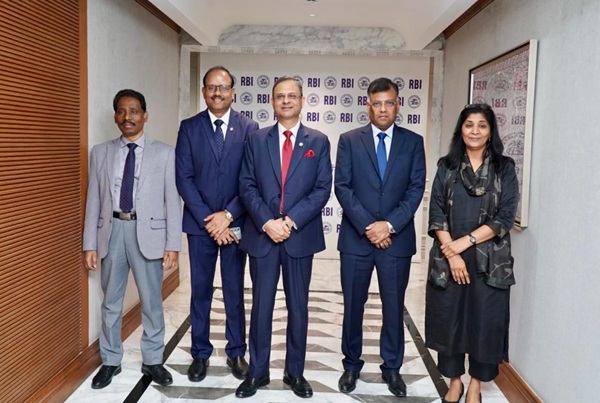

Shailendra Jhingan is Head-Treasury at ICICI Bank.
February 6, 2026 at 12:25 PM IST
The February policy wasn’t much of a surprise for markets since a change in policy rate or stance wasn’t expected. However, the market was keenly eyeing the RBI’s liquidity operations for transmission, given that the spread between wholesale funding rates and the repo rate has widened since the last policy. The bond market was hoping for a few measures to aid transmission, such as more open market operations or preponement of the April liquidity coverage ratio guidelines. With no steps forthcoming, long-end bond yields hardened.
Another reason which drove yields higher was the upward revision to both growth and inflation forecasts for the first half of 2026-27. Although the RBI hasn’t provided growth and inflation forecasts for 2026-27, as both the series are due for base-year and methodological revisions, the forecast for the first half of 2026-27 has been revised upward by around 20 basis points for both. This implies that, under the old series, the RBI now expects growth to be around 7% and inflation around 4.2% in the first half. The upward revision in the former is driven by the momentum seen in high-frequency indicators. The trade agreement reached with the US, which brings tariffs on India at a slightly lower level than its Asian peers, is also positive for growth. At the same time, inflation has been revised higher given the increase in precious metal prices.
The forecast for the entire year will be released in the April policy. While a double deflator would pull down manufacturing and thus GDP growth, a higher share of the services sector should work towards pushing growth higher, given that the same has been growing at a much faster pace. The bigger question is on urban consumption, given the threat of artificial intelligence on the Indian IT sector, with the impact of the same visible on hiring in the sector. Recent agentic AI plug-ins have led to sell-offs in software stocks across the world, with fears of impact on jobs. This may have implications for both growth and inflation in the long run if AI is as effective as it is being made out to be.
For now, the current policy was being set against a more favourable macroeconomic backdrop in comparison with the December policy, with India signing an FTA with the EU and is on track to come to an agreement with the US. Hence, the pressure on the rupee has eased in comparison to the previous policy. Notably, FPIs sold $4.3 billion and $3.2 billion of Indian stocks and bonds in December and January, respectively. The trend has changed in February with an inflow of $1.7 billion. This has eased the pressure on the currency, which was sliding lower, and has given room to the RBI to better manage its liquidity operations. The trade agreement with the US is also positive for India’s current account.
Since December 2025, RBI has done liquidity injection of ₹3.5 trillion via OMOs and $25 billion via buy-sell swaps along with long-term variable rate repo operations (₹1.36 trillion). This has led to an increase in durable liquidity from ₹2.6 trillion in end-November 2025 to about ₹4.5 trillion now. With most of the injection being back-ended, both call money rates and wholesale funding rates have eased recently. Banks have been parking as much as ₹3.6 trillion in the SDF window lately, given the surplus liquidity as against ₹1.5 trillion in end-December. Going forward, as currency demand and reserve requirements build up, along with likely maturity of outstanding short forward positions, banks would use surplus parked in SDF to meet these requirements. Hence, RBI did not announce any immediate durable liquidity measure but gave comfort by saying that it is prepared to provide liquidity for transmission and meet the requirements of the economy.
What would be the best way to support transmission? Given the current elevated credit-deposit ratio along with a pick-up in demand for credit and limited accretion in household deposits, the credit-deposit ratio should move higher from here, which is likely to put pressure on wholesale funding rates when household savings are being increasingly channelised into market-led instruments. This has implications for banks' ability to lend further, given that wholesale deposits have a higher run-off than retail deposits and thus need more HQLA assets, which crowds out lending. In addition, many banks are at the lower end of the liquidity coverage ratio and thus would have to buy bonds to maintain the same, which would constrain their ability to lend and/or participate in any future OMO purchases by the RBI. Hence, this calls for un-constraining the system, for instance, by including some part of CRR as part of the liquidity coverage ratio, till such time as the inflow of foreign savings improves and thus aids in deposit creation.
In summary, while policy rates are likely to remain low for long, transmission of the same into lending rates, given such a high credit deposit ratio, would require significant policy intervention by the central bank.
More From BasisPoint