.png)

India–US Trade Deal, the EU Trigger and the Limits of Celebration
The India–US trade deal offers tariff relief, not a clear win. India has conceded ground, gained breathing space, and must now wait for the fine print to determine the balance.

Groupthink is the House View of BasisPoint’s in-house columnists.
February 3, 2026 at 4:24 AM IST
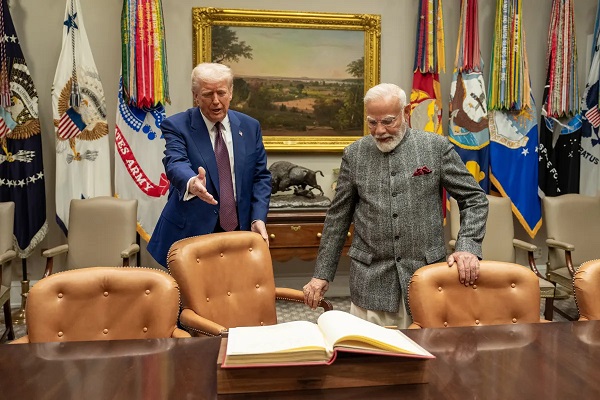
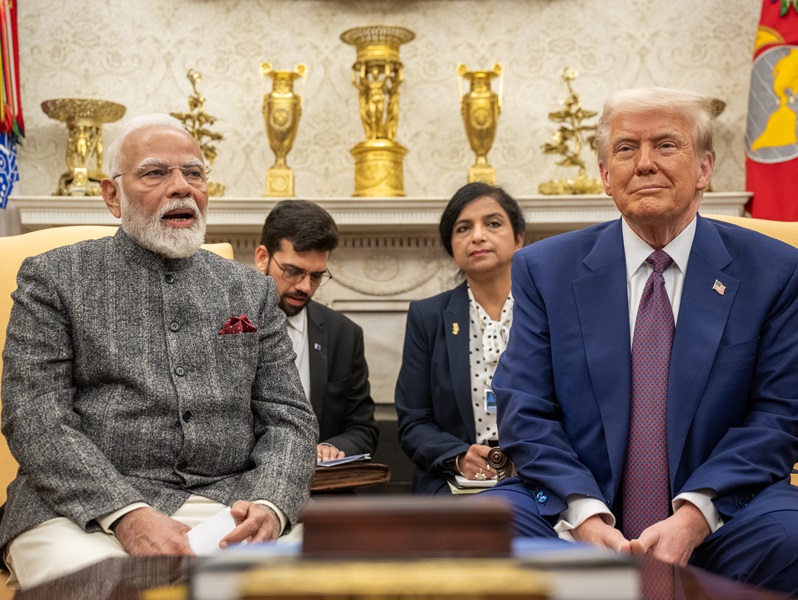
Seen from a distance, the India–US trade deal announced via President Donald Trump’s social media post looks less like an isolated breakthrough and more like a (final?) turn in a broader geopolitical loop. The EU–India free trade agreement, concluded earlier, appears to have been the real catalyst, nudging Washington back to the table after months of tariff escalation and strategic pressure.
Without the threat of sharply higher US tariffs on Indian exports, and without Trump’s confrontational posture towards Europe over issues ranging from Greenland to NATO burden-sharing, New Delhi and Brussels may not have felt sufficient urgency to take their long-pending FTA past the finish line. Equally, without that EU agreement, Washington’s incentive to close an India deal may have been weaker.
The sequence matters, and the trade diplomacy here looks less linear than circular.
On the surface, the headline concession is substantial. If the effective US tariff on Indian goods has indeed been cut from 50% to 18%, that would be a material positive for exporters and for financial markets that had been pricing in prolonged trade stress. Subject to Trump not revisiting the terms, this represents a meaningful de-escalation.
Beyond that, however, caution is warranted. India is not in a position to offer hard purchase or investment commitments of the scale being floated. Pledges of $500 billion in US goods purchases sit uneasily with India’s economic structure. The issue is not whether such numbers are politically attractive, but who, in practice, would execute them. Government balance sheets, corporate capital expenditure plans and household demand do not extend that far.
There is also a tendency to overstate the cost of some concessions. A reduction in Russian oil purchases, for instance, should not be viewed through a sentimental lens. India has extracted economic value from discounted Russian crude since 2022 and has largely already done its part. Diversification away from Russia is not, in itself, a strategic loss, provided alternative sourcing does not materially worsen the current account or inflation dynamics.
Similarly, cutting tariffs to zero on a wide set of non-agricultural goods is defensible. India has been moving in this direction gradually, and liberalisation in non-agricultural sectors carries far fewer political and social risks than opening up food and farm markets. On these elements, the give-and-take looks broadly reasonable.
The discomfort lies elsewhere.
The emphasis on sharply higher imports from the US, across energy, technology and potentially defence, raises harder questions. Imports are not policy variables in the same way tariffs are. They depend on pricing, competitiveness and domestic demand. Signalling intent is one thing; locking in volumes is another. Any implicit pressure to reorient defence procurement away from long-standing partners would further complicate the picture and warrant explicit clarification.
While the 18% tariff rate has been reiterated as final, other terms have been left deliberately vague, with details deferred to trade negotiators. That ambiguity cuts both ways. It offers flexibility, but it also leaves room for expectations to be oversold.
Deals, by definition, involve compromise. India has given ground and secured relief. What it has not secured is a clear, unambiguous win. Portraying the agreement as one risks eroding credibility when the fine print eventually emerges. For now, the appropriate response is neither triumphalism nor alarm, but realism. The circle may be complete, but the ledger is still being written.
More From BasisPoint