.png)

How Should India Tax Bulk Scotch? What the Law and Precedent Say
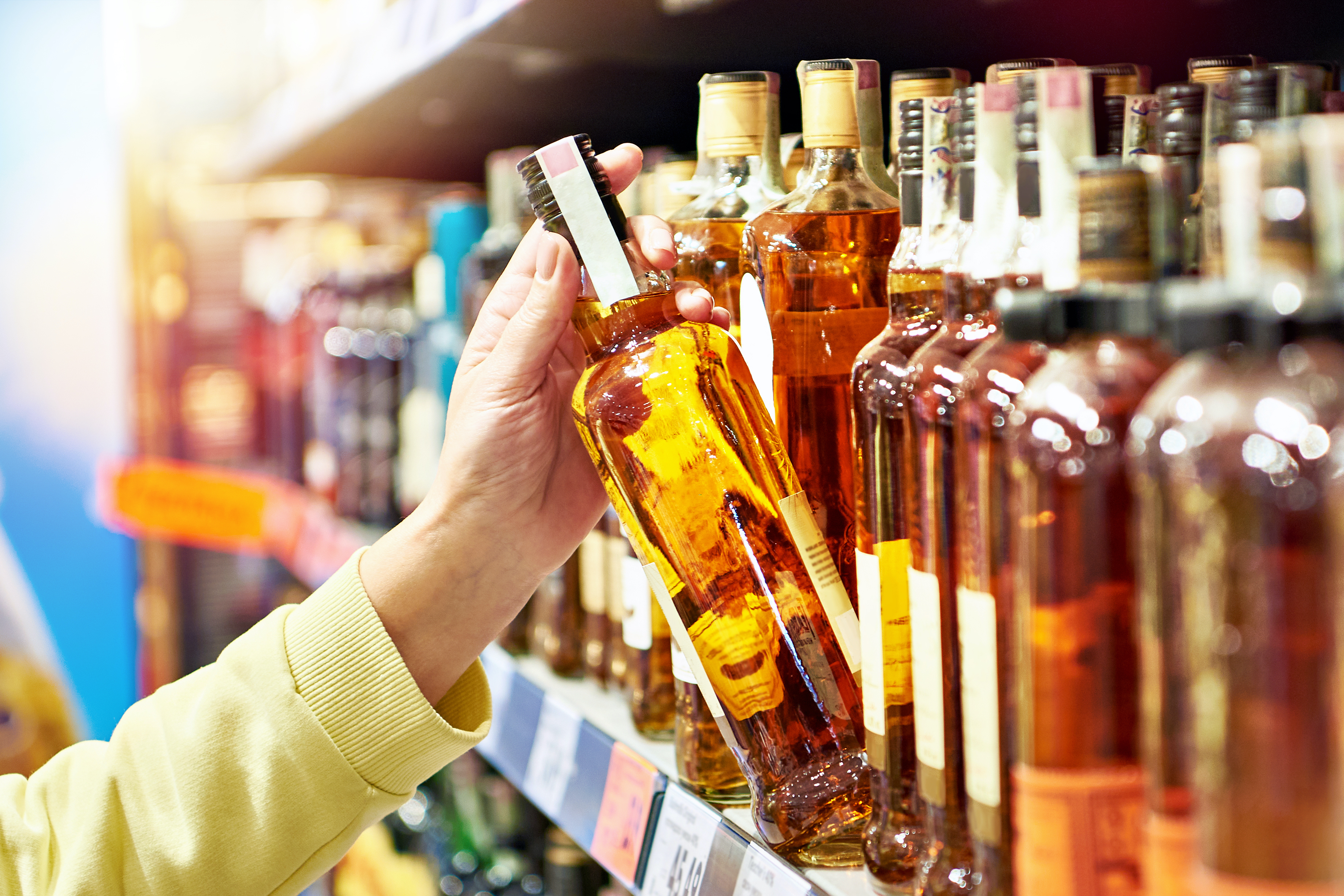
Bulk Scotch arrives at Indian ports at 58%–63% ABV as matured whisky, and adding water before bottling merely lowers alcohol strength without turning it into an industrial beverage base. Core question remains- Does Adding Water Change What Already Counts as Whisky?

Ajay Srivastava, founder of Global Trade Research Initiative, is an ex-Indian Trade Service officer with expertise in WTO and FTA negotiations.
November 25, 2026 at 1:56 PM IST
Indian customs authorities have sparked a major tariff dispute over bulk Scotch whisky imports, threatening a key concession of the India–UK Comprehensive Economic and Trade Agreement nearly four months after the pact took effect on July 15, 2026.
Under the agreement, India halved its basic customs duty on qualifying Scotch whisky from 150% to 75%, with plans to lower it to 40% by year 10. Importers declare bulk Scotch under HS 22083092, the tariff code for Scotch imported in containers larger than two liters.
In early November, however, the Directorate of Revenue Intelligence instructed Customs to reclassify certain bulk Scotch shipments as beverage-making preparations under HS 21069051—a new tariff line India introduced on May 1, 2026, through the Finance Act. Because HS 21069051 is excluded from the trade pact, moving bulk Scotch into this category doubles the basic customs duty from 75% back to 150%. Combined with a 5% consumption levy calculated on the import value plus duty, the total tax burden surges to 162.5% of the shipment's value.
To preserve regulatory certainty and honour treaty commitments, Customs and the DRI must reconsider this reclassification and align their enforcement with India’s tariff architecture, international customs rules, and binding Indian court precedents.
Even if customs authorities entertain any doubt over whether a bulk shipment satisfies the specific criteria for whisky under HS 22083092, the Harmonized System provides a built-in fallback within Heading 2208 itself—specifically the residual spirits line, HS 22089099—rather than pushing the product into Chapter 21 under HS 2106. Under the India–UK CETA, HS 22089099 carries a preferential basic customs duty starting at 110% and phasing down to 75% by year 10, making it the proper statutory safety net for distilled spirits within Heading 2208.
India’s Tariff Architecture for Bulk Scotch Whisky Imports
India’s customs tariff already contains an explicit, dedicated classification structure for Scotch whisky imported in bulk containers holding more than 2 litres under code 22083092. To understand where it fits, the classification must be read in stages:
• Four-Digit Heading (HS 2208): Covers spirits—including whisky, brandy, rum, gin, and vodka—as well as undenatured ethyl alcohol below 80% alcohol by volume.
• Six-Digit Subheading (HS 2208.30): Specifically covers whisky.
• Eight-Digit Tariff Lines: India’s eight-digit codes identify both the type of whisky and the size of the container:
|
Container Size |
Scotch |
Blended |
Other Whisky |
|
2 litres or less |
22083012 |
22083013 |
22083019 |
|
More than 2 litres |
22083092 |
22083093 |
22083099 |
Under the India–UK trade agreement, the basic customs duty on qualifying UK whisky under 2208.30 fell from 150% to 75% when the agreement took effect and is scheduled to fall to 40% by year 10, with the exact same rates applying to both container sizes.
Separately, code 22089099 covers other spirits that have no more specific tariff entry (the residual category), where firms importing spirits without naming them are classified; for qualifying UK imports under this residual code, the basic duty fell from 150% to 110% in year one and is scheduled to reach 75% by year 10.
The Customs and DRI Position
Bulk Scotch and blended whiskies typically arrive in India at cask strength of 58% to 63% alcohol by volume, or ABV, after which domestic producers dilute the spirit with demineralized water before bottling or blend it with domestic neutral grain spirit to manufacture Indian-made foreign liquor. Because the imported whisky undergoes post-import dilution, Indian Customs and the DRI view the shipments not as whisky, but as an industrial input, classifying them as “compound alcoholic preparations of a kind used for the manufacture of beverages” under HS 2106 90 51. The DRI further contends that lower negotiated preferential tariff rates were intended exclusively for finished consumer products—such as bottled-in-origin Scotch—rather than bulk concentrates destined for local processing and blending.
To justify classifying bulk Scotch whisky under Heading 21.06, the DRI relies on Note (7) of the World Customs Organization’s Harmonized System Explanatory Notes for Heading 21.06. That note describes compound alcoholic preparations used to manufacture beverages by blending vegetable extracts of Heading 13.02 with lactic, tartaric, citric, or phosphoric acids, fruit juices, preserving agents, or foaming agents—industrial bases that are not intended to be consumed as presented and are later diluted with water, wine, or alcohol to avoid the unnecessary transport of large quantities of liquid. By pointing to the post-import dilution of bulk Scotch, the DRI attempts to treat the imported cask-strength spirit as an industrial beverage base rather than a finished Chapter 22 spirit.
Technical and Statutory Flaws in the Customs Classification
A-Statutory Definition of Scotch Whisky vs. WCO Explanatory Note (7)
The DRI’s interpretation collapses against both the statutory definition of Scotch whisky and the text of WCO Note (7) itself. Under UK law, Scotch whisky is distilled solely from water, malted barley, and whole cereal grains fermented with yeast, with only water and plain caramel colouring permitted. Neither malted barley, which is a grain, nor plain caramel, which is made by heating carbohydrates, is a plant extract of Heading 13.02 such as liquorice or hop extract, nor does Scotch contain compounded acids or flavouring agents. Moreover, WCO Note (7) applies only to intermediate flavouring bases or additives that are not already complete Chapter 22 spirits, whereas bulk Scotch arrives at the Indian port already matured as whisky.
B- Product Identity at Import and UK HMRC Certification
Treating cask-strength whisky as a compound alcoholic preparation because water is added before bottling ignores what the product actually is at the time of import. A Compound Alcoholic Preparation is an intermediate flavouring base or additive used to manufacture a beverage, whereas bulk Scotch whisky is already matured whisky when it arrives at the Indian port.
A Certificate of Age and Origin issued by UK HM Revenue & Customs (HMRC) expressly confirms the identity of the bulk liquid as Scotch whisky under HS 2208 before any water is added or bottles are filled in India. While the importer’s plan to dilute and bottle the Scotch tells us what happens next, the UK certificate establishes what arrived at the port. Heading 2208 explicitly allows imports of undenatured spirits up to 80% ABV, meaning adding water after import—whether at a bottling plant or at the table—merely lowers alcoholic strength for bottling without changing the spirit’s essential character or creating a new product, leaving Customs with no valid basis to treat it as an industrial input rather than whisky under Heading 2208.
Alignment with International and Domestic Legal Interpretations
A-WCO Harmonized System Explanatory Notes to Heading 22.08
The WCO’s Harmonized System Explanatory Notes to Heading 22.08 reinforce why Customs must classify bulk Scotch whisky under Heading 22.08 rather than Heading 21.06:
• Alcoholic Strength Threshold: Distilled spirits remain classified in Heading 22.08 regardless of their alcoholic strength—provided it is below 80% by volume—meaning cask-strength whisky imported at 60% to 68% ABV retains its tariff identity.
• Natural Congeners vs. Added Flavourings: The WCO notes draw a clear line between two distinct categories: (1) Heading 22.08 spirits, which contain "without adding flavouring... constituents... which give the spirits their peculiar individual flavours and aromas"—meaning their taste and aroma come naturally from distillation and maturation rather than added flavourings; and (2) Heading 21.06 compounded preparations, which rely on added vegetable extracts or acids to create their flavour profile.
• Industrial Use Explicitly Included: The WCO explicitly states that spirits remain inside Heading 22.08 “whether intended for human consumption or for industrial purposes,” confirming that importing whisky in bulk vats for post-import dilution, blending, and bottling does not shift it into Chapter 21.
B- European Union Customs Law and Indian Domestic Tax Regimes
European Union customs law and India’s own domestic tax regimes point in the exact same direction. Explanatory Notes to the Combined Nomenclature of the European Union (Document 52011XC0506(05)) interpret spirits under Heading 2208 as falling within that heading “even if they have an alcoholic strength of 80 % vol or higher, whether or not the product is ready for consumption as a drink,” directly refuting the DRI’s claim that a spirit must be ready to serve as imported to qualify under Heading 2208.
Similarly, under India’s domestic tax structure, undenatured alcohol below 80% volume retains its HS 2208 classification across both the Goods and Services Tax (GST) regime for industrial and non-potable alcohol and State Excise regimes for potable alcohol.
Unbroken Indian Judicial and Tribunal Precedent
Indian judicial and customs-tribunal precedent has consistently anchored bulk, high-strength Scotch whisky inside Harmonized System Heading 2208, even when the spirit is imported in wooden casks for post-import dilution and blending rather than as ready-to-drink bottled liquor. Customs and the DRI must align their administrative stance with this settled jurisprudence:
• Bussa Overseas & Properties Pvt. Ltd. v. Union of India (1991): The Bombay High Court treated over-proof vatted malt spirit imported in bulk as a concentrated whisky raw material within Heading 2208 rather than finished potable liquor.
• Seagram Manufacturing Ltd. v. Commissioner of Customs, New Delhi (March 2003): The Customs, Excise and Gold (Control) Appellate Tribunal rejected revenue challenges to Seagram’s valuation and tariff declarations on Scottish whisky imported at 60% to 63% ABV between 1994 and 2000, affirming its placement within Heading 2208—first under erstwhile subheading 2208.10 and, after that subheading’s deletion in 1996, under residual subheading 2208.90—a decision later left undisturbed by India’s Supreme Court.
• Pernod Ricard India Pvt. Ltd. v. Special Director of Enforcement (February 4, 2014): The Delhi High Court reinforced that tariff boundary by overturning foreign-exchange penalties brought against Seagram’s successor over the same 1994–2000 cask imports. Writing that high alcohol strength and mandatory dilution down to 42.8% ABV were fully compatible with Heading 2208, the court held that Seagram had properly declared the consignments under subheading 2208.10 and subsequently under 2208.90, leaving no basis for allegations of misdescription.
Taken together, these rulings establish an unbroken legal record treating bulk over-proof Scotch whisky as a Heading 2208 spirit rather than shifting it into Chapter 21’s food and beverage preparations.
Economic Impact on Domestic Manufacturing and Recommended Way Forward
Indian import data for 2025-26 shows that virtually all spirits from the U.K.—including bulk spirits and Scotch—enter India under HS 2208 ($408 million), compared to a negligible $4 million under HS 2106. Yet Customs is now reclassifying bulk Scotch under HS 2106, treating the imported spirit as a raw material merely because water and other ingredients are mixed in before retail bottling.
Beyond the technical classification dispute, this move imposes punitive tariffs on the concentrated Scotch used to manufacture Indian-Made Foreign Liquor. Higher duties on bulk imports will make domestic blending unviable—halting local IMFL production and leaving the market exclusively to ready-to-drink, bottled-in-origin Scotch. Compounding the uncertainty is the complete silence from Customs authorities, which damages India's regulatory credibility.
To resolve the dispute and restore policy clarity, the government should take two immediate steps:
• Ministerial Clarification: A senior Finance Ministry official or minister should hold a press briefing to clarify the government’s stance on these conflicting interpretations.
• Formal CBIC Guidelines: The Central Board of Indirect Taxes and Customs (CBIC) should issue formal classification guidelines for the import of Scotch and other bulk spirits in line with Heading 2208 and settled court rulings.
|
Import from UK-US$ Mn |
|||
|
HS8 |
Description |
FY2025 |
FY2026 |
|
22083012 |
Scotch in containers holding 2 ltr or less |
39.19 |
37.93 |
|
22083013 |
Blended whiskey in containers holding 2 litre or less |
88.09 |
96.03 |
|
22083019 |
Other whiskey in containers holding 2 ltr or less |
44.20 |
50.06 |
|
22083092 |
Scotch in containers holding more than 2 ltr |
17.11 |
63.56 |
|
22083093 |
Blended whiskey in containers holding more than 2 ltr |
54.57 |
67.88 |
|
22083099 |
Other whiskey in containers holding more than 2 ltr |
17.24 |
16.12 |
|
22089099 |
Other in containers holding more than 2 ltr |
76.54 |
68.15 |
Disclaimer
*GTRI is not engaged in any kind consultancy with India’s Alcobev sector.
More From BasisPoint