.png)


R. Sridharan is a seasoned business journalist who has worked in India and the US.
October 19, 2026 at 3:43 AM IST
A year ending and a new year beginning should not be a big deal for anyone. Except that it is. That's primarily because a global citizenry, tumble-dried for 365 days by a variety of events beyond its control, looks to a new year for both respite and hope—only, usually, to be disappointed. I am here to tell you that 2027 may be no better.
So, as 2026 trundles to a close, what do we see? We see two wars that, far from ending, are actually getting worse. We see AI posing newer and greater risks, with the guardrails largely in the hands of—believe it or not—their makers. We see the world's superpower becoming more and more unpredictable and transactional. And we see, among other things, governments struggling to borrow to finance their reckless indulgences. It will take a miracle for 2027 to turn out better than 2026.
Allow me to list the five shocks I will be watching in 2027:
1. The AI Bubble Bursts: Anthropic is reportedly targeting a November IPO that could mop up about $100 billion at a staggering $2 trillion valuation. The IPO will be closely watched by its nearest rival, OpenAI, which has reportedly pushed its own public float to 2027. The so-called hyperscalers have lined up several trillion dollars in data centre investment, and a lot of that money is being borrowed—often in competition with sovereign borrowers. I wrote a detailed piece on it a few months ago. For the AI rally to continue, two things need to happen: one, revenue from AI investment needs to kick in and, two, government bond yields must not climb any higher. The AIlabs (and the entire supplier ecosystem they've propped up) will make money only if enterprise users of AI see a return on their investment. So far, the only scintillating stories have been about rogue AI agents and claims that OpenAI has cracked one of the Millennium Prize problems. The corporate CFO is still waiting to be dazzled by AI. If the bubble bursts, expect the US, followed by other parts of the world, to experience a sharp slowdown or even a recession.
2. The Dollar Weakens: De-dollarisation has been talked about for years now. But 2027 could be an eventful year for the greenback for a variety of reasons. Total US debt stands at $40.36 trillion; debt held by the public alone roughly equals GDP. The federal budget deficit is 6.2% of GDP, with net interest on the debt surpassing $1 trillion. If government spending keeps rising and revenue doesn't catch up or, worse, falls (which is possible if the AI bubble were to burst), and inflation (driven by energy prices) remains elevated, then nervous investors will demand ever higher yields on US bonds even as they sell the dollar. That would not just lift gold but also accelerate the shift away from the dollar as a reserve currency and the preferred means of payment for international trade. The BRICS nations could speed up settling trade in their own currencies and over their own payment systems. If the world's largest economy is rocked, the shocks will ripple through the rest of the world as well. So, keep your eyes on bond yields and the greenback, and start worrying if yields move up and the dollar down.
3. Russia Pressure-tests Europe: If a distracted US continues to turn away from Ukraine, Europe will have no choice but to step in. Without US support, Ukraine will be considerably weakened and pose less of a threat to Russia, leaving President Vladimir Putin free to start pressure-testing European unity. In the recent past, Western officials have described Russia's September 2025 drone incursion into Poland as a test. Once freed from Ukraine, Russia may decide to carry out more such incursions in Europe in 2027. European defence spending will have to rise in response. But whether a continent struggling with anaemic growth will share the burden fairly is a big question, and one that will surely test its unity.
4. Instability in the Middle East Grows: What happens in the Middle East next year depends largely on one country: Iran. It has proved to be a far more capable adversary than what the US, Israel and Iran’s Arab rivals expected. Iran has demonstrated that it can cause serious global harm by blocking the passage of oil tankers through the Strait of Hormuz and throttling, by proxy, the Bab al-Mandeb. It has also figured out that it doesn't need many rockets to bring energy shipping in the region to a halt; a few well-placed strikes, backed by threats, are enough to scare shippers away. An unstable Middle East means energy prices could remain elevated for longer than anyone wants. Global growth, then, will remain hostage to the region.
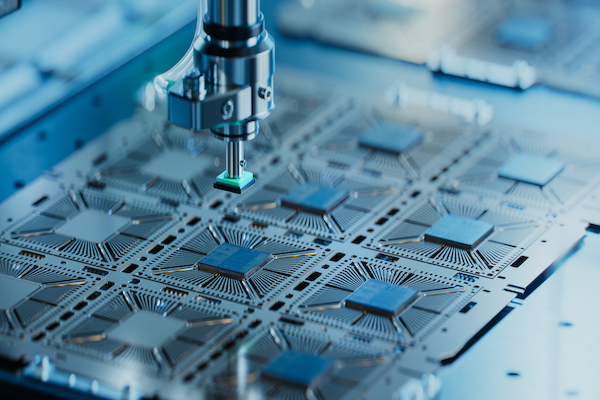
5. China Blockades Taiwan: If the US truly retreats from its superpower role, allowing Russia to pin down Ukraine and nettle NATO, and Iran to rattle its Arab rivals and Israel, then China may just decide to test how far it can go with the “Taiwan question”. And 2027 is a good time for that, with Beijing keen to shape the outcome of Taiwan’s presidential election in January 2028. The ruling Democratic Progressive Party will be seeking an unprecedented fourth consecutive term, and the China-friendly Kuomintang is a strong contender. Beijing maintains that Taiwan is part of China and that the issue is one of reunification, not war. China could impose a naval blockade of Taiwan—or a softer coast-guard “quarantine”—cutting the island off from global trade. But that would be enormously costly, because Taiwan makes 90% of the world's most advanced chips, and any disruption in supply would cripple the global economy. So any arrangement that keeps the chips flowing while allowing China to tighten its grip on Taiwan could well be condoned by the US and, consequently, rest of the world.
There’s a famous, but almost certainly apocryphal, Chinese curse: “May you live in interesting times.” On that count, it seems, 2027 has no plans to disappoint any of us.
More From BasisPoint