.png)

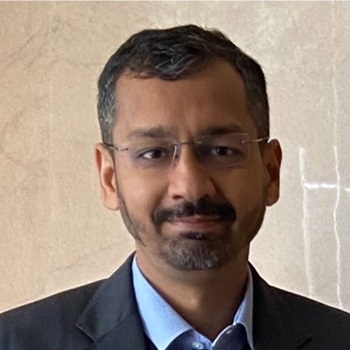
Dr. Srinath Sridharan is a Corporate Advisor & Independent Director on Corporate Boards. He is the author of ‘Family and Dhanda’.
September 18, 2026 at 6:07 AM IST
India has become a country that knows how to convene. From technology and fintech to mobility, manufacturing, defence, energy and geopolitics, the calendar is crowded with summits, conclaves, trade shows and forums, many ambitious enough to describe themselves as global. A country seeking a larger role needs platforms through which its ideas, businesses and institutions can meet the world.
But as this conference economy expands, a question is worth asking: when does scale begin to overwhelm the purpose of the gathering?
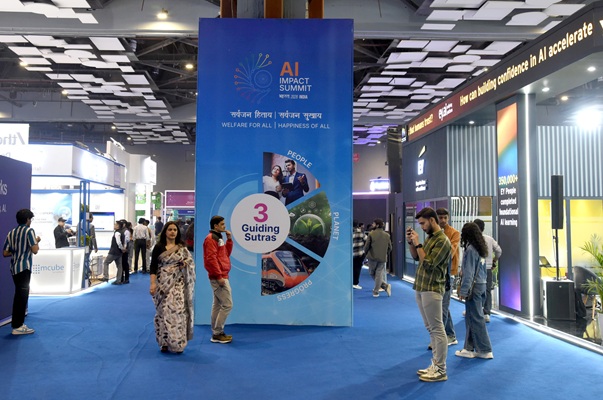
A few months ago, the concerns around the organisation of the Delhi AI summit offer one starting point, but the issue is much wider than any one event. The same tension is visible across large business conferences and trade shows. More delegates, exhibitors, panels and stages create energy and reach. They can also create congestion, fragmented attention and a growing distance between the impressive scale of an event and the value experienced by the person who has travelled to attend it. Indeed, for many of us, what remains most vividly associated with that summit is the Chinese robot dog presented as an in-house university creation, a striking reminder of how easily spectacle can overshadow the substance of an event.
For a startup founder, this distinction is very real. The founder needs access to potential customers, investors, partners and decision-makers. There is also a powerful element of FOMO: when everyone in a sector appears to be there, not being present can itself feel like a missed opportunity, which partly explains the hype and, sometimes, the disappointment that follows. The irony is that many of the most influential people at these gatherings have increasingly curated calendars, tightly managed itineraries and very little time to spare. Ten thousand people passing a booth can therefore be less useful than ten carefully arranged meetings with people who can buy, invest, distribute or open doors. If navigating the venue, finding the right people or sitting through a crowded programme consumes the time meant for those conversations, the additional footfall has begun to impose a cost.
The multiplication of panels presents a similar dilemma. There is considerable value in bringing informed people together to discuss AI, technology, financial inclusion, industrial policy or the future of business. But a participant can spend an entire day moving between stages, listening to distinguished speakers and responding to messages, only to discover that there was little time left for the conversation that might have mattered most. The most useful exchange may happen over coffee or in a corridor, precisely because nobody scheduled it.
There is also a revealing development within this conference economy itself: the rise of AI as the universal conference magnet. At recent tech startup gatherings, AI has become one of the defining themes around which sessions, roundtables and product conversations are organised. The enthusiasm is justified. AI is transforming financial services and deserves serious attention. But the sudden emergence of a large tribe of self-proclaimed “AI experts” deserves rather more scrutiny. What, precisely, qualifies someone as an AI expert today? Having read a few consulting reports, experimented with ChatGPT, attended a conference or added AI to a professional bio hardly constitutes expertise. There is a danger that AI is becoming this year’s fashionable conference vocabulary, much as JAM Trinity, ESG, DEI and resilience became the obligatory themes of previous cycles.
Conferences increasingly serve several purposes at once: business development, thought leadership, branding, media visibility, networking, policy signalling and reputation building. All are legitimate. The difficulty begins when the easiest number to publicise, attendance, quietly becomes the preferred measure of success. A record registration figure tells us that people came. It tells us rather less about what happened because they came.
There is an important distinction between the different kinds of gatherings now filling India’s calendar. A trade show exists primarily to enable buyers and sellers to discover one another. An industry conference is meant to exchange expertise, debate the direction of a sector and build relationships. A technology summit can serve a broader ecosystem of founders, investors, customers, researchers and policymakers. A business conclave often has a mixture of commercial, intellectual and networking objectives. A political or geopolitical summit has yet another purpose: convening itself can be an act of diplomacy, while visibility can be a deliberate instrument of statecraft. Treating all of these events as though they should produce the same kind of outcome misses why they exist in the first place.
Political and geopolitical gatherings operate by a different logic, because visibility itself has strategic value. Governments convene leaders to signal intent, demonstrate relationships, shape narratives and establish presence. Who attends, who meets whom, which countries participate and what India chooses to put on the stage are messages to audiences far beyond the venue.
India’s major diplomatic platforms therefore serve a purpose that cannot be captured by counting contracts signed or partnerships announced. The presence of foreign leaders, ministers, business delegations and international institutions creates a visible narrative about India’s place in the world. It tells other capitals that India is prepared to host consequential conversations and wants to be seen doing so.
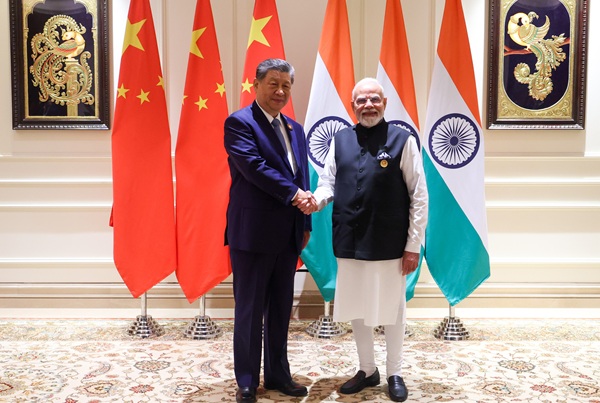
Indeed, diplomatic officials from other countries who live in Indian cities already know a great deal about how New Delhi thinks. They interact with our ministries, regulators, businesses and strategic institutions throughout the year. They do not need a summit to discover India’s position. Their capitals, political leaderships, investors, companies and media audiences, however, are watching. A public gathering can turn years of dispersed diplomatic engagement into a single, visible narrative. In geopolitics, the photograph, the guest list and the presence of leaders can be part of the substance.
This is why spectacle should not automatically be dismissed. India should want large international gatherings, particularly where geopolitical positioning or national visibility is part of the objective. Large platforms create networks, establish presence and give India an opportunity to shape the conversation rather than merely participate in it.
Commercial and professional conferences have a different test. A trade show should make discovery easier. A technology gathering should connect users, innovators, capital and talent. A business summit should create access that participants could not easily obtain elsewhere. An industry forum should produce relationships and ideas that survive beyond the closing ceremony. None of this requires an event to be small. It requires the design of the event to remain faithful to its purpose.
India’s conference ecosystem has perhaps reached the point where it needs to become more discerning about this. We have learnt how to attract large numbers. We now need to become equally sophisticated about curation, access and follow-through. Organisers are taking stewardship of something more valuable than venue capacity: the time and attention of people who have chosen to be there.
The real audit begins after the banners come down. Did a startup acquire a customer? Did an investor discover a business? Did a partnership begin? Did a policymaker hear something that altered a view? Did a relationship deepen enough to produce something months later? These outcomes are harder to count than footfall, but they are much closer to why serious participants attend.
India should continue to think big about convening. The ambition is welcome and necessary. But the larger the gathering becomes, the greater the responsibility to ensure that the machinery of the event does not become its principal achievement.
The finest conference is not necessarily the one that creates the biggest crowd or loudest buzz. It is the one in which scale creates enough possibility for the right conversations to happen, and enough space for those conversations to matter.
More From BasisPoint