.png)


Groupthink is the House View of BasisPoint’s in-house columnists.
August 25, 2026 at 7:36 AM IST
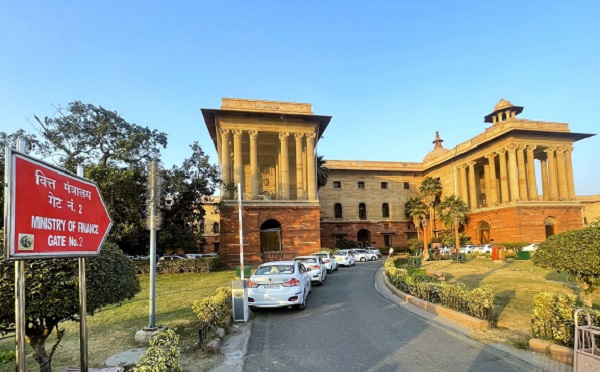
The Ministry of Finance’s August 24 release on the Reserve Bank of India’s swap facility reads less like an explanation of a policy instrument than a victory lap. It celebrates an “unprecedented surge” in forex inflows, calls the mobilisation the “largest and fastest” undertaken by India, claims “maximum cost-efficiency” and concludes that the economy is “moving from strength to strength”.
That is too much weight for a swap window to bear. A successful purchase of insurance is being advertised as an economic dividend.
The RBI’s facility has undoubtedly delivered what it was designed to do. Banks and companies raised $73 billion in eleven weeks, including $65.4 billion through FCNR(B) deposits. The inflows strengthened immediate foreign-currency liquidity and gave the RBI a larger buffer against an uncertain global environment.
But this is not the same as earning $73 billion through exports, remittances or foreign direct investment. Nor is it the government acquiring permanent capital. FCNR(B) deposits are foreign-currency liabilities of banks. External commercial borrowings and overseas foreign-currency borrowings are debt raised by companies and financial institutions. Their attractiveness was enhanced by a concessional RBI swap.
The RBI acquires spot dollars and supplies rupees, while assuming a corresponding obligation in its forward book. Gross reserves rise, but future claims on those dollars rise as well. India has purchased protection; it has not created foreign assets without cost or liability.
The release says the response reflects the diaspora’s “confidence” and its “economic and emotional stake” in India’s growth story. Confidence may be part of the explanation. Pricing is another, and probably more immediate, one. Depositors and borrowers respond to yields, hedging costs and the terms offered by the central bank. Flows induced by favourable economics cannot be presented simply as a referendum on the economy.
The assertion that India has fortified its buffers with “maximum cost-efficiency” is more difficult still. That conclusion requires an accounting of the concession embedded in the swap, the RBI’s carrying cost, the maturity profile of the liabilities and the eventual cost of unwinding the position. Without that disclosure, “maximum cost-efficiency” is a promotional claim, not an economic assessment.
None of this means the facility was a mistake. In a volatile external environment, buying a reserve cushion can be prudent even when it is costly. The relevant question is whether the cost of the buffer is lower than the potential cost of currency disorder, depleted reserves or a sudden loss of market confidence. Closing the FCNR(B) window early once the desired buffer had been secured was also sensible.
The counterproductive part is the triumphalism. Markets distinguish between reserves accumulated through durable external earnings and those built through swaps and borrowing. Overselling the headline number invites closer scrutiny of net reserves, forward obligations, refinancing risks and the exit strategy. It may also suggest that the authorities are trying to convert a defensive necessity into evidence of economic vigour.
The honest case is strong enough. India faced elevated external risk, paid to acquire additional insurance and succeeded in doing so quickly. That is prudent balance-sheet management. Calling it a “spectacular response” and proof that the economy is moving from strength to strength asks a costly buffer to demonstrate something it cannot.
More From BasisPoint