.png)


Shilpashree Venkatesh is a research professional with expertise in macroeconomics, real estate, and infrastructure, focused on growth trends.
August 25, 2026 at 4:21 AM IST
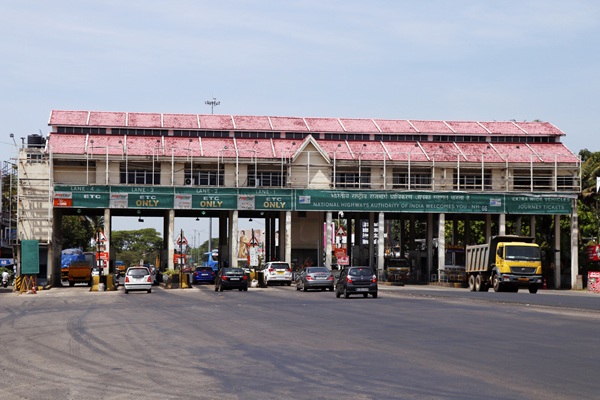
India is once again turning to private capital to finance its highways, but this time by changing its approach to risk allocation. The Ministry of Road Transport and Highways has substantially revised the Model Concession Agreement for build-operate-transfer toll projects by introducing revenue support, traffic-risk sharing, an elastic concession period and capacity-linked buybacks to attract institutional participation, with the intention of reducing dependence on public financing for highway development and making private investment viable.
The significance of the new MCA lies in its attempt to address the challenges facing private participation in India’s road toll sector. The policy approach is shifting from risk transfer towards risk sharing, with the primary objective of attracting private capital without recreating the problems that caused the original BOT model to fail.
Risk Rebalanced
Developers were therefore exposed to risks beyond traffic that they could not control. The allocation of risk had become disconnected from the ability to manage it. BOT awards consequently declined sharply and, by 2019, had effectively disappeared from the highway landscape.
The government then moved towards EPC and the Hybrid Annuity Model, or HAM.
HAM restored private participation by providing substantial government funding during construction and annuity payments thereafter, while largely insulating the concessionaire from traffic risk. But the solution created another imbalance. As the highway network expanded, the public sector assumed a growing share of infrastructure financing. NHAI’s 2026–27 allocation is ₹1.87 trillion, around 60% of the Ministry of Road Transport and Highways’ budget. BOT 2.0 therefore seeks to mobilise private capital without repeating those mistakes.
The attractiveness of the revised MCA lies in its changed treatment of traffic risk. Under the old model, a traffic shortfall could immediately translate into lower toll revenues. However, BOT 2.0 provides revenue support if traffic falls more than 10% below the target during the initial milestone period, subject to prescribed limits. If weak traffic persists, the concession period can be extended, allowing the developer more time to recover its investment. If traffic significantly exceeds expectations, the concession can instead be shortened.
This makes the concession period an economic adjustment mechanism rather than a rigid contractual clock. Long-term traffic forecasting is inherently uncertain. A project where demand takes longer to build should not automatically become distressed simply because its original concession period continues to elapse. Equally, a project that substantially outperforms should not necessarily deliver excess returns for the entire original term.
The distinction matters because BOT 2.0 should not eliminate traffic risk. If the government absorbs virtually all demand uncertainty, the model will simply become HAM with toll revenues layered onto it.
The capacity-linked buyback is another potentially transformative provision. Once a project reaches its prescribed design capacity under specified conditions, the government can buy back the asset. Institutional investors seek long-duration assets but also need to recycle capital. A conventional BOT can lock capital into a road for decades. A defined buyback creates a potential exit once the asset matures.
This changes the investment cycle from build, operate and hold to invest, build, stabilise, exit and reinvest. It also links greenfield BOT projects with India’s wider road monetisation ecosystem, including toll-operate-transfer and InvITs. If BOT generates a larger stock of mature operating roads, these assets could eventually feed secondary transactions and other monetisation structures, allowing capital to move into new projects.
The opening of BOT bidding to sovereign wealth funds, pension funds, infrastructure funds and private equity investors could reinforce this transition. Financial investors can participate on the basis of their financial strength while partnering with technical and EPC firms for execution.
Roads can fit institutional portfolios for several reasons. Toll assets can provide long-duration cash flows and have relatively low technological obsolescence. However, risk-adjusted returns are crucial to attracting capital.
That makes construction support critical. Government support of up to 40% of the project cost, linked to physical progress, reduces the private capital required during the construction phase. BOT 2.0 consequently sits between the existing models. EPC leaves most project and traffic risk with the government. HAM provides significant construction support and largely removes traffic risk from the private sector. The revised BOT model combines government support and protection against extreme outcomes with meaningful private exposure to financing, operations and demand.
The revised framework also recognises risks created by government decisions. A competing road can materially reduce traffic on an existing toll road, yet the concessionaire has no control over subsequent network development. The same principle applies to land acquisition and delays. If government-controlled processes prevent revenue generation, developers should not bear the full financing consequences.
Bankability Test
That is why bankability must be viewed as a package. A buyback mechanism cannot compensate for weak dispute resolution. Revenue support cannot rescue an unrealistic construction schedule. Traffic-risk sharing cannot make a project viable when land remains unavailable. Investors will price construction, financing, demand, regulatory and exit risks.
The 2026–27 pipeline provides the first market test. Of NHAI’s 54 identified projects, only seven are planned under BOT, compared with 21 under HAM and 26 under EPC. Projects must attract credible investors and achieve financial closure at sustainable costs.
The larger lesson from India’s BOT experience is that PPPs should not be designed around maximum risk transfer. They should allocate each risk to the party best able to manage it. BOT 1.0 placed too much demand risk on developers. HAM swung the pendulum towards the government. BOT 2.0 is therefore an attempt to restore balance while preserving private-sector incentives. The success of this mechanism is crucial because India needs a highway financing ecosystem in which institutional capital can enter at the greenfield stage, mature assets can be monetised and released capital can be redeployed into new assets. For this, the government must make projects bankable, not merely profitable. Excessive revenue protection could shift private-sector losses back to taxpayers and recreate the fiscal pressures that greater private participation is meant to ease.
India has demonstrated its capacity to build highways at scale. Its next challenge is to build a financing architecture capable of sustaining that expansion. BOT 2.0 could become an important part of that architecture, but only if India has absorbed the central lesson of BOT 1.0: private capital can absorb commercial risk, but it cannot efficiently absorb risks that it neither controls nor can reasonably price.
Views and opinions are personal.
More From BasisPoint