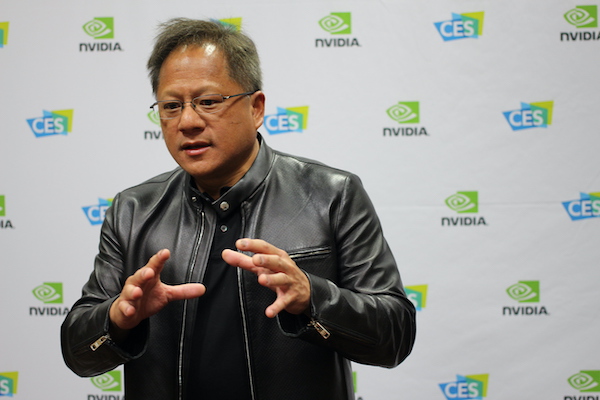
The world has spent the past few years celebrating the extraordinary intelligence of machines. Yet the people building this technological order remain entirely human. Jensen Huang, Nvidia’s celebrated founder and chief executive, has admitted to being unfaithful to his wife. The admission has attracted attention because of his stature and its emergence alongside allegations that he may have been targeted by a Chinese intelligence operation. Those allegations remain under investigation.
There is an expression in Tamil social vocabulary that offers an uncomfortable cultural lens: chinna veedu. Literally, a small house, the phrase has long been used for a second domestic arrangement maintained by a married man, often involving a mistress. The periya veedu, or big house, is the principal family household. The distinction reflects a social history in which wealth, influence and status have sometimes allowed powerful men to maintain parallel personal lives, often with greater accommodation than society extends to others. The practice was never universal or uncontested, but the vocabulary exposes a persistent double standard.
Huang’s admission reminds us that human intelligence, or HI, remains very much alive in the age of artificial intelligence. Ambition, desire, vanity, secrecy and fallibility inhabit even those celebrated for building the machines of tomorrow.
The more consequential questions, however, concern power and accountability. Can an Indian board confront a promoter who is compromised, or even perceived to be compromised? And when a company operates in a frontier technology sector subject to sovereign scrutiny, how does its board distinguish genuine security risks from geopolitical pressure?
The Founder Must Remain Answerable
Nvidia’s response provides an important case study. The company announced that a committee of independent directors, assisted by external counsel, would investigate reports that Huang had been targeted by a foreign intelligence effort. Nvidia has said it has no reason to believe that national security or company secrets were compromised. This is an inquiry into potential corporate and national-security exposure, not an investigation into his marital conduct.
Huang founded Nvidia, led its transformation and became the public face of the global AI revolution. His commercial standing and personal authority are immense. Yet the board has initiated a process through which independent directors will examine a matter involving their own founder and chief executive. Confidence in a leader cannot mean exemption from scrutiny.
Nvidia’s governance arrangements provide the institutional setting for this response. Its 2026 proxy statement identifies every director other than Huang as independent. The company has an independent Lead Director, and independent directors meet separately at scheduled board meetings. These arrangements do not guarantee courage, but they provide space for oversight that does not depend entirely on the chief executive’s consent. The real test is whether directors can act when the person under scrutiny is also the individual most responsible for the company’s success.
India Must Move Beyond Independence on Paper
India has a substantial statutory framework for independent directors, audit committees and board oversight.
Yet the presence of independent directors does not necessarily establish the independence of a board. In promoter-led companies, the person who may need to be questioned can also be the controlling shareholder, influence board appointments and exercise considerable authority over directors’ continued tenure.
The independence of a board is determined by the distribution of power within the company and the conduct of those who exercise it. Promoters can influence access to information, the tenor of discussions and the prospects of reappointment. Independent directors may possess the legal authority to challenge management, yet find that exercising it carries considerable professional and personal consequences. Dissent then becomes an individual act of courage rather than an accepted feature of board functioning. A board cannot provide meaningful oversight if its members depend on the very authority they are expected to question.
The test becomes sharper when a promoter is actually compromised, or when credible circumstances create a perception of compromise. Can the board commission an independent investigation, restrict access to sensitive information, manage conflicts and protect the company’s operations without prejudging the individual? Can it act even if doing so threatens the company’s valuation, business relationships, access to networks or, in an extreme case, its continued existence? These are fundamental questions of institutional survival. Independence must be supported by collective deliberation, unrestricted access to relevant information, independent advice and protection for directors who dissent.
American boards are not immune to founder dominance. Concentrated voting rights and charismatic founders can constrain shareholder influence there too. Nor does Nvidia’s announcement establish that its investigation will necessarily be fearless or conclusive. The lesson is that formal independence is only a starting point. The capacity to withstand pressure, including pressure from the person who created the enterprise, is the real measure.
Sovereign Scrutiny Changes the Boardroom Test
The challenge becomes more complex in frontier technology sectors. Artificial intelligence, semiconductors, advanced computing and critical digital infrastructure are increasingly treated as matters of national capability. Governments use export controls, investment screening, procurement restrictions and intelligence assessments to protect strategic interests. A commercial relationship that appears routine to a company may attract sovereign scrutiny because of the technology, data or computing capacity involved.
Boards must distinguish several questions that can easily become entangled. Was a law or export restriction breached? Was confidential information exposed? Did an executive’s personal relationship create a conflict or security vulnerability? Is the concern supported by evidence, or driven by an unsubstantiated allegation? Does government intervention address a legitimate security risk, or also serve a wider strategic or commercial objective? A board cannot assume that every sovereign concern is conclusive, nor dismiss national-security exposure as an external political matter.
Its responsibility is to establish facts, preserve evidence, commission independent scrutiny, protect sensitive assets and cooperate with lawful authorities while safeguarding due process. It must neither shield a powerful founder nor abandon that individual to a geopolitical narrative. This demands directors who understand technology, regulation, security and the commercial consequences of their decisions.
There is a final irony in the Huang episode. Nvidia is at the centre of a technological transformation intended to extend human capability. Yet its present challenge requires judgement that no machine can supply. A founder’s vision may create an enterprise, but cannot become a substitute for governance. The more consequential the company, the greater the need for an institution capable of questioning its leadership.
Artificial intelligence may eventually outperform people across a remarkable range of tasks. It cannot create the institutional courage required to question a founder, the restraint that power demands or the integrity that makes authority accountable. Those remain human responsibilities. The larger question is contemporary: when power becomes concentrated in an individual, who has the independence and courage to hold that individual to account?
.png)