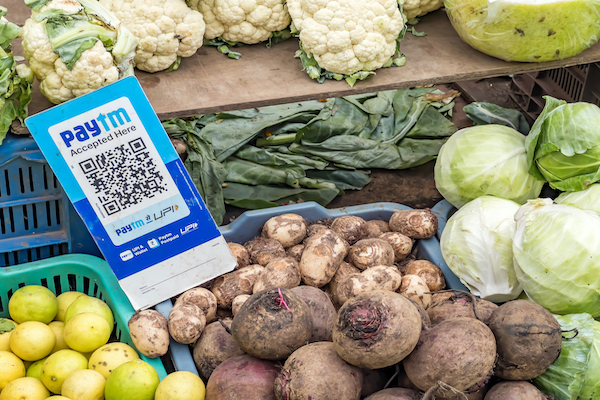
UPI is a unique financial engineering marvel. It has democratised financial inclusion on an unprecedented scale, bringing billions of unbanked users into the formal, cashless digital economy and giving street vendors, daily commuters, small merchants and petty traders a simple way to conduct everyday transactions. UPI payments are completed in seconds: scan, tap, beep, done.
Yet that simplicity rests on a complex digital public infrastructure spanning banks, payment processing, authentication, settlement, fraud detection, cybersecurity, customer support and technology operating at enormous scale. As UPI introduces selective nominal charges on merchant payments, India faces a question posed by the system’s success: how should a digital public infrastructure that feels free at the point of use be financed when it has become essential to everyday economic activity?
Beyond Free
In January 2020, the introduction of zero MDR was intended to boost digital payments. By eliminating transaction costs, consumers and merchants were encouraged to move away from cash, strengthening UPI’s network effects, particularly among small businesses.
Free to users never meant costless to the system. Every transaction still requires processing, authentication, fraud monitoring, data protection, dispute resolution and technology upgrades. In August 2026 alone, UPI processed 24.5 billion transactions worth ₹29.8 trillion across 752 live banks. Such scale demands sustained investment in capacity, resilience and security.
For years, government incentives supported low-value UPI transactions, particularly for small merchants. The Cabinet approved a ₹15 billion incentive scheme for 2024–25, along with earlier support. This approach served its purpose during UPI’s adoption phase. But as UPI becomes one of the world’s largest payment networks, can its economics continue to rely mainly on fiscal support?
The new framework aims to create a recurring commercial revenue stream within the ecosystem rather than relying solely on budgetary support. MDR is not government revenue; it is intended to remunerate payment-system participants such as banks, payment service providers and UPI application providers.
The number 0.4% has attracted attention, but what matters is what the charge is designed to achieve. UPI accommodates millions of low-value, high-frequency retail payments alongside larger commercial transactions, while person-to-person payments remain outside the MDR framework.
The distinction between volume and value is striking. In 2025–26, P2M payments made up 63% of all UPI transactions but only 29% of their value. Only 4% of P2M transactions exceeded ₹2,000, yet they accounted for two-thirds of P2M value. This means the segment potentially exposed to the standard MDR represents only 2.5% of all UPI transactions by volume but 19–20% of total UPI value.
At 2025–26 volumes of 241.6 billion transactions worth ₹314 trillion, this translates to 6.09 billion transactions carrying about ₹61 trillion in value. What appears small by transaction count is therefore substantial when measured by the value flowing through the merchant side of UPI.
Applying the 0.4% rate to ₹61 trillion suggests an estimated gross MDR pool of ₹240 billion. This is an upper-bound calculation, not a revenue forecast. The ₹300 cap for transactions of ₹75,000 and above, the ₹5 flat MDR for specified essential and thin-margin sectors, the 0.02% rate for capital-market transactions and other exclusions mean actual collections would be lower.
Even 0.4% is modest compared with conventional card payments, where merchant discount rates can be higher. The economic question is therefore less about whether digital payments are expensive and more about who should share the cost of running a payment network that continues to grow.
The framework aims to preserve UPI’s high-frequency, low-value usage while recovering costs from higher-value commercial activity. But value alone does not determine incidence. The nature of the merchant matters too: P2P payments remain free, small merchants are protected, essential sectors face a flat ₹5 charge, and large transactions are capped at ₹300.
Protecting small merchants is crucial. UPI has helped them reduce cash dependence and improve payment tracking and collection. However, a receipt threshold does not accurately measure a merchant’s ability to absorb transaction costs. A business can have high digital turnover and still operate on thin margins. How MDR affects such merchants may matter more than the 0.4% headline figure.
For consumers, the most important thing is what does not change. Person-to-person UPI payments remain free, and MDR on eligible merchant transactions does not appear as a charge on customers’ bills. Banks must ensure merchants do not pass on the cost, while UPI apps cannot impose separate platform or hidden fees.
That protection matters because UPI’s success rests on its simplicity, not just its technology. When consumers see a separate ‘UPI charge’ at checkout, the payment can begin to feel less like a frictionless public utility and more like a priced service.
There is another layer. MDR is a charge for payment-processing services and currently attracts 18% GST. Businesses that can claim input tax credit can largely offset this as a business cost. Others will pay more to accept digital payments. The Government has said it may review the GST treatment of MDR. The question is therefore not only who pays MDR, but whether the tax treatment of the underlying service is consistent with keeping digital payments affordable and encouraging wider adoption.
Adoption to Sustainability
International experience offers no single template, but it shows that affordability and transaction-based pricing can coexist. The design of charges matters: modest fees do not necessarily slow digital payments’ overall expansion, although they can influence payment choices at the margin.
Thailand’s PromptPay offers free transfers within limits, with higher-value transactions incurring small fees. Most banks have since waived fees for digital transactions. Brazil’s Pix allows financial institutions to charge legal entities for specified transactions while protecting individuals in certain circumstances. Despite this, Pix has rapidly expanded, showing that selective pricing does not prevent widespread digital adoption. Europe has taken a different approach: the Instant Payments Regulation limits charges for instant euro transfers to those for regular transfers.
This does not mean India should copy these systems. The broader lesson is that large-scale digital payment networks can combine affordable access with sustainable economics, but pricing still influences behaviour at the margin.
UPI is no longer merely a substitute for cash. It is becoming a key part of a digital, services-driven economy. Financial services, IT, professional services, e-commerce, fintech and other digitally enabled businesses rely on continuous, secure payments. India’s digitally delivered services, cross-border digital activity and UPI’s international reach are growing alongside one another.
The economics of UPI therefore matters more than the transaction price alone. A sustainable revenue stream can support investment in processing capacity, cybersecurity, fraud prevention, resilience and technological upgrades. It can also create competition: large platforms with other business lines can subsidise a zero-revenue payment product, while smaller providers must fund payment operations directly. A regulated, transaction-linked revenue stream could strengthen incentives for investment across the ecosystem, although that outcome will need to be established in practice.
There is, however, a larger policy question. UPI has become a significant channel for moving commercial transactions from cash to traceable digital payments, supporting formalisation. The new MDR framework safeguards consumers, P2P payments and most merchant transactions. But charging for some higher-value P2M transactions changes the relative cost of digital and cash payments.
Even with the ₹300 cap for transactions of ₹75,000 and above, policymakers should monitor whether this creates any incentive to retain cash as a viable alternative. The concern is not that MDR will automatically push transactions into the informal economy. It is that pricing digital payments, even at the margin, could weaken the behavioural shift towards formal, traceable commercial activity, particularly for high-value transactions.
That is important because the objective is not simply to build a financially sustainable payment network. It is also to sustain the structural shift from cash and unaccounted transactions towards a formal digital economy.
The policy imperative, therefore, is not to monetise UPI, but to preserve what made it transformative: low-cost, frictionless access, while developing an economic model capable of supporting its infrastructure.
The true test of the new MDR is not whether every UPI transaction remains free. It is whether India can maintain free small payments, protect small merchants and insulate consumers while ensuring the network’s security, resilience and innovation grow with commercial use, without weakening the transition from cash to a formal, traceable economy.
UPI’s success lay in making digital payments nearly invisible. Its next phase is to make that invisibility financially sustainable without making digitalisation less attractive.
*Views are personal
.png)