.png)

Gurumurthy, ex-central banker and a Wharton alum, managed the rupee and forex reserves, government debt and played a key role in drafting India's Financial Stability Reports.
November 16, 2026 at 4:13 AM IST
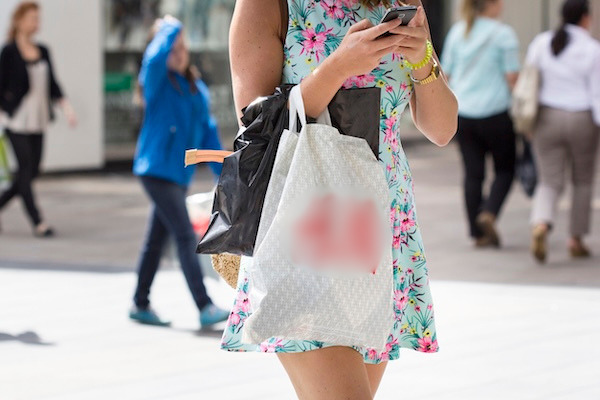
A customer buys shoes, a dress or a bottle of liquor. At the billing counter, the retailer offers a carry bag bearing its own name and logo, and adds its price to the bill. The customer pays not only for the goods but also for the privilege of carrying the seller’s advertisement through the streets. A convenience has become a surcharge; a marketing expense has been passed on to the consumer.
The retailer contended that customers were informed of the charge and notices were displayed. The commission rejected this defence. Invoking caveat venditor - let the seller beware - it observed that a liquor seller should anticipate that customers buying bottles would need a bag. It also took note of the promotional benefit the retailer derived from its branded packaging.
A recent order of the District Consumer Disputes Redressal Commission, Bengaluru (Urban), brings the issue into focus. A customer who bought liquor worth ₹2,170 from a liquor shop was charged ₹20 for a bag carrying the store’s name, logo and promotional material. He objected, but paid because he needed to carry fragile bottles safely. The commission held the retailer guilty of unfair trade practice and deficiency in service, ordering a refund of ₹20, ₹5,000 compensation and ₹3,000 towards litigation costs.
The retailer argued that customers were informed of the charge and notices were displayed. The commission rejected this defence: a liquor seller should anticipate that customers buying bottles need a bag, especially when it carries the shop’s advertisement.
This is not an isolated intervention. In November 2024, the National Consumer Disputes Redressal Commission (NCDRC), in Bata India Ltd v Dinesh Parshad Raturi and a connected matter, distinguished an optional plain carry bag from a branded promotional one. A retailer could charge for a genuinely optional plain bag, provided the customer was informed before choosing to shop and was free to refuse it. But a bag carrying the retailer’s name, logo, slogan or advertisement could not be sold for a price; it had to be supplied free. Customers also had to be allowed to bring their own empty bags.
The legal foundation lies in the Consumer Protection Act, 2019. Section 2(47) defines unfair trade practice, while section 2(11) defines deficiency in service. Section 2(9) recognises the consumer's right to redress against unfair trade practices. Section 39 empowers consumer commissions to order appropriate relief, including discontinuance of unfair practices. The NCDRC's operative directions were addressed to Bata in the cases before it, rather than being a blanket order against every retailer. Its reasoning, however, provides a significant basis for similar consumer challenges.
Why, then, do shops continue?
First, enforcement is largely complaint-driven. A customer must preserve the bill, challenge the retailer and, if necessary, approach a consumer commission. Few will spend time litigating over ₹20, however sound the principle. The cost and effort of pursuing a grievance is often greater than the amount in dispute.
Second, the economics favour the retailer. A small charge collected across hundreds of daily transactions adds up. Individually negligible, the charge becomes a revenue stream while the retailer retains the publicity. The consumer bears the cost; the business captures both revenue and advertising value.
Third, retailers exploit the appearance of choice. They call the bag optional or point to a notice near the billing counter. But a choice offered after goods have been selected is hardly informed choice. Nor does printing a price on a board turn a branded advertisement into a neutral commodity. The NCDRC specifically stressed prominent prior disclosure and the right to refuse.
Finally, decisions do not enforce themselves. The NCDRC's directions in the Bata cases were not a nationwide inspection order against every shop. Other retailers may calculate that the risk of an individual complaint is low. The liquor shop case illustrates the gap: a consumer had to litigate before a commission intervened. The Central Consumer Protection Authority has powers to investigate unfair trade practices and order their discontinuance. Under section 18, it can also issue guidelines to prevent unfair trade practices. Without visible checks and credible consequences, however, an adverse order risks becoming merely a cost of doing business.
There is a legitimate case for charging for disposable bags to reduce waste. England requires retailers to charge a nominal sum for specified single-use plastic carrier bags; Singapore requires larger supermarkets to charge similarly for disposable bags of all materials while also charging an amount to encourage recycling of specific plastic and metal cans/bottles (the amount reimbursed when the specific waste is returned). These are transparent environmental measures, not licences to charge customers for carrying a shop’s branding.
India should make the distinction equally clear. The Central Consumer Protection Authority and state authorities should issue explicit guidance: a genuinely optional, unbranded bag may be sold at a price disclosed before purchase; a bag bearing the seller’s own advertising should not be charged to the customer. Policies should be displayed at entrances; customers must be allowed to bring empty bags; repeat violations should invite action and with exemplary penalties.
The argument is not that every carry bag must be free. It is that businesses should not charge consumers for packaging that doubles as their advertisement. A retailer would not normally ask shoppers to reimburse the cost of its billboard. Why should a walking billboard be any different?
A customer enters a shop to buy goods, not to become its advertising agency, and certainly not to pay for the privilege.
More From BasisPoint