.png)


Batabyal is a Distinguished Professor of economics and the Head of the Sustainability Department at the Rochester Institute of Technology, NY. His research interests span environmental, trade, and development economics.
November 21, 2026 at 4:52 AM IST
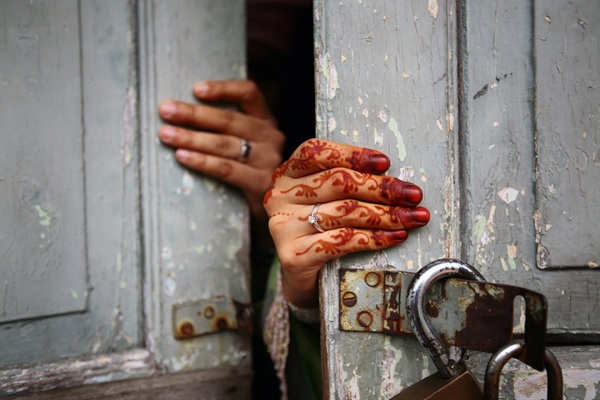
Dating and arranged marriages may seem to belong to different worlds. Dating is usually understood as an individual search for a partner; arranged marriage, as a family guided process with a longer-term horizon. Yet the distinction is less sharp than it appears. In contemporary India, where more than 90% of marriages are arranged, prospective spouses increasingly meet and assess one another before deciding whether to marry. The process has much in common with organised matchmaking and dating.
That overlap creates an opportunity for economists. Almost half of marriages worldwide are said to be arranged, yet economists have devoted comparatively little attention to decision-making in these settings. Research on dating can help fill that gap. A recent study offers a useful framework for understanding how people learn whether a potential partner is right for them. Its insights also point to questions that research on arranged marriages should address.
The study treats dating as learning under uncertainty. People assess potential partners using a characteristic the authors call "attractiveness." It can represent education, wealth, or other qualities, not just physical appearance. The model assumes that greater attractiveness makes genuine compatibility more likely. Dating takes time and involves costs: while two people are seeing one another, they cannot devote that same time to meeting other potential partners.
As a couple spends time together, it may receive a clear signal that they are compatible. If that signal arrives, they marry. If it does not, uncertainty persists. Without encouraging news, confidence may decline. Eventually, one person may end the relationship, sending both back to searching mode.
This framework yields observations that resonate beyond dating. First, people with stronger alternatives tend to be more selective. Someone who is highly sought after has less reason to remain in a relationship that does not seem promising. The same logic applies before an arranged marriage: a person or family with demanding expectations may give a matchmaker restrictive criteria, requiring a more selective search. Personal “pickiness” is also a feature of the matching process.
Second, similar people often pair up. In dating, similarity may make a match appealing or make compatibility easier to establish. In arranged marriages, families and matchmakers typically seek similarity with a longer horizon in mind. They may consider education, socioeconomic circumstances, cultural background, family expectations, and future plans—not simply whether two people enjoy one another’s company. Does similarity make a marriage successful, or merely predict compatibility?
Third, relationships across different backgrounds may be harder to establish when compatibility is difficult to assess. If people need more time or clearer signals to understand one another, they may abandon such relationships sooner. Fewer cross-background couples will then marry. This is relevant to arranged marriage because families and matchmakers often screen prospective partners in advance and may hesitate to introduce people they regard as insufficiently compatible. Screening can reinforce social separation even without explicit prejudice.
These insights are useful, but they are not a complete account of decision-making in arranged marriages. Those differences make the research agenda especially interesting. In the model, people learn about compatibility before committing to marriage. In many arranged marriage settings, substantial learning may take place after a match has been arranged and the couple has committed. What are the consequences of learning before, rather than after, commitment? Does commitment encourage people to invest in understanding one another, or make it harder to respond when incompatibilities emerge?
The idea of similarity also needs closer examination. People are not described by a single characteristic. Two prospective spouses may be similar in education but differ in career ambitions, attitudes toward children, or expectations about extended family. Similarity is a bundle of attributes, some more consequential than others. Research should examine how individuals, families, and matchmakers weigh these dimensions and whether their priorities coincide.
Arranged marriage decisions also involve more than the preferences of the two people who will marry. Parents and relatives can influence the search, the criteria used to evaluate candidates, and the decision to proceed. Their involvement may provide information and support but can also create pressure or privilege preferences that differ from those of the prospective spouses. Does including these broader preferences improve the quality and stability of a marriage, or can it undermine the couple’s own assessment of compatibility? Research can help clarify these competing possibilities.
The dating model itself leaves practical questions open. It assumes that a lack of positive news becomes increasingly discouraging. But real relationships may work differently: the absence of problems over time could build confidence. People receive partial or misleading signals, continue learning after marriage, and may meet several potential partners in ways the model does not capture. The study under discussion also simplifies differences between men and women and does not fully explore unequal opportunities, cohabitation, or divorce. These assumptions matter when applying the model to real communities.
Most importantly, the predictions need to be tested. Do people with more attractive alternatives really end relationships sooner? Do relationships across social or cultural backgrounds end more quickly because compatibility is harder to assess? How do these patterns differ between dating and arranged marriages in India? Answering requires evidence on introductions, decisions, family involvement, and couples’ experiences over time.
The lesson is not that arranged marriages should imitate dating, or that one system is inherently better. Both involve choices under uncertainty, limited time, and imperfect information. The economics of dating offers tools for understanding those choices. Adapting those tools to arranged marriages could illuminate how people and families identify compatible partners, how commitment changes the learning process, and when private decisions produce outcomes that are less beneficial for society. Given the continuing popularity of arranged marriages in India, these are not marginal questions. They belong at the center of a richer study of how people choose their life partners.
More From BasisPoint