.png)

Shubhada Rao is the founder of QuantEco Research. Vivek Kumar and Yuvika Singhal, veteran economists, spearhead the research initiatives at the firm.
June 23, 2026 at 4:00 AM IST
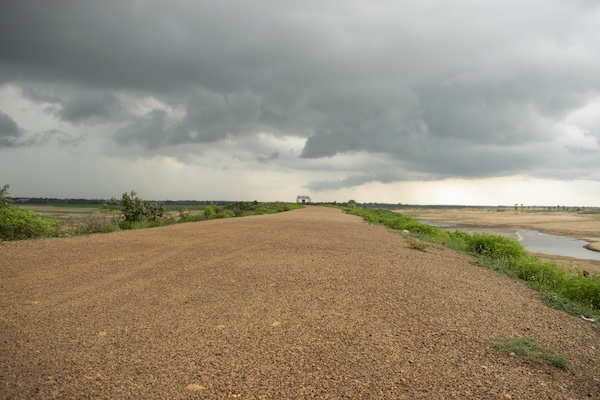
India’s southwest monsoon has begun on a worrying note. As of June 21, cumulative rainfall was 42% below normal, far worse than the 8% deficit predicted for June.
An early deficit, however, does not determine the outcome for the entire season. In 2019, cumulative rainfall was 43% below normal as of June 21, but a late revival helped the season end with a 10% surplus. In 2023, rainfall was 42% below normal as of June 17, before recovering sufficiently for the season to close with a deficiency of 6%.
The lesson from these episodes is that the eventual performance of the monsoon depends less on its initial progress and more on the evolution of rainfall through the core monsoon months. The timing and intensity of El Niño will therefore be critical.
El Niño conditions have already emerged and are expected to strengthen during the season. A weak El Niño during May, June and July is expected to progress to moderate intensity during June, July and August, with the possibility of stronger conditions during July, August and September.
Against this backdrop, the forecast of a 10% rainfall deficiency in 2026 appears broadly consistent with historical experience. The risks, however, are tilted towards a weaker outcome.
Signs of stress are already visible as reservoir capacity stood at 27.7% as of June 18, down from 34.3% at the end of May and 31.8% a year earlier. This is the sharpest depletion in reserves between the end of May and the third week of June in the past six years.
Kharif sowing has also started slowly, and the total area sown as of June 12 was 3.9% lower than a year earlier. Pulses acreage was 43.2% lower, while cotton acreage was down 27.7%.
The macroeconomic significance of these developments lies not only in their effect on agricultural output. A deficient monsoon also presents a material risk to food inflation.
At first glance, the relationship between monsoon rainfall and food inflation appears weak. The two variables show only a mild negative correlation. But this average relationship conceals an important asymmetry.
In the years of deficient rainfall, every additional 1% shortfall is associated with an increase of roughly 25 basis points in food inflation. In years of above-normal rainfall, every additional 1% improvement reduces food inflation by only around 15 basis points.
In other words, the inflationary damage caused by deficient rainfall is materially greater than the disinflationary benefit delivered by surplus rainfall.
This asymmetry reflects the demand and supply dynamics of food commodities. Demand for most food items is relatively inelastic. Consumption therefore changes only marginally when prices rise.
When deficient rainfall curtails agricultural output, the resulting supply shortage is absorbed primarily through higher prices rather than lower consumption. Even a modest production loss can consequently produce a disproportionately large increase in food inflation.
The reverse does not operate with equal force. In a year of favourable rainfall, higher agricultural output does not generate a comparable increase in consumption. Surplus production is instead absorbed through inventories, government procurement, buffer stocks and exports. This limits the decline in prices arising from above-normal rainfall.
Perishable commodities such as vegetables are somewhat different because of their limited shelf life and storage capacity. Both shortages and surpluses can produce sharp price movements. Yet the transmission remains asymmetric.
Weather-related shortages are passed quickly into consumer prices. The benefits of bumper harvests are passed through only partially because storage losses, transportation costs, intermediary margins and distribution inefficiencies create an effective floor under retail prices.
India’s expanded irrigation coverage offers some protection against rainfall shocks. Irrigated area under foodgrains stood at 62.6% in 2023-24, compared with around 35% in 1990. But this aggregate improvement masks substantial differences across crops.
Around 95.5% of wheat acreage and 70% of rice acreage are irrigated. For pulses, the corresponding share is around 35%. It falls to 14% for tur. Only around 10% of soybean acreage is irrigated.
Irrigation coverage is also low for several coarse cereals. It stands at 24% for jowar, 19% for bajra and 42% for maize. Pulses, coarse cereals, oilseeds and cotton therefore remain particularly vulnerable to a deficient monsoon.
Geographical Exposure
Maharashtra, Rajasthan, Karnataka, Jharkhand and Chhattisgarh have among the lowest shares of irrigated area. Several of these states are also important producers of vulnerable crops such as jowar, bajra, maize, tur, soybean and cotton.
The consequences for agricultural growth could be significant. Historically, every 1% shortfall in monsoon rainfall has been associated with a sacrifice of around 40 basis points in crop GVA growth.
A rainfall deficiency of 10% could therefore push crop GVA into a contraction of around 1% in 2026-27. Growth in allied agricultural sectors could cushion some of the impact, allowing overall agricultural GVA growth to remain marginally positive at between 0% and 1%.
The impact of inflation could be more pronounced. A 10% rainfall shortfall could add at least 250 to 300 basis points to food inflation, other things remaining equal. This could translate into an incremental impact of around 100 basis points on headline CPI inflation.
Lower energy prices could provide a meaningful offset. Assuming crude oil averages between $80/barrel and $85/barrel, compared with the earlier assumption of $95, and rainfall is 10% deficient, CPI inflation is forecast at 5.1%.
The final monsoon tally may yet look better than its June beginning. But the economic verdict will rest not on the all-India rainfall number alone, but on when and where the rain falls, which crops it reaches and how quickly any shortfall enters food prices. With reservoirs depleted, sowing subdued and several major crops still heavily dependent on rainfall, this monsoon will ultimately be judged less by the season’s aggregate rainfall than by what it does to the price of food.
More From BasisPoint