.png)

THE TRAGEDY OF TATA
Tata’s founders return in a fictional Greek satire where independence needs permission, and every governance crisis generates recurring revenue for lawyers.
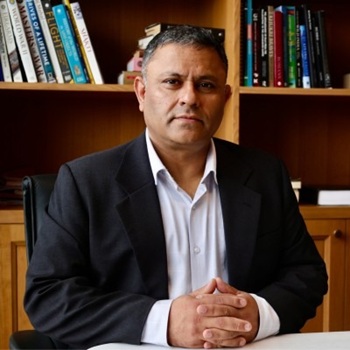
Ashutosh Tyagi is a Tata Administrative Service alumnus who held senior roles at Tata Industries and Tata Capital in investment management, strategy and private equity. He has been in the development sector for the last 8 years.
October 13, 2026 at 2:48 AM IST
In this fictional Greek play*, Tata’s founders and former custodians return to discover that building an institution was only the beginning; deciding who gets to speak for it is considerably more complicated.
Ownership, independence and loyalty compete for the floor, while Zeus handles compliance and the lawyers supply interpretations. Everyone is determined to protect the legacy, although agreement on what that requires remains elusive.
The ghosts have eternity on their side, but even they would like the meeting to end
*This is a fictional satire. Dialogue and situations are invented; the themes draw on publicly reported matters and governance debates around Tata Trusts and Tata Sons. Reported allegations, disclosures and competing positions are presented as such, not as established findings.
DRAMATIS PERSONAE
JAMSETJI TATA — Founder. Built an empire; now watches his descendants fight over the furniture.
SIR RATAN TATA — Philanthropist. Gave away a fortune, budgeted nothing for the legal fees.
SIR DORABJI TATA — Empire-builder. Believes every moral argument needs a balance sheet.
JRD TATA — Aviator. Allergic to the phrase “strategic realignment.”
RATAN TATA (GHOST) — Dreamer of impossible dreams, now haunting the minutes.
N. CHANDRASEKARAN — Chairman, Tata Sons. Professionally tolerant of meetings.
NOEL TATA — Chairman, Tata Trusts. Guardian of the legacy and, ideally, the quorum.
VENU SRINIVASAN — A fictionalised nominee who votes as though he has read the agenda. Scandalous.
THE BOARD — Unanimous. Photogenic.
ZEUS, AS THE RBI — Thunderbolts, compliance-grade.
CYRUS MISTRY’S GHOST — Succession’s recurring guest star.
THE EMPLOYEES — Hit quarterly targets while the gods debate punctuation.
THE MEDIA — Turns any disagreement into a “CLASH.”
THE LAWYERS — Seven interpretations per sentence, invoiced separately.
THE FATES — Auditors of timing and quorum.
PROLOGUE: THE GODS GATHER
JAMSETJI: I built an empire from steel, science and sweat. My heirs are arguing over who gets the car. Wonderful.
SIR RATAN: I gave my fortune to the public good. Nobody mentioned the footnotes.
SIR DORABJI: Where is the balance sheet?
JRD: In my day we built institutions. Today we build committees to decide who sits on them.
MESSENGER: My lords! Tata Trusts and Tata Sons are in dispute. Again.
JAMSETJI: Summon the gods. Summon the lawyers. Summon the tea. In that order, but the tea first.
ACT I: THE KINGDOM OF TRUST
THE TRUSTS: We are the guardians of the sacred flame, and, purely coincidentally, the shares.
CHANDRA: The business must grow. We need capital, speed and a chairman who is not reviewed by the flame.
NOEL: The legacy is vast and the burden great. Please note the burden.
CHORUS: Does owning the thing mean deciding the thing? Nobody knows. Bill by the hour.
ACT II: THE COUNCIL OF THE BOARD
THE BOARD: After careful consideration, we unanimously recommend the chairman continue. We are as surprised as you are.
NOEL: You recommend? Have you forgotten who owns the board?
VENU: I shall vote my conscience.
NOEL: Venu, the Trusts must stand as one.
VENU: A united house can be united and wrong.
JRD: A man who reads the agenda. Somebody call the press.
ACT III: ZEUS AND THE THUNDERBOLT OF COMPLIANCE
CHANDRA: Great Zeus, our heritage is without peer. Surely an exemption?
ZEUS: Your heritage is noted. Your request is declined.
LAWYERS: We have prepared a memorandum. Perhaps two. Invoice to follow.
JRD: In a boardroom, independence is often mistaken for insurrection.
ACT IV: THE GHOST OF SUCCESSION
CYRUS: Did someone say “succession”?
CHANDRA: A different chapter, sir.
CYRUS: Every chapter has a new cover. Same book.
SIR DORABJI: A succession plan should be written before succession becomes the plan.
ACT V: THE TRUSTS’ LABYRINTH
NOEL: Another committee? We have committees galore!
LAWYERS: A committee is merely a door. It solves nothing, but gives everyone something to do.
JRD: I flew aircraft over India. This maze is harder.
SIR DORABJI: At least a maze has walls. This has subclauses.
ACT VI: THE MORTALS SPEAK
EMPLOYEE ONE: We joined because the name stood tall.
EMPLOYEE TWO: My manager wants me to demonstrate alignment. The board is still debating what alignment means.
EMPLOYEE THREE: My appraisal has seven competencies, including stakeholder management. I wonder if the chairman has completed his.
CHORUS: The mortals labour. The immortals take minutes.
ACT VII: THE MEDIA DESCENDS
THE MEDIA: A battle for control! A clash of values! A question of the soul!
THE BOARD: Kindly report the facts.
THE MEDIA: Naturally. First, would you care for a quote?
SIR DORABJI: In my day, news travelled by telegram. Now it travels before the meeting ends.
ACT VIII: THE GENERAL MEETING OF THE GODS
SHAREHOLDER ONE: What of the chairman’s reappointment?
THE CHAIR: The board has taken its decision.
SHAREHOLDER TWO: And the Trusts’ objections?
THE CHAIR: Being addressed through the appropriate channels.
SHAREHOLDER THREE: And the proposed listing?
THE CHAIR: Under consideration.
JRD: Is there a single question that can be answered today?
RATAN: Refreshments?
JAMSETJI: They will form a committee for that, too.
ACT IX: THE DISCLOSURE OF HANNO
Or, How the Fates Discovered Another Footnote
MESSENGER: My lords! Reports say Chandrasekaran’s wife, Lalitha, and son, Pranav, were directors of Hanno One Warehousing, which entered a lease arrangement involving TVS Motor.
SIR DORABJI: TVS Motor again?
JRD: The plot has discovered a recurring character.
VENU: Let us be precise. A connection does not, by itself, establish wrongdoing.
TATA SONS SCRIBE: Hanno One’s incorporation was disclosed. Our position is that this transaction did not require disclosure.
TATA TRUSTS SCRIBE: The Trusts contend the TVS relationship was not disclosed to them.
JRD: Splendid. We have reached the classical Greek position: two accounts, one event, several interpretations.
SIR DORABJI: Can we at least agree on the land?
CHORUS: Seventeen acres.
SIR DORABJI: One fact!
JRD: Do not celebrate. It is early.
CHORUS: Governance is not merely the act of voting. It is also the art of asking what ought to have been known before the vote.
JRD: Unfortunately, the newspapers have already written Act X.
ACT X: THE NOMINEE
When the Nominee Took His Own Scroll to the Charity Commissioner
MESSENGER: Venu Srinivasan has written to the Maharashtra Charity Commissioner seeking an inquiry into the Sir Dorabji Tata Trust. Among other things, he alleges attempts to restrain his independent vote as a Tata Sons nominee director.
JRD: And what did you do?
VENU: I objected to Circular Resolution 107, circulated on September 16. I believed it sought to stop me from voting on the proposed listing of Tata Sons. So I disagreed.
JRD: With the resolution?
VENU: With the resolution.
JRD: Only the resolution?
VENU: Let us not get ahead of the plot.
VENU: I also allege this was part of a wider effort to suppress differing views and concentrate power among fewer trustees.
JRD: There it is. The phrase that turns a boardroom dispute into Act X.
SIR RATAN: Is it established?
VENU: No. It is my allegation, made in a letter seeking an inquiry.
JRD: Then let the Commissioner decide what the Fates merely suspect.
NOEL TATA enters, carrying a separate scroll.
NOEL: My position as perpetual trustee? My chairmanship? Neville’s appointment?
VENU: Yes. Yes. And yes.
SIR DORABJI: This is becoming a family tree.
JRD: A corporate family tree. Much worse.
VENU: I have also sought a freeze on Trust board changes during the inquiry. Appointments, reappointments, removals.
JRD: A man has discovered how to turn a boardroom argument into a regulatory proceeding.
MESSENGER: He has further asked that Noel recuse himself from certain decisions involving Tata Sons, including matters under Article 121.
JRD: So it is now a disagreement over who decides who gets to vote.
SIR DORABJI: Complicated?
JRD: Very.
SIR DORABJI: Then the lawyers will be happy.
FATES: First, Venu was the nominee who voted differently. Then, the nominee whose independence was questioned. Now, the trustee is asking the regulator to examine the Trust.
JRD: This is no longer merely a Greek tragedy. It is a Greek tragedy with a compliance department.
MESSENGER: Reports suggest the Sir Dorabji Tata Trust may file a caveat and seek action concerning Venu’s position.
SIR DORABJI: Who wins?
JRD: A forbidden question. This is a tragedy, not a cricket match.
EPILOGUE
The Ghost of RATAN TATA appears.
RATAN: I thought succession would be the hard part. Then I thought governance would settle matters.
JRD: It was. It has not.
RATAN: And Venu?
JRD: Rogue, only in the comic sense. He has not been found to have broken any rules. He simply stopped following the script.
RATAN: Then perhaps the script was the problem.
CHORUS: The chairman has his term. The Trust has its shares. The Board has its Articles. The trustee has his dissent. The regulator has the file.
ALL: And the lawyers have another meeting.
CURTAIN.
FINAL CHORUS
The chairman has a resolution. The Trust has a reservation. Venu has a letter. The regulator has a file. The lawyers have a bill.
JRD: Has anyone checked whether the
Articles have an Article about all this?
A LAWYER: There are twelve interpretations.
SIR DORABJI: Then we shall need thirteen committees.
CURTAIN.
ACT XI: THE CHARITY COMMISSIONER — COMING SOON
Subject to inquiry, caveat, recusal, board resolutions, regulatory interpretation, and further disclosure.
More From BasisPoint