.png)

Rubio’s Venezuelan Oil Proposal: Issues India Must Resolve Before Committing
India can process Venezuelan crude. Whether it should expand purchases or invest in production is a separate commercial judgment.

Ajay Srivastava, founder of Global Trade Research Initiative, is an ex-Indian Trade Service officer with expertise in WTO and FTA negotiations.
October 21, 2026 at 11:06 AM IST
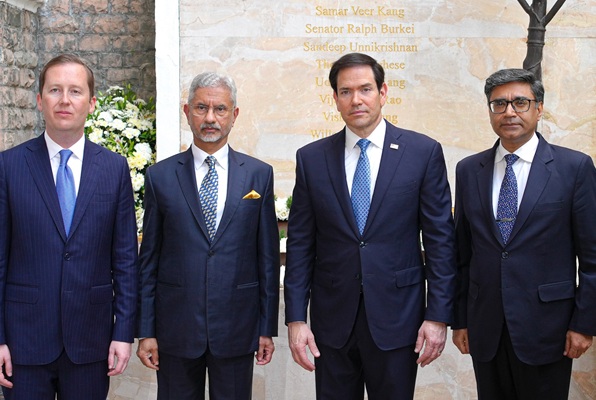
US Secretary of State Marco Rubio said in Mumbai on October 20, 2026, that he would encourage Indian refiners particularly Reliance Industries to refine more Venezuelan crude and explore oil production in Venezuela to help India diversify its oil supplies.
India, however, is already buying more oil from Venezuela and the United States while reducing purchases from Russia. Before committing to Washington’s proposal, New Delhi must distinguish between three separate decisions: importing more Venezuelan crude, investing in Venezuela’s damaged oil infrastructure and moving away from Russian supplies. Each carries different commercial and strategic consequences.
India’s crude imports from Venezuela surged from $255 million in 2025-26 to $3.6 billion in just five months, April–August 2026. Purchases from the United States also increased, from $405 million in July 2026 to $790 million in August.
Russia remained India’s largest crude oil supplier, but purchases fell by about 25%, from $7.3 billion in July 2026 to $5.4 billion in August. Russia’s share of India’s total crude imports consequently dropped from a peak of 51% in July to 45% in August.
With diversification already underway, Rubio’s proposal raises a basic question: what additional commitments does Washington want, and what would Indian refiners gain?
Reliance’s dominance in India’s Venezuelan crude purchases explains Washington’s focus on the company. India imported Venezuelan crude worth $3,585.6 million during April–August 2026, with Reliance accounting for 74.3%. Imports through Reliance’s SEZ Jamnagar stood at $1,695.3 million, or 47.3% of the total, while Sikka accounted for $968.2 million, or 27%.
Other imports comprised $421.3 million through Indian Oil’s Paradip facility, representing 11.7%; $405.8 million through Mundra’s storage terminals operated by HPCL and others, accounting for 11.3%; and $95 million through Nayara Energy’s Vadinar facility, representing 2.7%. Together, these purchases accounted for India’s entire $3,585.6 million of Venezuelan crude imports.
India can process Venezuelan crude. Whether it should expand purchases or invest in production is a separate commercial judgment. Venezuela’s crude is mostly extra-heavy—a thick, tar-like hydrocarbon requiring specialised diluents, upgrading facilities and heated transport infrastructure before it can be refined or exported.
Such crude generally sells at a discount to light oil. During April–August 2026, India paid an average of $821 per tonne for high quality Saudi Arabian crude, compared with $612 per tonne for low quality Venezuelan crude. But the lower purchase price must be weighed against lower yields and higher handling and refining costs.
India has some of the world’s most complex, high-conversion refineries, capable of processing heavy, lower-grade crude and operating with thin refining margins. Reliance Industries’ Jamnagar complex, the world’s largest refining facility, has substantial capacity designed to process extra-heavy blends. Nayara Energy’s Vadinar refinery can process heavy, high-sulphur crude. Suitable Indian Oil Corporation facilities, along with HPCL’s Visakhapatnam, or Vizag, refinery, also have desulphurisation and coking configurations suited to heavy crude.
The harder question is investment in Venezuela. Much of the country’s oil extraction equipment and export infrastructure is described as heavily damaged or derelict. Production stands at roughly 1.1–1.2 million barrels per day, with crude exports of about 650,000–750,000 barrels per day.
Restoring output to its historical peak of more than 3 million barrels per day could take at least 7–10 years and require $75 billion to more than $100 billion to rebuild upgraders, restore power grids and repair marine export facilities.
India must establish whether Washington’s proposal would secure crude delivered to Indian refineries or require Indian firms to finance the recovery of Venezuelan production. Purchasing available oil and financing an industry’s reconstruction carry substantially different costs, risks and timelines. And US changes its policies quickly. For example, it sanctioned any country buying oil from Venezuela till few years back.
India had a bad experience investing in Venezuela during 2010–2020 and should be cautious about committing fresh funds. U.S. sanctions disrupted ONGC Videsh’s investments and forced it to halt operations. As Washington tightened restrictions on Venezuela’s state oil company PDVSA, culminating in the 2019 oil embargo, Indian refineries also stopped buying Venezuelan crude to avoid secondary U.S. sanctions. Hundreds of millions of dollars in Indian dividend earnings were stranded in Venezuelan accounts, production from Indian equity investments was effectively frozen, and plans to expand oilfield development and secure long-term crude supplies were abandoned. India must consider whether another shift in U.S. policy could again put its investments and earnings at risk.
Washington’s push for India to move away from Russian oil also warrants scrutiny when the United States itself is buying Russian diesel. On October 9, Washington signed an agreement with Russia to improve domestic diesel availability, reversing its approach of penalising other countries for buying Russian oil on the grounds that those purchases finance the war in Ukraine.
Under that arrangement, Russia gained sanctions relief until April 7, 2027, allowing sales in global markets and potentially generating dollar earnings for producers including Rosneft and Lukoil. Washington must explain why its own energy needs justify Russian purchases while India is expected to reduce its dependence on Russian supplies.
India’s refining capability is established, and its sourcing is already changing, possibly under US pressure. Before taking on additional commitments under Rubio’s proposal, New Delhi must secure clear terms on supply reliability, investment obligations, pricing, commercial returns and the duration of American demand.
Washington has already involved Reliance Industries in a major refinery project. On March 11, 2026, President Donald Trump announced a $300 billion project involving Reliance to build the first major new U.S. oil refinery at Brownsville, Texas. Asking Reliance to also invest in Venezuela’s oil fields would add to its costs and responsibilities, it may not be able to bear.
More From BasisPoint