.png)

RBI Must Avoid June’s Missteps as Stance and Signals Take Centre Stage
The RBI’s December review must prioritise clear signalling and avoid June’s mistakes.
Richard is an independent financial journalist who tracks financial markets and macroeconomic developments
December 4, 2025 at 5:28 AM IST
The Reserve Bank enters the December policy review with a strong economy, a weaker rupee, and a financial system still adjusting to the rapid shifts of the past few months. The underlying data have not meaningfully altered the broad narrative of easing space, yet the debate has been unsettled by the weight of recent signalling.
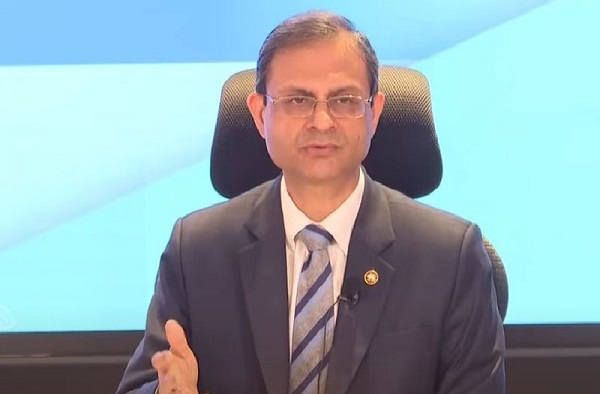
In the run up to the policy, the markets had expected a shallow 25-basis-point cut in the repo rate. That expectation had strengthened after Governor Sanjay Malhotra remarked in a recent television interview that fresh data had not altered the MPC’s assessment that lower inflation had opened space for one more cut.
He could have declined to answer questions so close to the policy, as many of his predecessors routinely did, yet he did not. By choosing to speak, he inevitably strengthened expectations. Markets interpreted the comment less as a technical statement of fact and more as a confirmation that easing remained the baseline this week.
That baseline was shattered after the government said GDP grew 8.2% in July-September, faster than anyone expected.
Such is the power of communication in the final stretch before a policy decision, and it is why the messaging around the December review bears particular significance.
The experience of June still lingers.
A 50-basis-point rate cut, a 100-basis-point reduction in the cash reserve ratio, and an abrupt pivot in stance to neutral combined to create shocks that reverberated through bond markets.
Volatility persisted for weeks, and it required a softening of communication in the October policy to restore some sense of continuity. The emphasis then was that the undershooting of inflation had opened policy space, and that the MPC’s actions should be read against that backdrop.
The December review provides an opportunity to reinforce that corrective, not reopen the turbulence of June.
Whether the committee chooses to cut or hold now matters less than how it frames the decision. If it cuts, it will need to explain clearly what incremental objective the move is meant to achieve at a time when the near-term growth impulse already looks firm. Headline inflation sits within comfort, real policy rates remain within acceptable ranges, and the recent rationalisation of GST slabs has added to growth momentum.
Yet weak transmission persists, and further depreciation of the rupee adds another layer of complexity. A cut that inadvertently signals the end of the easing cycle or limits the scope for liquidity support would risk a market reaction that could tighten conditions rather than ease them. If easing is delivered, the communication must keep options open.
What follows any rate cut will matter more than the cut itself. The one signal the committee must avoid is that the easing cycle ends with this move. Any suggestion of “this far and no further” would harden market yields, tighten financial conditions, and undermine the very purpose of cutting.
Even if a cut is delivered, the RBI must keep the runway open. Closing the door prematurely achieves little when transmission remains uneven and liquidity conditions are still shifting. If the MPC holds the repo rate, a dovish pause would do no harm.
The October message offers a ready-made template: that policy space exists, but the impact of front-loaded rate cuts, fiscal measures, and trade uncertainties is still unfolding, and it is prudent to watch how these effects play out before charting the next steps. The underlying conditions have not changed materially since then.
Reiterating data dependence would anchor expectations without unsettling them, and it would avoid the appearance of contradiction with the Governor’s recent remarks.
Clarity on liquidity will matter as much as clarity on the stance.
The widening gap between the overnight rate and long-term yields reflects transmission frictions that a rate cut alone cannot repair. Markets have responded constructively to indicators of steadier liquidity management, and this is where the Reserve Bank can offer immediate reassurance.
Durable injections through open market operations, a predictable OMO calendar, inclusion of state development loans in liquidity operations, uniform auction pricing, and the use of Operation Twist to smooth the yield curve all sit within the existing toolkit and on the market's wishlist.
Signalling a willingness to use them as needed would bring year-end stability without constraining the MPC’s room for manoeuvre.
The central bank is likely to have internalised the communication challenges of June, and the December review is a chance to consolidate that progress. Markets will offer an instant verdict, as they always do, but they will respond best to consistency rather than surprise. Whatever the decision, the RBI’s credibility rests on aligning policy action with clear, disciplined signalling. A steady hand on communication will do more for financial conditions at this juncture than any single rate adjustment.
More From BasisPoint