.png)

Nepal’s Disasters Expose a Missing Link in Infrastructure Finance
Nepal’s reconstruction challenge raises a bigger question: can infrastructure finance prevent the next loss, rather than simply paying to rebuild after disaster strikes?

Dr Arvind Mayaram is a former Finance Secretary to the Government of India, a senior policy advisor, and teaches public policy. He is also Chairman of the Institute of Development Studies, Jaipur.
November 3, 2026 at 3:47 AM IST
Nepal’s repeated infrastructure losses following natural disasters expose a deeper weakness in capital allocation. After a disaster, governments mobilise grants, loans and insurance to restore damaged services. Yet the next project may be appraised and financed without fully accounting for the risks that caused the previous losses. Reconstruction then competes with development spending. The problem extends well beyond Nepal. For developing countries, including India, increasingly exposed to climate-related risks, the question is not simply how to finance more infrastructure, but how to ensure that capital is allocated to infrastructure that can withstand the risks it will face over its lifetime.
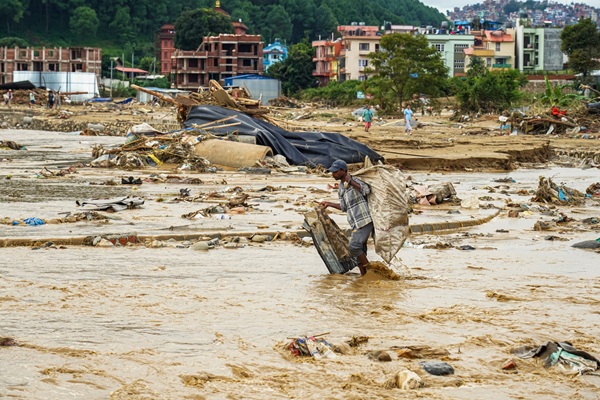
The August 2026 Rasuwa flood has again exposed the vulnerability of hydropower and transport links. The World Bank projects Nepal’s growth to slow to 3.7% in the financial year 2027 following the disaster. Restoring services is urgent. So is changing how infrastructure decisions are made before capital is committed.
Fund the decision before funding the project
The financing problem begins before construction. Is a proposed hydropower site exposed to glacial floods, landslides or seismic hazards? Have cumulative basin risks been assessed? Are safer locations or other ways of meeting the same energy need available? Can the risks be reduced to acceptable levels, and at what cost?
These questions require independent technical, environmental, geological and economic appraisal. But sponsoring agencies may lack the resources to commission it. Projects can therefore reach the market without adequate scrutiny, even when they will commit substantial public and private capital.
India’s Infrastructure Project Development Fund, or IIPDF, offers a relevant precedent. As Joint Secretary in the Department of Economic Affairs, I helped develop the concept, introduced in 2007 to support the preparation of infrastructure projects for private participation. The lesson is simple: project quality depends on the work done before a project reaches the market.
For climate-vulnerable economies, this principle should go further. Independent appraisal must be grant-funded and separate from transaction preparation. It should test location, alternatives, climate and geological risks, cumulative impacts, lifecycle costs and fiscal exposure. Its funding should not depend on the project becoming bankable or reaching financial close.
Transaction preparation is different. Once a project has passed appraisal, some costs of structuring a procurement or private-participation transaction may be recoverable if it succeeds. Independent appraisal must be free to recommend redesign, relocation or abandonment. If a project does not proceed, the appraisal may have prevented a much larger loss.
Match capital to risk over time
After a project passes this test, its financing should reflect its purpose and risk. Grants may be justified where public benefits are substantial but commercial returns inadequate. Concessional debt may suit projects whose revenues can support repayment but not market-rate borrowing. Commercial debt and equity become appropriate when cash flows and risks are sufficiently predictable. Insurance and contingent credit can cover specified risks; neither substitutes for sound design, maintenance or risk avoidance.
The financing structure should also evolve over the asset’s life. A project uncertain during construction may become a mature operation with predictable cash flows. Public or concessional capital used to absorb early-stage risk may then be released and redeployed—but only after maintenance, adaptation, insurance and other residual obligations are funded.
I have developed this approach as Circular Finance in a series of papers and articles. It is a dynamic capital-allocation architecture that matches different forms of capital to different stages of an asset’s maturity and risk, while continuously recycling scarce public and concessional capital. Its purpose is not simply to mobilise more finance, but to ensure that capital is neither committed prematurely nor locked into assets long after the risks it was intended to absorb have diminished. As infrastructure matures and risks change, the capital structure must evolve, releasing public and concessional resources for redeployment into new investments. Circular Finance contributes by bringing project selection, risk allocation, lifecycle obligations, and capital recycling into a single, integrated framework. Here, the term refers specifically to infrastructure finance, rather than the use of circular finance in the context of the circular economy.
Resilience is a system obligation
India’s National Monetisation Pipeline illustrates one instrument that can sit within this framework: unlocking value from mature brownfield assets and redeploying proceeds into new infrastructure. But monetisation is not itself Circular Finance. If a transaction releases capital while leaving government with unfunded maintenance costs, guarantees or reconstruction liabilities, it has shifted the burden rather than resolved it.
For Nepal, appraisal must therefore look beyond construction costs and projected revenues. Preventive maintenance, renewal, hazard monitoring, insurance, emergency liquidity and the restoration of essential services all need identifiable funding sources.
Individual assets must also be assessed as parts of connected systems. A hydropower plant may survive a flood but be unable to deliver electricity if its transmission link fails. A bridge may withstand an extreme event while the adjoining road becomes impassable. Appraisal should examine the networks that supply power, connect markets and sustain essential services. Depending on the evidence, the right choice may be to reinforce an asset, diversify supply, build redundancy, relocate infrastructure—or not proceed.
A test for Nepal
Nepal could pilot this approach on a hydropower-and-transmission corridor or a strategic transport link. An independent appraisal would compare the proposed investment with safer alternatives and determine whether its risks and benefits justify proceeding. The financing plan would allocate each risk to the party best able to manage it and identify funding for lifecycle obligations. Any later refinancing or transfer would have to account for liabilities and resilience costs that remain.
The pilot should be judged by whole-life cost, continuity of service, fiscal exposure and the amount of public capital genuinely released for redeployment—not simply by the volume of private investment mobilised.
Grants, concessional finance, insurance and private capital each have a role. The failure is to treat them as disconnected instruments. Nepal’s reconstruction offers an opportunity to join the decisions that are too often separated: whether to build, how to finance the risks, and when public capital can safely move on. This would not eliminate disaster risk. It could stop weak appraisal and financing choices from compounding it.
More From BasisPoint