.png)

Rajesh Ramachandran is a former Editor-in-Chief of The Tribune group of newspapers and Outlook magazine.
November 13, 2026 at 9:25 AM IST
The midterm polls in the US have steered the polity away from MAGA madness and towards a more left-leaning, inclusive leadership. There are many firsts in the US senate now ––– Abdul El-Sayed from Michigan is the first Muslim member and Scott Colom is the first Black to win the Mississippi seat (the earlier two were chosen by lawmakers 150 years ago). The House of Representatives and the Senate, the two chambers of the US Congress, are now decisively Democrat-led leaving little doubt about the influence of the social democrats within the party.
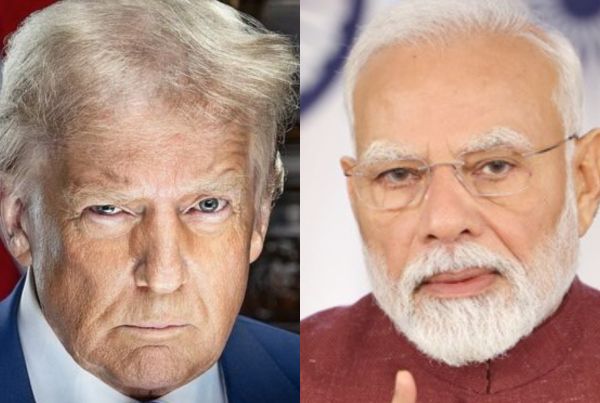
None of this is good news for the BJP or the NDA government. Even the members of the Indian diaspora who got elected are vociferously anti-BJP. Then, this is not a sudden rupture, and the novelty of “Howdy Modi” and the bonhomie of “Ab ki bar Trump sarkar” had long worn off. The personal chemistry between Prime Minister Narendra Modi and President Donald Trump had soured and the bilateral relationship between India and the US had nosedived leading to a reset in the ties after Operation Sindoor.
India’s kinetic response to Pakistan-based terrorists’ dastardly attack on innocent tourists in Jammu and Kashmir’s Pahalgam in April 2024 marked the beginning of the end of the Modi-Trump friendship and also the India-US strategic partnership. Trump jumped in to claim that he got India and Pakistan to stop hostilities and began praising the Pakistani army chief, who by then got himself promoted to Field Marshal, and soon termed the Indian economy dead. He was virtually announcing the death of his relationship with Modi. The reset had begun.
Two years later Vice President JD Vance went out of his way to call Indian techies seeking American citizenship "indentured servants,” which was worse than Trump‘s attack because Vance is supposed to be a measured, reasonable man with an immigrant wife. He was reflecting his constituency’s growing antipathy towards India, xenophobic insecurity over people of Indian origin “grabbing” American jobs and rising racism against the assertion of Indian identity.
Vance, married to a person of Indian origin, had to address the anxieties of his constituency and reassure the constituents of his loyalty to them and their primacy in his politics. He did it in the most brazen fashion possible ––– fuelling further racism and crass condescension towards Indian immigrants. The Republican mood had turned hostile and there was nothing much for the Indian government to do about it. The post-Op Sindoor reset was complete. The Republicans had turned against the Modi government.
Then came the bipartisan Lindsey O. Graham Sanctioning Russia and Iran Act of 2026 piloted by Democrat Senator Richard Blumenthal of Connecticut. A piece of legislation named after a Republican hawk pushed by a Democrat targeting India. Beyond all the tariffs heaped on India by Trump, this bill was a carte blanche by the Senate primarily aimed at India and China, the biggest importers of Russian oil. The new bill let Trump impose tariff up to 100% on goods imported from countries buying Russian oil. Blumenthal’s bill, passed by the100-member Senate 86 to 11 with three abstaining on August 7, became law on September 18.
Of course, Trump issued a US national-interest waiver to the Graham Act on October 16 to contain domestic fuel prices on the eve of the midterm polls, but India now has few friends atop the Capitol Hill. The larger question is whether the post-Op Sindoor reset ––– turning the clock of bilateral relationship back to the hostile 1970s ––– is an unfriendly act against PM Modi’s leadership or is it an attempt to target India as a rising power. It is tough to discern the exact reasons for the US recalibration in 2024, but it seems directly linked to the de-escalation in the Himalayas and the dis-engagement with the Chinese troops in Ladakh.
In this context of the strained India-US relationship, the US midterm polls have only increased the Modi government’s vulnerabilities. But this context and perception could change if the BJP wins the Uttar Pradesh assembly polls and proves that it is here to stay. The Modi government will soon complete two and half years in its third term in office and in that sense the UP polls are a crucial pointer for Indian politics marching towards the 2029 polls. A defeat in the UP polls will render the NDA Union government a lame duck.
In a couple of months there will be polls to five states ––– UP, Punjab, Uttarakhand, Manipur and Goa. But for Punjab, the BJP is in power in all the other four states. UP with 403 assembly and 80 Parliamentary seats is more populous than France and Germany combined and decides the fate of the Indian Parliament, particularly for a Hindi heartland party like the BJP. The party lost its simple majority in the 2024 Parliamentary elections because of its poor performance in UP winning just 33 seats, a huge drop from 71 in 2014 and 62 seats in 2019.
There is no sudden groundswell of support for the BJP in Punjab and hence no reason to believe that the party would make substantial gains in the assembly polls. Its old ally Shiromani Akali Dal is in no shape to take on the AAP government. There is a real chance of loss of power in Uttarakhand with allegations galore against the incumbent. A murder in a resort and allegations of corruption against a minister by her husband have rocked the hilly state, which sees a bipolar contest between the BJP and the Congress. Manipur is going to polls after prolonged bouts of ethnic violence. Goa too promises a tough fight. The chances of a repeat performance in all these four states do not appear to be bright.
The Modi government, battling incessant waves of protests in the recent past, may be keeping a few aces up its sleeves to take on the Opposition. After the Diwali Milan for the press corps at the BJP headquarters on Thursday there was a lot of talk about a special Parliament session to get the delimitation bill passed. But that ace could work only if the Hindi heartland remains with the BJP.
More From BasisPoint