The protesters at Jantar Mantar have good reason to be angry. The NEET paper leaks are one symptom; the deeper problem is youth unemployment. Young and educated Indians account for a significant share of the unemployed, while underemployment remains widespread. At a time when AI-driven disruption is threatening existing jobs, the government must find ways to create new ones.
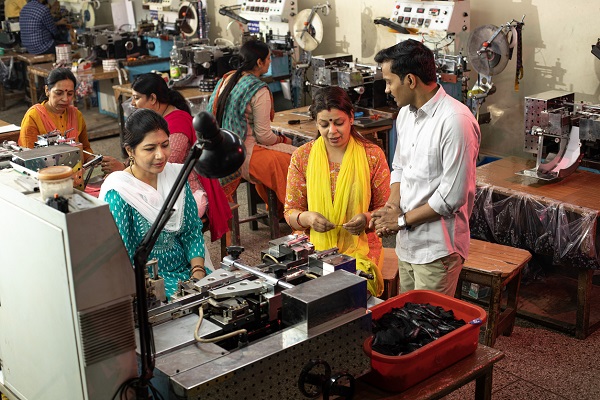
The Micro, Small and Medium Enterprises Development (Amendment) Bill, 2026, now before Parliament, could help. The MSME sector employs more than 320 million people, making it the country’s second-largest employer after agriculture, and offers a potential outlet for frustrated young Indians.
India’s 63 million MSMEs are the backbone of its industrial economy. The Economic Survey 2025–26 shows that they account for approximately 31% of GDP, 35% of manufacturing output and 49% of exports. Yet, India’s MSME base remains largely informal, fragmented and concentrated in low-value activities.
Although the Bill seeks to address delayed payments, dispute resolution and some compliance burdens, smaller firms continue to struggle with access to affordable credit and compliance with GST, labour, environmental and tax regulations. These challenges weaken their competitiveness in both domestic and international markets.
India could learn from the experiences of China and the United States, both of which nurtured networks of smaller enterprises as they developed into manufacturing powerhouses.
What the US and China got right
The US and China did not build dominant industrial economies one firm at a time. They built clusters: specialised ecosystems in which suppliers, highly skilled labour, capital and applied research operate in close proximity.
Such clusters do not emerge spontaneously. They are the products of deliberate policy, sustained public investment and long time horizons. In many cases, it took 20 to 30 years before the returns became visible.
Three examples illustrate the effectiveness of this approach.
The first is North Carolina’s Research Triangle, where Duke University, the University of North Carolina at Chapel Hill and North Carolina State University helped anchor biotechnology and pharmaceuticals clusters from the 1980s onwards. Their presence enabled university research to feed into a thriving commercial ecosystem.
The second is Guangdong in China, where electronics-focused special economic zones such as Shenzhen combined tax incentives, land and infrastructure to create dense supplier networks. A hardware entrepreneur can now design, fabricate and prototype a component there within days.
The third is China’s “Little Giant” programme, which identifies smaller firms already leading in narrowly defined technical niches and fast-tracks their growth through financing, tax incentives and R&D support.
Why clusters work
Why is a cluster more valuable than the sum of its individual firms? The answer lies in three mechanisms.
-- Knowledge spillovers
When competing and complementary firms are located close together, technical knowledge circulates more rapidly than it would through formal channels alone. It moves through technicians changing jobs, informal conversations between suppliers and customers, and interactions with shared service providers.
A machine shop that solves a problem for one client often raises the standard of service available to every other client nearby. This kind of tacit learning is difficult to transmit across long distances. It depends on repeated, informal and often face-to-face interactions.
-- Talent attraction and retention
A single firm in an isolated location struggles to attract specialised talent because, for an employee, accepting a job there amounts to betting on one employer.
A cluster of 20 firms transforms the same location into a labour market. An engineer or scientist can change employers without having to move to another city, reducing the risk associated with accepting a job there in the first place.
Clusters therefore become self-reinforcing. More firms attract more skilled workers, who in turn attract additional firms seeking access to that labour pool. This is a virtuous cycle that isolated MSMEs cannot create on their own.
-- Shared infrastructure and lower fixed costs
Testing laboratories, effluent-treatment plants, cold-storage facilities, design centres and logistics hubs all involve high fixed costs. A single small firm may not be able to justify such an investment, but the facilities become affordable when their costs are spread across hundreds of co-located enterprises.
This may be the most direct route to greater competitiveness for India’s MSMEs. Most are too small to afford, individually, the quality certification, R&D facilities and export logistics required to compete in global markets.
What the Indian government can do
India already has several cluster-oriented initiatives, including the Micro and Small Enterprises Cluster Development Programme, PM MITRA textile parks and various common facility centres. However, many of these interventions remain closer to infrastructure grants than genuine ecosystem-building programmes.
Four shifts could change the landscape.
1. Move from generic industrial estates to specialised clusters
Many state industrial parks house an unrelated mix of businesses that have little reason to interact with one another. India should instead concentrate resources on a smaller number of specialised clusters and build greater depth within them.
These could include auto components in Pune, pharmaceuticals in Hyderabad and electronics in Sriperumbudur. Each cluster should have access to shared testing laboratories, common design centres and supplier directories that allow local firms to identify and trade with one another.
The objective should not merely be to put companies in the same industrial estate. It should be to create the institutional and commercial connections that allow them to function as an ecosystem.
2. Create an Indian equivalent of the Little Giant programme
Rather than treating every MSME in the same way, India could identify cohorts of “hidden champions” across different industries. These would be small manufacturers already excelling in narrowly defined technical fields such as precision castings, speciality chemicals or defence components.
Selected firms could receive dedicated credit lines, faster patent processing, R&D support and priority access to public procurement.
The production-linked incentive scheme has followed a version of this logic in large-scale electronics and pharmaceuticals. India could extend a lighter-touch model downstream to specialised MSMEs, developing the connective industrial tissue that is currently missing.
3. Address the financing gap at the cluster level
The Reserve Bank of India estimates that the MSME credit gap runs into trillions of rupees. Yet, lending decisions continue to be made largely at the level of the individual firm.
Under cluster-based lending, banks assess risk using the collective track record of a cluster, relationships among its buyers and suppliers, and, where appropriate, shared collateral pools. This reduces the information asymmetry involved in evaluating each small firm in isolation.
The approach has worked in pockets. Tiruppur’s textile cluster is a well-studied example. It should be scaled systematically through SIDBI and cluster-focused non-banking financial companies.
4. Put universities at the centre
The most striking difference between many Indian clusters and their US or Chinese counterparts is the near-total absence of universities from the industrial ecosystem.
Universities are not merely downstream beneficiaries that place their graduates in jobs. They are foundational institutions that supply talent, applied research, laboratory infrastructure and opportunities for commercial innovation.
In China, leading engineering institutes are often located near major industrial clusters and are explicitly tasked with supplying skilled workers and applied research to local firms. In India, leading universities and technical institutes largely operate in silos, disconnected from the needs of the surrounding industrial base. Their graduates frequently take corporate jobs in major metropolitan areas rather than joining nearby MSMEs.
Changing this dynamic will require several concrete measures. Public funding and grants could be made conditional on universities establishing research centres and laboratories inside cluster zones, rather than exclusively on their campuses. A share of faculty research funding could be directed towards applied projects that solve problems faced by local MSMEs.
Technical institutes and cluster firms should also develop structured internship and apprenticeship programmes. MSMEs should receive subsidised access to university equipment and technical expertise that they could not afford independently.
India does not lack MSMEs; it lacks the ecosystems that enable them to scale.
To realise its ambition of becoming a global technological and economic power, while generating employment for millions of young people, India must rethink its traditional approach to industrial development. The country needs a deliberate, long-term strategy that can transform millions of small and isolated firms into an integrated, innovative and globally competitive industrial base.
Industrial ecosystems must now move to the centre of India’s policy conversation.
*Pradeep Racherla also contributed to this article.
.png)