.png)


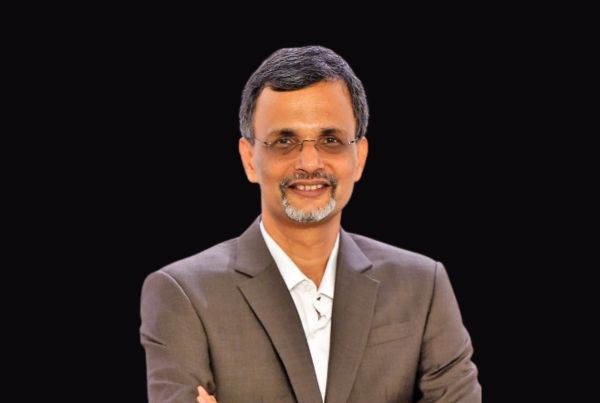
Prasanna Mohanty is a journalist, researcher and author.
November 19, 2026 at 8:11 AM IST
India’s debate on public employment needs to hold two objectives together. Citizens should receive efficient, accountable services, and those delivering them should have fair pay, reasonable employment security and social protection. Improving public administration requires serious reform, but a wider shift towards contractual employment must also be assessed for its consequences for workers, institutions and household incomes.
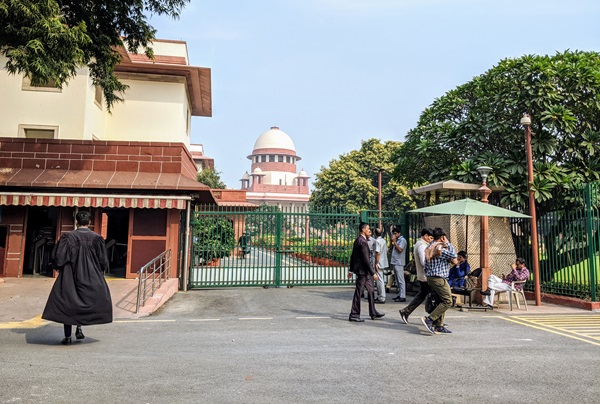
During a Supreme Court hearing on November 5, 2026, concerning unpaid dearness allowance in Punjab, Justice B V Nagarathna reportedly described government employees as a “privileged class”, questioned their accountability and suggested contractual recruitment. These were oral observations, not a judicial ruling. They provide an occasion to examine the wider policy assumption that reducing employment security will improve public administration.
The concern about accountability deserves consideration, and permanent appointment should carry clear responsibilities and enforceable performance standards. Citizens should not have to accept delays, indifference or poor service. However, changing an employee’s contractual status cannot by itself establish clear duties, improve supervision or ensure that persistent failure has consequences.
The state’s obligations as an employer also deserve attention. In its August 19, 2025, judgment in Dharam Singh and others versus State of Uttar Pradesh, the Supreme Court described the government as a “constitutional employer”. The case concerned employees engaged for decades to perform recurring work. The court emphasised fairness in employment and rejected financial constraints as a justification for the employment arrangements challenged in the case.
That context matters for public policy. Temporary appointments can serve legitimate purposes, including work of limited duration or specific projects. The concern arises when continuing public functions are performed through prolonged, insecure arrangements, with inadequate remuneration, uncertain prospects and insufficient protection against illness, injury or financial insecurity in old age.
Pension policy, too, needs a more careful discussion than a general contrast between protected government employees and everyone else. The affordability and design of retirement benefits deserve scrutiny, including how they are funded. The objective should be a sustainable system of retirement protection that can reach more workers, alongside employment practices that support dependable livelihoods.
Employment Insecurity
The Annual Survey of Industries places contract workers at about 42% of total workers in the establishments it covers in 2024-2025. Separately, the statistics ministry’s 2026 indicator report puts the proportion of regular wage and salaried employees outside agriculture without social security benefits at 51.7% for 2025.
These figures measure different aspects of employment and should not be treated as interchangeable. Contractual status does not automatically mean that a worker receives no benefits, just as a regular salary does not guarantee adequate protection. Together, however, they underline the importance of examining the terms on which people work, alongside the number of people employed.
The broader employment picture also warrants attention. According to the Centre for Monitoring Indian Economy, unemployment rose to 4.7% in October from 4.0% in September, while the employment rate slipped to 39.3%. A monthly unemployment figure cannot capture the full difficulty of finding work that offers adequate earnings, continuity and social protection.
For households, the consequences of insecurity extend beyond the immediate pay packet. Uncertain earnings can make it harder to meet education and healthcare expenses, build savings or plan for retirement. They can also restrain consumption when families postpone spending because they cannot be confident about their future income.
The private sector has a substantial responsibility here. In September, Chief Economic Adviser V Anantha Nageswaran urged businesses to “invest, hire, and compensate fairly”. That appeal should inform the assessment of public support for investment and employment. Where incentives are justified by their contribution to jobs, the quality and durability of those jobs should form part of the evaluation.
Even established sources of salaried employment face adjustment. Tata Consultancy Services’ workforce declined by a net 23,460 in 2025-2026. That figure represents the balance of recruitment and departures, rather than a count of layoffs, but it illustrates why the continued expansion of familiar employment opportunities cannot simply be assumed.
The government cannot meet the country’s entire employment requirement through its own payroll. It can, however, influence employment standards through its recruitment, public enterprises, procurement and the enforcement of labour protections. Those responsibilities become more significant when workers elsewhere struggle to obtain dependable incomes and benefits.
Public Obligations
The priority should be better disclosure and clearer explanations. The 2025 Periodic Labour Force Survey already provides an estimate of employment. Its move to a calendar-year reporting period also came with changes in survey design, and the statistics ministry expressly cautions that the results may not be strictly comparable with earlier estimates. Those qualifications need to be respected when interpreting changes in employment patterns.
Public recruitment figures similarly require context. An RTI-based report published in August put central government civilian vacancies at about 824,000 as of March 1, 2024. Separately, the government’s September announcement for the twentieth Rozgar Mela said cumulative appointment letters would reach about 1.275 million. These figures concern different dates and measures; they cannot establish, by themselves, how many vacancies remain.
An account of recruitment should therefore explain appointments, retirements, other departures and changes in sanctioned strength. It should also distinguish between filling an existing vacancy and creating an additional position. Such disclosure would help citizens assess both employment policy and the government’s capacity to deliver services.
Employment reform must also distinguish between reducing immediate payroll costs and improving administration over time. For continuing public functions, dependable staffing can support training, continuity and institutional knowledge. Where contracts are appropriate, their terms should be transparent, applicable benefits should be provided, and responsibility for compliance should be clear.
Accountability requires equally deliberate attention. Public institutions should define service standards, assess performance fairly, strengthen supervision and act on persistent failure through timely procedures. Managers should be answerable for staffing decisions and working conditions, while employees should be answerable for the duties entrusted to them.
Income transfers and subsidised essentials can provide valuable support to households. They cannot, however, perform the same role as reliable earnings over a working life. A development strategy concerned with poverty and vulnerability must therefore place productive employment, fair wages and social protection at its centre.
India needs more opportunities to build a stable livelihood. Permanent employment for continuing needs, properly regulated contractual work and sustainable retirement protection should form part of that effort. Public employment reform should give citizens better services while enabling the people delivering them to work with dignity and security. A state that expects accountability from its employees should also be accountable for how it employs them.
More From BasisPoint