.png)

I Miss You, ELBS And Mir: When Affordable Knowledge Meant Great Books
ELBS and Mir gave generations of Indian students access to world-class textbooks at prices they could afford. Their quiet gift deserves to be remembered.
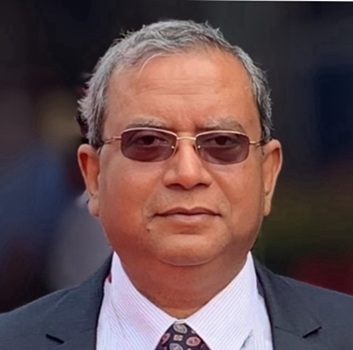
Shubhranshu, former Chief Administrative Officer at Rail Wheel Plant in Bela, has managed many engineering and manufacturing projects, including the Train-18, or the Vande Bharat Express.
September 26, 2026 at 4:05 AM IST
But more about low-cost education later.
The textbooks were another matter. We simply did not have the heart to ask our parents for ₹250 for a single book on calculus or mechanics. That was when we should thank the people who thought of ELBS and Mir.
They had, in effect, decided that students in poorer countries deserved the best textbooks at prices they could afford. There was no obvious ideological agenda, no grand scheme to indoctrinate young minds. Just an extraordinary commitment to making knowledge accessible.
After all, how does one indoctrinate an impressionable mind through a textbook on science, medicine or engineering, except perhaps in the most positive sense?
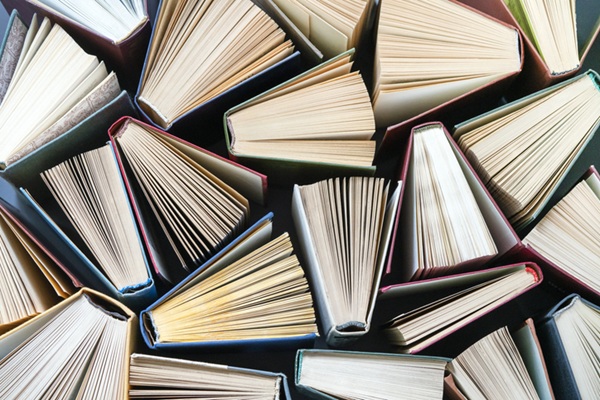
A hefty 300- or 400-page textbook could be bought for ₹20 or less. There was nothing cheap about these books. They were written by some of the finest British authors for ELBS, and by equally accomplished Soviet authors for Mir, whose books were also translated into English and several other languages.
They were printed on good paper, properly bound and built to last. Often, expensive textbooks were republished by ELBS as special low-priced editions, bringing otherwise inaccessible academic material within the reach of ordinary students.
These were publishers that seemed genuinely interested in spreading knowledge. Their countries and societies were comparatively wealthy, and they chose to use some of that wealth to educate young minds in poorer societies.
This was not the familiar development model of aid programmes, food assistance or health initiatives. Others were doing that. ELBS and Mir were feeding hungry minds.
And that benevolence went a remarkably long way. Generations of Indian students studied science, medicine and engineering using books that their families could actually afford.
I often wonder, several decades later, what motivated them to provide such low-cost, high-quality books to students they would never meet.
India is wealthier today. Even lower-middle-class families can, in many cases, afford textbooks that would once have seemed impossibly expensive. But the contribution of ELBS and Mir should not go unsung.
Mir is gone. It survived for a few years after the collapse of the USSR, before eventually disappearing. ELBS, too, could no longer be funded by the British government and ultimately shut down.
Today, one can find collector’s copies of their books, often bought as much for nostalgia as for anything else.
But something else disappeared with them: the idea that high-quality knowledge could, and should, be made extraordinarily affordable.
Governments across the world rarely do for students today what ELBS and Mir once did for students they had never met: publish high-quality textbooks at prices that ordinary families could afford.
Perhaps the internet has filled that space. It has certainly made knowledge more accessible than ever before. Yet there is something about a textbook in print: its weight, its pages, the notes in the margins, the dog-eared corners, the feeling that the book belongs to you.
ELBS and Mir did more than sell books cheaply. They made knowledge feel like a public good. For those of us who grew up with them, that is a gift worth remembering.
More From BasisPoint