.png)


Dhananjay Sinha, CEO and Co-Head of Institutional Equities at Systematix Group, has over 25 years of experience in macroeconomics, strategy, and equity research. A prolific writer, Dhananjay is known for his data-driven views on markets, sectors, and cycles.
April 23, 2026 at 5:16 AM IST
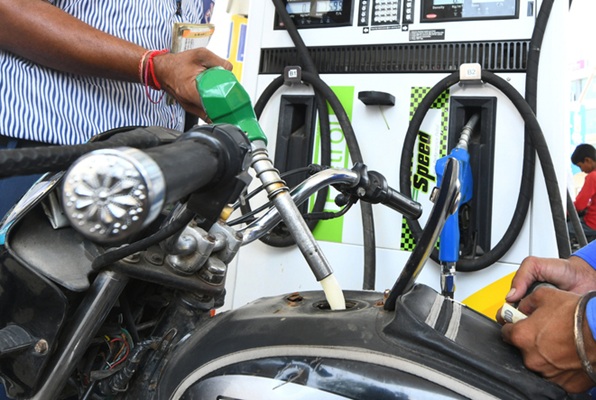
Reports suggesting a sharp post-election increase in retail fuel prices point to a familiar but consequential policy choice. Kotak Institutional Equities, noted that there is a case to raise petrol and diesel prices by ₹25–28 per litre, with the current freeze becoming increasingly unsustainable as oil marketing companies absorb significant losses. The government, of course, was quick to deny this and push the can down the road.
That formulation captures the immediate trigger, but the deeper issue lies in how such deferred adjustments reshape the inflation cycle rather than merely shift its timing.
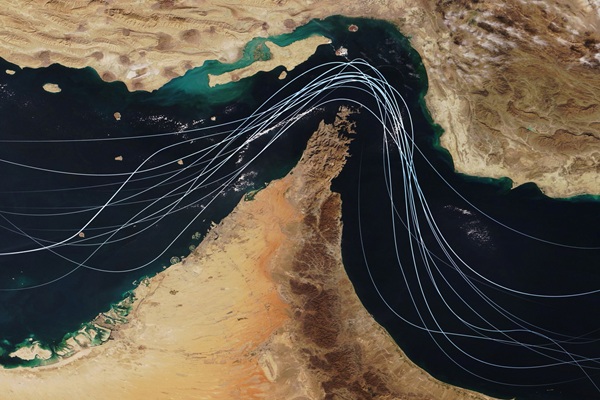
The present freeze has effectively suppressed the first-round impact of elevated global crude oil prices. With Brent remaining firm amid geopolitical tensions in West Asia and supply disruptions around the Strait of Hormuz, the gap between input costs and retail prices has widened sharply. Losses of nearly ₹270 billion per month for state-owned oil marketing companies suggest that the pricing regime is no longer absorbing volatility, but accumulating it.
Once released, this adjustment is unlikely to be a one-off event.
Historical patterns indicate that the transmission from crude to retail inflation in India unfolds with a lag of two to three quarters. A ₹25–28 per litre increase in fuel prices would therefore not only lift headline inflation immediately, but also embed a more persistent inflationary impulse into the system.
Delayed Pass-Through
Food inflation risks are already rising. The potential emergence of El Nino conditions, alongside the India Meteorological Department’s forecast of a monsoon at 8% below the long-period average, points to risks for both acreage and productivity, particularly as a shortfall raises the cost and availability of agricultural inputs. This introduces an additional supply-side pressure at a time when transportation costs are already elevated. Base effects, which had dampened inflation readings previously, are set to reverse, mechanically pushing the trajectory higher over the coming quarters.
The second-round effects are likely to be more complex.
Corporate pricing behaviour has evolved in recent years, with a stronger linkage between crude prices, raw material costs and sales realisations. A 100-basis-point increase in crude prices is estimated to raise input costs by around 50 basis points and sales growth by roughly 35 basis points. At current levels, with Brent near $100 per barrel, input costs are already significantly elevated. Yet incomplete pass-through implies that corporates may absorb part of this shock through margin compression rather than fully transmit it to final prices.
Initial inflation prints may reflect the direct impact of fuel price increases, while subsequent quarters could see a more diffused transmission through manufacturing prices and services.
The result is not just higher inflation, but a more prolonged inflation cycle.
There are, admittedly, mitigating factors. Government food grain buffers provide some capacity to smooth price spikes, particularly in essential commodities. Over a longer horizon, elevated crude prices may induce demand destruction, leading to some moderation in global oil markets. These effects, however, operate with lags and cannot offset the near-term impulse.
The implications for policy are less straightforward than the headline numbers suggest. While the relationship between crude prices and GDP growth has weakened in recent years, the inflation channel remains potent. A delayed but sharper inflation rise constrains monetary policy flexibility, especially if it coincides with slowing growth.
Rate-sensitive sectors such as banks and non-bank lenders are particularly exposed in such a scenario. Higher inflation expectations can tighten financial conditions even without immediate policy action, affecting credit demand and asset quality dynamics.
What emerges is a familiar but often underappreciated pattern. By deferring fuel price adjustments, the policy does not eliminate the inflationary impact; it redistributes it over time, compressing multiple price impulses into a shorter window once the adjustment is made. The result is a more abrupt and less manageable inflation cycle.
In that sense, the expected post-election fuel price reset is not merely an administrative correction. It is a repricing event, with implications that extend beyond the pump and into the broader macroeconomic trajectory over the coming year.
More From BasisPoint