.png)



Chandrashekhar is an economist, journalist and policy commentator renowned for his expertise in agriculture, commodity markets and economic policy.
September 22, 2026 at 6:26 AM IST
Young commodities traders often ask me if we are at the start of a commodity super-cycle. The question comes from the broad-based spike in prices of several commodities, including energy products (crude oil, natural gas), industrial metals (copper, aluminium) and agricultural goods (palm oil).
Since the beginning of this year, the market price of most commodities has risen considerably. Brent crude oil has moved from below $70 a barrel to over $100. Copper has escalated from $13,200 a ton to $14,300, while aluminium is up from $2,700/ton to $3,500/ton. Crude palm oil has spiked from $1,000/ton to $1,300/ton. And, as of now, there is no end in sight to this upward price movement.
The rise in prices can be seen as a result of a combination of factors – the West Asia conflict that disrupted the supply chain for critical energy commodities like crude oil and natural gas, US-led trade tariffs, and the El Nino weather phenomenon.
The current prices contain a risk premium of 10-15%, and there are huge trading positions in the derivatives market created by speculative funds. When the threat of military action decisively subsides and cargo movement normalises, funds will quickly exit their long positions and risk premium will reduce substantially. When this happens, prices are bound to correct. As an experienced commodity markets observer, I would assert the world is not yet at the start of a commodity super-cycle, despite broad-based price spikes over the last eight months.
A real or genuine commodity super-cycle will have certain distinct features. It is generally a multi-decadal phenomenon and is characterised by a broad-based rally across a wide spectrum of physical commodities and is generally be driven by structural long-term shifts in global demand while persistent supply constraints fail to immediately match the demand growth.
The current commodity price spike may be a ‘false start’. The spike is essentially temporary, triggered by the geopolitical and geo-economic upheavals, supply disruptions and speculative rallies.
China Factor
The last real commodity super-cycle was in the early 2000s, driven by China. To fuel robust growth, the Asian major showed a voracious appetite for commodities – oil, steel, cement, copper, aluminium, soybean, palm oil, cotton and many more. That cycle, in a sense, ended some 10 years ago, around 2015, when Chinese policymakers decided to move gradually from investment-led growth to consumption-led growth.
Even now, China continues to be a mover and shaker in the global commodity market, but it is not the dominant force that it once was.
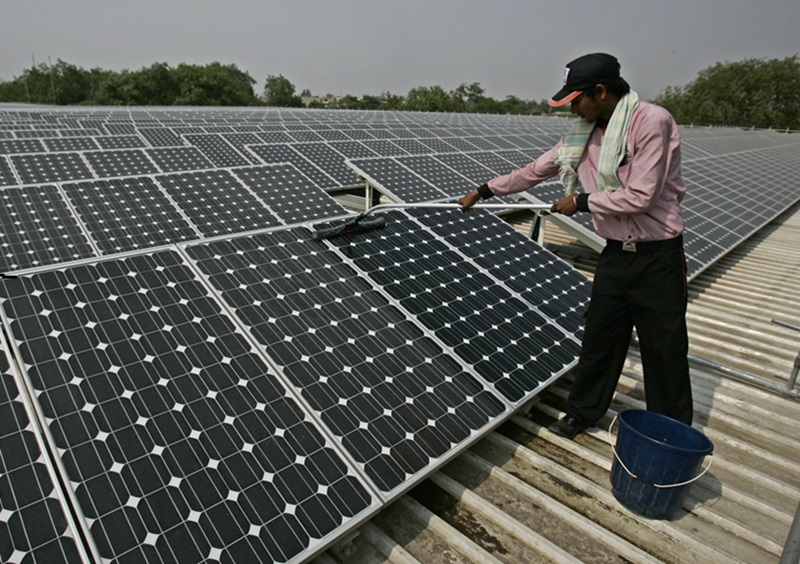
Interestingly, demand drivers have become more diverse and sector-specific. Demand is currently shaped by electrification, clean energy, defense-spending and data infrastructure.
As geopolitics continues to take centre-stage, supply chain risks continue to loom. Countries and corporates are learning lessons all the time. Reducing overdependence on a single supply source or a single market is a key lesson, and is now giving way to diversified supply sources and diversified export markets.
Additionally, in the context of supply chain risks, increasingly, corporates are playing safe and reducing risk by moving from the old Just-in-time principle to ‘Just-in-case’, building adequate inventories so manufacturing activity does not suffer for want of inputs. Stockpiling, especially of critical raw materials, is now the new norm.
Indian economy is in an expansionary phase, and is seen continuing its robust growth into the foreseeable future. My own research shows there are eight major growth sectors for India. Agriculture and Food; Textiles and Clothing; Housing and Infrastructure; Energy; Mobility; Healthcare; Education; and Leisure and Entertainment.
While the last three – healthcare, education and leisure/entertainment - are services, the first five are growth sectors of the ‘real economy’ with strong commodity implications for food crops, fibers (natural and synthetic), energy products and industrial metals.
The strong positive correlation between economic growth and commodity consumption is well recognised and India is already a large producer, processor, consumer, exporter and importer of a range of commodities. Going forward, Indian demand for food, textiles, housing, energy and mobility will continue to expand because of rising income, demographic pressure and current low per capita availability.
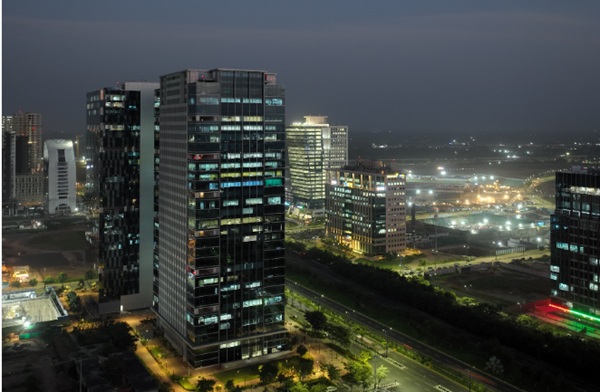
The infrastructure and housing sector is highly commodity intensive and over two-third of any project cost is accounted for by commodities like steel, cement, copper, aluminium, wood, rubber etc. At any given point of time, India faces a shortage of about five million dwelling houses. Additionally, we spend close to $100 billion annually on infrastructure development covering roadways, railways, airways, seaways, bridges as well as urban and rural infra.
Another sector worth noting is energy. India is import dependent, sourcing over 85% crude oil from overseas. Demand for energy products (oil, gas, coal, biofuel, renewables) will continue to expand.
In the years ahead, inevitably, commodities will propel India’s growth for at least two decades, and thus, in a sense, India can be a ‘mover and shaker’ of global commodity markets as a large producer, processor, consumer, exporter or importer. Our trade and tariff policies can potentially impact global markets and we can attract Foreign Direct Investment in the real economy that have commodity intensity. We can leverage the strength and clout offered by our size and scale, but, are we ready?
More From BasisPoint