.png)

Budget Promised Customs Overhaul, Delivered Repackaging
The Budget 2026 has delivered an extension of old reforms, reflecting a propensity for cautious and incremental change.
Reform Compass is a column by former senior officers of Income Tax, GST & Customs focused on reforms in policy and tax administration.
February 4, 2026 at 2:48 PM IST
When the finance minister said in December that a customs overhaul was a top priority, expectations shot through the roof. Industry hoped for real surgery: rationalised tariff rates, refunds for inverted duty structures, an enlarged single window, less discretion with officers, and maybe even one unified portal to navigate India’s maze of Quality Control Orders. What Budget2026 delivered instead was more modest: a set of incremental tweaks, most of them extensions of reforms that have been in place since a decade.
On tariffs, the finance minister framed the changes as simplification, noting that “effective rates” from notifications would be incorporated into the tariff schedule itself. That may help in referencing at rate of duty, but certainly not what industry hoped to get from a rationalisation exercise.
Start with the flagship promise of a single window. India Customs Single Window, or SWIFT, has existed since 2016, allowing importers to file one declaration and obtain online clearances from multiple regulators through ICEGATE. Budget 2026 re-promised seamless processing through a “single and interconnected digital window” by the end of the financial year. In other words, the same goal, ten years later, still in the future.
The same pattern runs through deferred duty payment. Since 2016, authorised economic operators have been able to clear goods first and pay duties later, typically on a fortnightly basis. The new budget extends this window from 15 days to 30 days and introduces a fresh category of “eligible manufacturer-importers”. Helpful, perhaps, but still wrapped in applications, approvals, and compliance touchpoints.
Advance rulings also get a small upgrade. Their validity is extended from three years to five. That gives businesses a longer period of certainty, but again, subject to applications, approvals, and touchpoints.
One of the more ambitious announcements is around release automation in processing declarations. Pre-arrival filing of bills of entry has existed since a decade, and risk-based facilitation was built into customs systems since the mid-2000s. Budget 2026 proposes extending faster clearance to “regular importers with trusted longstanding supply chains”. The problem is that nobody yet knows who qualifies, or on what criteria.
Warehousing laws were majorly reformed in 2016. This Budget made a change in one of the 17 sections to remove the need for officer approval when shifting goods from one warehouse to another. For the niche group of importers who use bonded warehousing extensively, this reduces a genuine pain point.
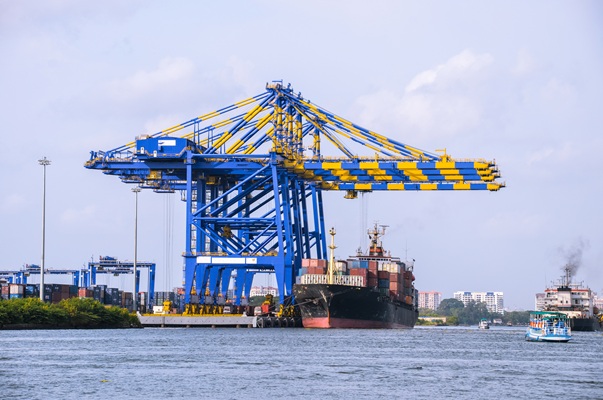
Technology is where the budget appears truly aspirational. The finance minister spoke of expanding non-intrusive scanning to cover every container at major ports. Today, only a tiny fraction of high-risk containers is scanned. India’s ports handle roughly 14 million containers a year or around 1,600 an hour. Scanning all of them would require massive investment in equipment and ultra-efficient port operations. No timeline has been given, which makes the announcement as a best endeavour for the future. Another project, the Customs Integrated System, was announced and is supposed to be completed in two years. The deadline feels highly optimistic, considering that a IT service provider is still to be selected.
On the consumer side, there are a few crowd-pleasers. Baggage allowance for international travellers rises from ₹50,000 to ₹75,000, a small but visible relief for India’s growing outbound middle class. Duties on cross-border e-commerce imports fall from 20% to 10%. But once 18% IGST is added, the effective tax rate still sits above 28%. Exporters benefit from the removal of a ₹1 million cap on courier shipping bills, though this was an overdue regulatory change and did not even require parliamentary approval.
Put together, Budget 2026 reads less like a structural reset and more like a compilation of old reforms, lightly refreshed. Most of the core architecture dates back to the post-2016 push towards digitisation and risk-based clearance. The real problems that importers complain about — discretion, opacity, fragmented regulations, and uneven enforcement — remain largely unaddressed.
Announcing reform from the floor of Parliament does lend it symbolic weight. But coming after the recent credibility crisis in Chennai customs, many expected a sharper response. This was a chance to rebuild Customs and signal a decisive new path on lines of GST 2.0. Instead, the government chose incrementalism.
Customs reform, it seems, is still a work in progress. Just one that keeps getting promised in the future.
More From BasisPoint