.png)

An India-Based Engineer, Seychelles and a Global Patent
Multinationals are naming Indian engineers as patent applicants for a country none of them may plan to enter. The structure is legal. What it reveals about how India prices a public service is the real question.

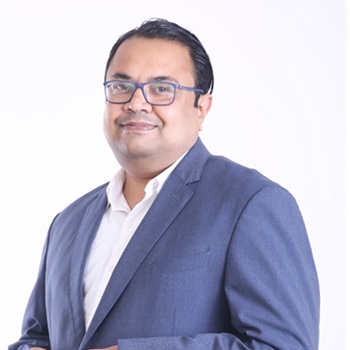
Nilanshu Shekhar is a founding partner at law firm KAnalysis and specialises in Intellectual Property.
October 24, 2026 at 7:38 AM IST
On January 3, 2019, a global telecom company filed an international patent application at the Indian Patent Office in Chennai. The application named the company as the applicant for every country in the world. It also named one of its India-based engineers as an applicant, but for a single country: the Seychelles.
There is no record of the company ever seeking a patent there. Yet this was not an oddity. Since 2015, the telecom company has used the same structure more than 230 times. A global materials group has used a variant of it in India. A large technology company used it in China for a decade.
Every step is legal. But the pattern raises a question that goes beyond patent procedure. Is a public service priced for Indian inventors being used, at scale, by some of the world's largest companies?
How the arrangement works
Most international patent applications are filed under the Patent Cooperation Treaty, or PCT, a system administered by the World Intellectual Property Organization. The filer chooses a national patent office to receive the application, and an office to carry out an "international search": a review of existing technology that shows whether the invention is new.
Under PCT rules, a company can file at a national office only if at least one applicant is a national or resident of that country. A foreign company with no Indian nationality or residence nexus cannot, on its own, file at the Indian Patent Office under this route. Adding an Indian engineer as co-applicant makes it eligible.
A second rule allows different applicants for different countries. So the engineer can be named applicant for the Seychelles alone, while the company remains the applicant everywhere that matters. The engineer is a ticket, not an owner. The company’s own filing confirms this: in the application, it declared itself entitled to the patent as the employer of every inventor, including the engineer named for the Seychelles.
Why India?
The record says otherwise. In Puneet Kaushik v. Union of India, the Delhi High Court held that an international application filed at the Indian Patent Office still counts as an application "outside India" under Section 39. The permission is needed whichever office receives the filing.
In the 2019 application, the company already had that permission. The Chennai Patent Office granted it on December 13, 2018, three weeks before the filing. The company could have filed through another eligible office. It chose Chennai.
What Chennai offers is the Indian Patent Office as the international search authority. Since 2015, every one of the company’s 264 international applications filed at the Indian office has chosen the Indian search. Not one has chosen any other.
The Price Difference
Across the telecom company’s 264 filings, the difference at today's rates is about ₹57 million. The global materials group has filed 183 applications at the Indian office since 2016, 181 of them with the Indian search, each naming Indian individuals as co-applicants. That difference is about ₹38 million. The technology company’s 315 applications through the Chinese office between 2012 and 2022, against the US alternative, add about ₹64 million.
Together, that is about ₹160 million across 758 applications. These are present-day illustrations, not calculations of what any company actually saved. The direction, though, never changes.
Not One Company, Not One Country
The global materials group has used an earlier, blunter version. Indian individuals are named as co-applicants and later removed, or named as applicants for the United States in applications that never go there. By the time the patents are pursued nationally, the company usually stands alone.
The technology company used the Seychelles device in China. Then, from 2021, it kept filing in China with Chinese co-applicants but switched to a different search authority. That suggests the Chinese route serves purposes beyond cost, and the China pattern deserves separate study. India's pattern has shown no such change.
The Questions for Policy
That leaves three questions for Indian policymakers.
Pricing: The Indian Patent Office's search fees are set with Indian applicants in mind. When a multinational routes hundreds of applications through India to pay a fraction of the European price, it is reasonable to ask whether the fee reflects the cost of the service, and who bears the difference.
Capacity: Every international search is examiner time. Hundreds of searches for global filers are hundreds of searches not spent on India's own backlog. How much of the Indian Patent Office's international search work comes through arrangements like these is not public. It should be.
Design: The Patent Office could charge a different fee where the only Indian applicant is named for a country unrelated to the application, or simply publish data on such filings. Either would bring transparency to a practice that currently goes unexamined.
None of these requires accusing anyone of wrongdoing. They require only recognising that a lawful structure can still produce an outcome policy never intended.
(This article is based on independent analysis of public PCT records from WIPO PATENTSCOPE and the Indian Patent Office. It does not allege unlawful or improper conduct by any company discussed.)
More From BasisPoint