.png)

Why India Should Delay Deeper Trade Ties With US
A slowdown in engagement would send a clear message that Indian lives and interests cannot be treated as collateral damage in America's geopolitical pursuits.

Ajay Srivastava, founder of Global Trade Research Initiative, is an ex-Indian Trade Service officer with expertise in WTO and FTA negotiations.
June 13, 2026 at 4:26 AM IST
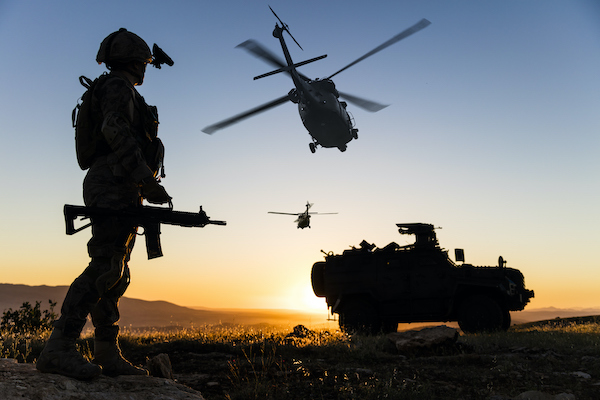
The United States has shown a disturbing disregard for international law, maritime freedom, and Indian lives by attacking three commercial vessels in international waters and killing three Indian sailors.
The US Central Command attacked three commercial vessels in the Gulf of Oman between June 8 and June 11. The vessels targeted were the Palau-flagged oil tankers MT Marivex on June 8 and MT Settebello on June 9, and the Guinea-Bissau-flagged asphalt tanker MV Jalveer on June 11.
All three ships had passed through the Strait of Hormuz and were operating in international waters when they were attacked as part of a unilateral US operation to enforce its blockade on Iranian trade.
The deadliest strike occurred on June 9 when a US aircraft attacked the engine room of MT Settebello. The strike killed three Indian sailors.
UN Charter
Second, the attacks violated the freedom of navigation guaranteed under Articles 87 and 90 of the United Nations Convention on the Law of the Sea. The United States attacked foreign commercial vessels on the high seas without the consent of the flag states or any UN mandate.
Third, the killing of civilian sailors on MT Settebello raises serious concerns under international humanitarian law. The principles of distinction, necessity and proportionality require armed forces to avoid civilian casualties and to distinguish between military and civilian targets. The deaths of three Indian seafarers suggest a failure on part of the US to meet these basic obligations.
Washington Response
The episode highlights a broader contradiction in US policy. The United States has simultaneously sought to restrict other countries' access to Iranian oil through unilateral military measures while openly discussing the seizure of Iranian oil infrastructure after seizing Venezuelan oil.
India's Response
At a time when Washington is using military force against vessels carrying Indian crew members and ignoring India's concerns, it is difficult to justify rushing into deeper commitments such as a Bilateral Trade Agreement.
A slowdown in engagement would send a clear message that Indian lives and interests cannot be treated as collateral damage in America's geopolitical pursuits.
Washington's failure to offer even a simple apology, expression of regret, or condolences to the families of the deceased sailors has further damaged trust. In these circumstances, India should go beyond diplomatic protests by seeking compensation, demanding an independent international investigation, and raising the issue in multilateral forums.
More From BasisPoint