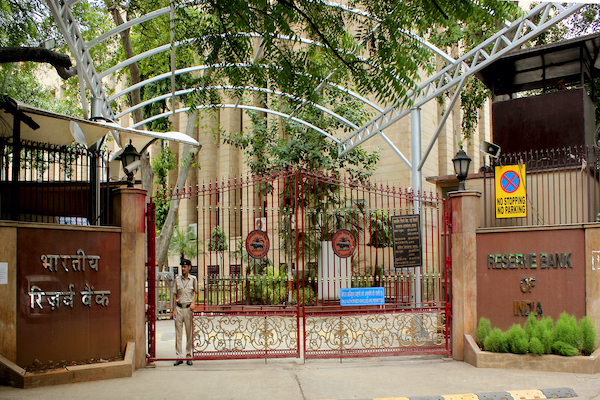
Central banking has never been a simple profession. But the Reserve Bank of India’s job in the second half of 2026–27 is complicated in ways that have no precedent in recent memory. A US–Iran war, Houthi attacks on shipping lanes, Ukrainian strikes on Russian energy infrastructure and an AI investment boom are simultaneously reshaping both demand and potential supply.
These are not the usual risks that a flexible inflation-targeting framework was designed to process. The BIS recently noted that AI alone makes monetary policy more complex because it boosts near-term demand through investment while raising long-term productivity and supply capacity.
These are two forces that push inflation in opposite directions and make it genuinely harder to read where the economy is headed. If that is the challenge confronting the Federal Reserve with all its analytical firepower, the RBI faces it with far less room for error.
The August policy meeting is largely a foregone conclusion: a pause, with a hawkish tilt. The more important question is what would actually move the RBI to hike.
Oil Remains the Weakest Link
The year 2026 has offered a masterclass in how not to forecast crude oil. Prices briefly touched $120 per barrel following the Iran conflict in late April–early May, then retreated to $70–$75 per barrel in June as ceasefire hopes held. That window has now closed. The ceasefire has broken down, and crude has clawed back towards $90 per barrel.
The transmission into domestic prices runs through a simple three-tier framework. If Brent oil prices are between $80 and $90 per barrel, pump prices are unlikely to move. Between $90 and $100 per barrel, the government absorbs the fiscal cost but holds retail prices. Beyond $100 per barrel, another round of retail price hikes becomes unavoidable. Fuel prices have already risen by about ₹8 per litre; a return to triple digits opens the door to a further ₹2–₹4 per litre increase.
The Input Cost Problem Is Just Beginning
Less visible, but perhaps more consequential for the RBI's reaction function, is input cost pass-through. Firms ran down low-cost inventory through the first quarter of 2026–27 and are now replenishing it at materially higher costs. Consumers have yet to see elevated petrochemical prices feed through to textiles, chemicals and construction materials. An analysis of more than 900 WPI sub-components suggests that increases in everyday consumer goods remain contained so far.
The academic evidence on WPI-to-CPI transmission is more nuanced. The relationship is non-linear. Price increases at the wholesale level take longer to reach consumers than price falls, and firms tend to absorb higher input costs before passing them on. WPI inflation running at 7.5–8% does not mechanically translate into CPI. But a sustained elevation at these levels, especially in manufactured goods and fuel, materially raises the probability of pass-through over a two-to-four-month horizon, once firms exhaust their capacity to compress margins further.
Demand Has Not Weakened Materially Yet
The standard expectation when external shocks tighten financial conditions is that domestic demand softens, buying the central bank time to postpone rate hikes. Management commentary for the first quarter of 2026–27 does not suggest meaningful demand deterioration in corporate earnings. Tractor and passenger vehicle sales remain firm. Credit growth was 18.3% year on year in the fortnight ended June 30, 2026, a pace that is itself inflationary when layered on top of supply-side pressures.
The rainfall deficit has narrowed, and sowing has improved. Whether that translates into a meaningful rural consumption impulse remains to be seen, but the conditions for it are more favourable than they were a quarter ago.
The Number That Will Actually Matter
All of these factors, including oil, pass-through, credit growth and demand resilience, feed into one number that determines the RBI's next move: CPI inflation. The trigger for a rate hike will not be a deteriorating rupee, a hot WPI print, or a hawkish Fed. It will come if and when retail CPI approaches 6% on a consistent basis. Our calculations suggest that inflation will remain between 5.5% and 6.3% for six months from September, albeit because of last year’s low base.
The average for the first quarter of 2026–27, at 3.9%, remains below even the RBI's own 4.2% forecast. But the gap is likely to close fast when food inflation, fuel pass-through and input-cost pressures materialise simultaneously. The RBI's task over the next two to three months is precisely to monitor whether these channels are converging, because if they do, the CPI trajectory shifts materially faster than the RBI’s base case implies.
Meanwhile, the US Federal Reserve is holding rates at 3.50–3.75%, following a 9–3 hawkish split, while markets are pricing in a 94% probability of a hike by October. These conditions will keep global financial conditions tight, FPI flows moderate, and the rupee under pressure. The RBI cannot ignore that interest-rate differential, but it cannot mechanically follow the Fed.
The rate hike, when it comes, will not be a surprise. It will be the outcome of a chain reaction taking shape over the next two to three quarters. The RBI's credibility does not depend on when it acts. It depends on whether, when the data forces its hand, it acts without hesitation.
.png)