.png)

The Business Question Behind Gandhi’s Appeal to India Inc.
Gandhi’s appeal raises wider questions about corporate autonomy, competition and the institutions that sustain private enterprise.
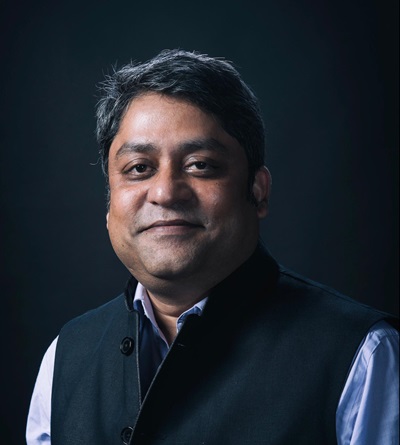
Rajesh Mahapatra, ex-Editor of PTI, has deep experience in political and economic journalism, shaping media coverage of key events.
October 31, 2026 at 10:18 AM IST
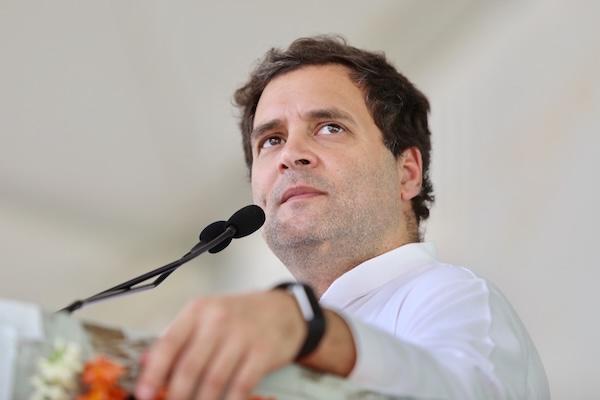
Opposition leader Rahul Gandhi’s recent comment that the Tatas are being “criminally destroyed” has drawn a response from Finance Minister Nirmala Sitharaman, who said the Tata imbroglio must be seen strictly as a legal and commercial matter, not politicised.
The question, however, extends beyond the mainstream debate over the merits of Rahul Gandhi’s claims or allegations. His intervention also raises questions about corporate autonomy, competition, and the rules governing business.
His post on X urging business leaders to break their silence over the Tatas gains context from a separate video in which he rejects the perception that he is anti-business.
“I'm not anti-business in the least. I am anti-monopoly. I am anti-creating oligopolies. I am anti-domination of business by one or two or three or five people,” Gandhi said in the video message.
Gandhi links the Tata dispute to his broader criticism of monopolies and the concentration of economic power.
Is Gandhi reaching out to corporates, or could it be the other way around? Whatever may be the case, it remains to be seen how much longer Indian business captains continue to sit out.
For businesses and investors, the relevant question is whether the rules governing entrepreneurial activity are transparent, predictable and consistently applied.
Corporate Outreach
In recent years, Rahul Gandhi’s campaign messaging has centred on a left-of-centre ideological framework. He has consistently emphasised public goods like health and education, advocated for a caste census, and highlighted social and economic equity. He has also campaigned against crony capitalism, arguing that a few large conglomerates enjoy advantages denied to small and medium enterprises.
Left-leaning economic positions can be conflated with opposition to private enterprise. Yet an emphasis on public goods and social equity need not imply a rejection of competitive markets. Criticism of monopolies and concentrated economic power should therefore be assessed on its merits, rather than treated as evidence of hostility to business itself.
His latest statement seeks to distinguish this criticism from opposition to private enterprise. By explicitly clarifying that he supports fair, competitive enterprise while opposing monopolies, he is asking corporate leaders to consider the broader conditions in which their own businesses operate.
When Gandhi, in his X post, asks corporate leaders, “How long will you stay silent? Until they own you?”, he is framing his appeal as a warning about corporate independence. His argument also raises the question of rent-seeking in the Indian economy.
Rent-seeking arises when firms pursue gains through political patronage, connections and government favours rather than efficiency or innovation. In such an environment, connected firms can gain advantages, while competitive, entrepreneurial firms without political backing may face barriers to entry and expansion.
The prevalence of rent-seeking can reflect institutional erosion and weak rule of law. In weak institutional environments, corporate profits may depend on protected market positions, securing preferential government subsidies, or obtaining selective tax relief. In contrast, strong institutional environments can encourage productive activity, where profits stem from technological innovation, superior services, and lower prices for consumers.
When commercial rewards depend more on securing favourable treatment than on improving productivity, firms have an incentive to devote resources to protecting their position rather than expanding productive capacity. The economic concern extends beyond the fortunes of individual companies to whether capital and talent are directed towards innovation and growth or towards preserving existing advantages.
Corporate Autonomy
The concern is not the size of a business group in itself, but whether markets remain open to competition. Commercial success built on efficiency and innovation is different from an advantage secured through preferential treatment. The relevant question is whether other firms can enter markets and expand on comparable terms.
It is within this broader context that Rahul Gandhi’s intervention on the Tata Group can be examined. The Tata Group faces internal corporate and boardroom tensions.
Rahul Gandhi’s statement can be read as an attempt to connect a dispute within one group to broader questions of corporate independence. That interpretation does not, by itself, establish the accuracy of his allegations about political interference.
Corporate silence may limit immediate political exposure, but businesses also have a stake in the stability of the wider economic environment.
When social cohesion breaks down and political instability rises, economic growth can suffer. The concern for business is therefore not confined to the immediate consequences of entering a political debate; it also extends to the conditions supporting long-term investment and enterprise.
Rahul Gandhi is urging corporate leaders to break their silence against cronyism and monopoly domination. The business case for engaging with these concerns need not depend on endorsing his political position.
Whether this marks the beginning of a broader dialogue between Indian business and political opposition remains an open question. The wider issue is whether corporate discretion is sufficient to protect the institutions and competitive conditions on which business itself depends.
More From BasisPoint