.png)


Michael Patra is an economist, a career central banker, and a former RBI Deputy Governor who led monetary policy and helped shape India’s inflation targeting framework.
November 4, 2026 at 3:50 AM IST
The Nobel Prize in Economic Sciences is awarded by the Royal Swedish Academy of Sciences in Stockholm, Sweden, but it is not one of the original five prizes established by Alfred Nobel's 1895 will. Instead, it was instituted in 1968 by Sveriges Riksbank, Sweden’s central bank and the world’s oldest, to celebrate its 300th anniversary. Hence, it is officially known as the Sveriges Riksbank Prize in Economic Sciences in Memory of Alfred Nobel.
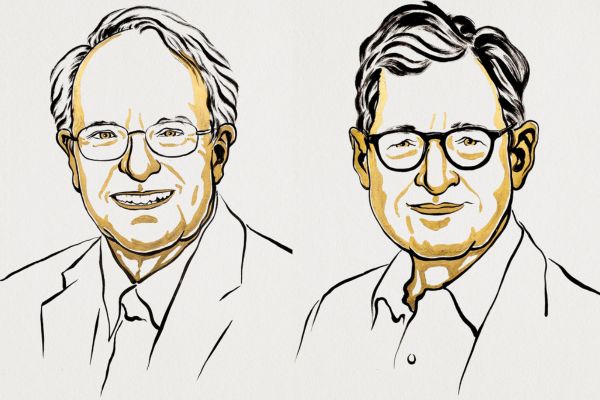
On the 12th of October, this year’s Prize was awarded jointly to American economists Robert E. Hall and Michael Woodford for their groundbreaking contributions to the "microeconomic foundations of macroeconomic stabilisation."
In the words of the Nobel committee, “A central component in these models is that households and businesses are forward-looking when making decisions about savings or product prices.
When governments and central banks communicate their plans for economic policy, they can influence this view of the future and move the economy in the right direction. Since the new models’ introduction, they have been extremely helpful in dealing with the economic downturns that have affected us.”
What the Prize Honours
Commenting on it and its winners, Alan Stuart Blinder, currently a professor of economics at Princeton University, US, and a former vice chairman of the US Federal Reserve, wrote: “Did forward guidance just win the Nobel Prize in economics? You would be forgiven for thinking so.”
Blinder is a strong advocate of forward guidance.
In his view, clear forward guidance should strengthen the link between short-term interest rates, which the central bank controls, and medium- and long-term rates, which it doesn’t. A close relationship between these rates is critical to calibrating monetary policy because key macro variables like gross domestic product, employment and inflation depend on the longer-term rates.
The Evolution of Monetary Policy Communication
The tide turned in 1994 when the US Federal Open Market Committee (FOMC) first started announcing its decision on the target for the federal funds rate.
By 1997, the Fed publicly acknowledged that monetary policy is formulated in terms of a target for the federal funds rate and put a number to it.
Even so, monetary policy communication was characterised by what has been described as ‘mumbling with great incoherence’. Alan Greenspan, then chairman of the Fed, spoke regularly but communicated little, leaving his audience less informed than before he spoke. In his view, it was better than not responding or saying, “no comments” or “I won’t answer”.
The great transformation came in the wake of the global financial crisis (GFC) of 2008. With interest rates at the so-called zero lower bound and balance sheets bloated by unconventional ultra-accommodation, forward guidance was actively used by central banks to directly influence longer-term rates with terms like ‘low for longer’ and ‘to do what it takes’.
The lessons of the GFC came in handy during the pandemic in 2020-2021. People looked to central banks for support as well as reassurance that they would do all they could to prevent loss of livelihood and restore stability in financial markets and institutions.
When inflation checked in from the second half of 2021, however, this logic of monetary policy communication was overturned. Terminal rates in this tightening phase could not be communicated in view of the stubbornness of the inflation episode. Forward guidance stirred up bouts of turmoil in financial markets, with spillovers to emerging markets. In March 2023, financial stress felled banks in some jurisdictions; the unwinding of the carry trade was triggered in August 2024, and sell-offs on recession fears routed markets worldwide in September 2024.
The State of Play Today
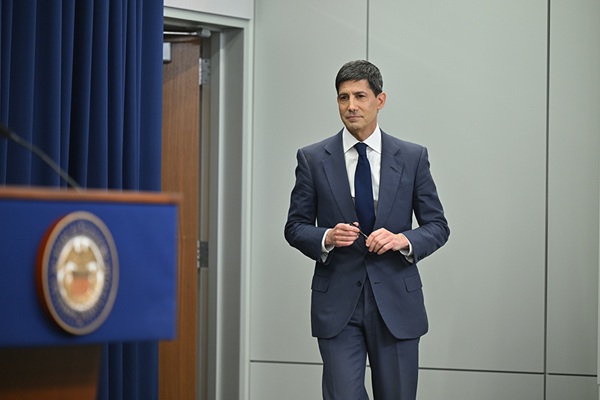
“I don’t believe in forward guidance,” Kevin Warsh, current Fed chairman, said in his Senate confirmation hearing in April 2026. “I don’t believe that I should be previewing for you what a future decision might be.” "In normal times, the role of forward guidance should be limited and circumscribed. Otherwise, it risks creating ambiguity in the name of clarity."
Warsh has argued that forward guidance limits the Fed’s agility in responding to changes in the economy. In his view, the Fed’s tardiness in responding to the surge in inflation during the pandemic was “compounded” by forward guidance.
Explicit signalling of future interest rate paths unnecessarily ties the central bank’s hands. Upon being confirmed, Warsh immediately put his philosophy into practice. At his very first meeting as Fed chair on June 17, 2026, forward guidance was entirely removed from the FOMC statement. He also declined to submit his own dot plot, dryly noting that his colleagues simply fill theirs out "with pencils and big erasers". His preference is for “a quieter Fed.” He has since established a communications task force to review and potentially overhaul the traditional communication and forecasting tools.
The scepticism regarding forward-looking commitments is no longer unique to the US. At major global economic forums, European Central Bank (ECB) president Christine Lagarde openly expressed regret for having felt "bound and compelled" by rigid forward guidance frameworks in the past. Governors of the Bank of England and Bank of Canada have expressed similar operational exhaustion with the tool.
Mervyn King, former Governor of the Bank of England and now Baron of Lothbury, has long been one of the world's sharpest and most vocal critics of forward guidance. He famously dismissed the strategy as an "American phrase for bankers talking too much", arguing that it is fundamentally ill-advised for central banks to communicate extensive path forecasts when the future is completely unknowable. King has held that the world operates under "radical uncertainty," a state where future probabilities cannot be mathematically calculated or modelled.
Forward guidance pretends that policymakers possess a crystal ball. By publishing exact future paths, central banks fall prey to the "illusion of certainty," confusing market participants into believing the economy is highly predictable when it is inherently full of surprises. His preferred approach is to ‘be boring and conditional’.
King has strongly advocated that a central bank should communicate that it will react to events as they happen. It is a conditional framework based on every available real-time data, or mutatis mutandis, the laid-back alter ego of ceteris paribus, economists’ necessary lie. Future monetary policy depends on everything else.
It is no surprise that Warsh recruited King to serve as the leading external authority on his newly formed communications task force to dismantle the "dot plot" framework.
The mutatis mutandis approach appears to have found resonance in the forward guidance given by the RBI’s monetary policy committee in its October 2026 resolution:
“The duration and extent of rate hike cycle would be contingent on the actual growth-inflation developments and outlook, especially that of underlying inflation, the extent of broadening of price pressures and second round effects of the supply shock, as also the impact of demand impulses.”
More From BasisPoint