.png)

Asian Stocks Rebound as Wall Street Rally Lifts Sentiment Despite AI Fears
Here’s your quick read to start the day: a chatty, no-fuss look at overnight moves, the big story, what’s on the docket, and the tickers you need to watch.


Nandinee Keluskar is an independent financial journalist.
October 16, 2026 at 2:34 AM IST
Global Mood: Cautiously risk-on
Drivers: Iran-US conflict escalation, Energy ceasefire breakdown, US PPI data
Asian markets traded higher on Friday, tracking gains on Wall Street as investors rotated out of technology stocks into other sectors. Japan’s Nikkei 225 rose more than 1%, and the Topix gained 1.14%, while South Korea’s Kospi advanced 1.22%, and the Kosdaq climbed 1.28%. Australia’s S&P/ASX 200 added 0.83%. US equity futures were largely subdued, with Nasdaq-100 futures down 0.3%, as investors remained cautious over pressure on AI-linked stocks.
Wall Street’s major indexes ended higher on Thursday, with the Dow rising around 1.1%, the S&P 500 gaining 0.3% and the Nasdaq Composite edging up 0.1%, ending a three-session losing streak. However, concerns over intensifying Chinese competition in memory chips and heavy borrowing by technology companies to fund AI infrastructure continued to weigh on sentiment. The GIFT Nifty was trading at 23,092.5, up 104.5 points or 0.45%, pointing to a positive opening for Indian equities.
THE BIG STORY
Yemen's Houthis fired missiles and drones at the presidential palace complex in Aden, killing five people and injuring 16, while the prime minister and cabinet members remained safe. The Saudi-led coalition said the Houthis had targeted dozens of Saudi sites, including Riyadh's King Khalid International Airport, where it reported 20 attacks this month. The Houthis' campaign is widening the conflict beyond Yemen, threatening Saudi airports, oil facilities and shipping routes as fighting with Saudi-backed government forces intensifies. The escalation threatens Saudi Arabia's Vision 2030 ambitions and investor confidence, with attacks disrupting major investment and oil industry events.
Iran and the Houthis are seeking to raise the cost of Washington's pressure campaign by targeting Saudi infrastructure and economic interests, according to regional and Saudi sources. Tehran wants Riyadh to press US President Donald Trump to ease the blockade on Iran, while the Houthis are also demanding an end to Saudi military operations and restrictions on Yemeni ports and airports. The attacks leave Saudi Crown Prince Mohammed bin Salman facing a choice between military escalation and concessions that could strengthen Houthi control in Yemen.
Analysts warn that continued attacks on energy infrastructure and strategic shipping routes could widen the conflict across the Gulf, undermine investment and derail Saudi Arabia's economic transformation plans.
Ukraine resumes strikes on Russian refineries as the energy truce collapses. Ukraine struck Rosneft's Ryazan refinery, which accounts for nearly 5% of Russian refining capacity, after President Volodymyr Zelenskiy declared an end to the suspension of attacks on Russian refineries.
Zelenskiy stated that Ukraine's patience had been exhausted after Russia persisted with missile and drone strikes on Ukrainian energy infrastructure, despite US President Donald Trump's proposed energy ceasefire. The breakdown risks deepening tensions between Kyiv and Washington, as Trump presses Ukraine to halt refinery attacks to ease fuel prices ahead of US midterm elections.
Zelenskiy also criticised restrictions on military-grade Starlink services, which disrupted Ukrainian drone operations, while Britain urged continued US engagement and announced additional air-defence support.
Data Spotlight
US producer prices surged 1.3% month-on-month in September, the sharpest increase since March 2022 and well above expectations of 0.5%, as the global energy shock pushed producer energy costs up 10.8%. Transportation and warehousing costs rose 3.4%, while food prices increased 1.2%. Core PPI climbed 0.7%, and annual producer inflation accelerated to 6.3%, its highest since December 2022.
US retail sales rose 0.8% month-on-month in September, beating forecasts of 0.3%, following an upwardly revised 1.3% increase in August. However, the gain was largely driven by a 6.4% jump in gasoline-station sales amid higher fuel prices. Excluding gasoline, sales increased by just 0.2%, while the core retail sales measure used to calculate GDP rose a modest 0.1%, signalling slower underlying momentum in consumer spending.
US initial jobless claims edged up by 1,000 to 199,000 in the week ended October 10, remaining below expectations of 200,000. Continuing claims fell by 4,000 to 1.71 million, staying close to recent multi-year lows. The data points to continued labour-market resilience despite elevated borrowing costs and rising price pressures.
Takeaway: The sharp acceleration in US producer inflation, alongside September’s stronger-than-expected headline retail sales, reinforces the risk that the energy shock will keep inflation elevated even as underlying consumer demand loses momentum. The limited increase in core retail sales suggests that higher fuel costs are inflating headline spending figures rather than signalling broad-based strength. Meanwhile, persistently low jobless claims indicate that labour-market conditions remain resilient, complicating the Federal Reserve’s policy outlook. Together, the data strengthen the case for interest rates to remain higher for longer as policymakers balance renewed inflation risks against signs of moderating domestic demand.
WHAT HAPPENED OVERNIGHT
US Stocks Recover as Investors Rotate from AI to Defensive Sectors
- The S&P 500 rose 0.33% on Thursday, recovering from early losses as investors shifted from AI-linked stocks to healthcare and consumer shares. The Dow gained 1.08%, while the Nasdaq edged up 0.08%.
- AI-linked stocks remained under pressure amid concerns over high borrowing costs. Nvidia fell 1.8% after TSMC struck a cautious note on 2027 despite posting its sixth consecutive record quarterly profit. Dell and Hewlett Packard Enterprise fell 6.9% and 7.1%, respectively.
- The semiconductor index dropped 0.9% for a seventh consecutive session. Meanwhile, the 10-year Treasury yield eased but remained near multi-year highs.
- US producer prices rose at their fastest pace in 4.5 years in September, signalling broader inflationary pressures. Markets priced in a 67% chance of a Fed rate hike by December, up from 62% on Wednesday.
US Dollar Retreats From 18-Month High as Fed Officials Temper Hike Bets
- The US dollar fell to 102 on Thursday as declining Treasury yields weighed on the currency, pulling it back from an 18-month high.
- US producer prices rose at their fastest pace in more than four years, reinforcing inflation concerns and expectations of tighter monetary policy.
- However, Fed officials Michelle Bowman and Mary Daly signalled they could wait for more data before deciding on rates at the October 27–28 meeting.
- Demand for Treasuries strengthened amid risk aversion and concerns over AI companies’ debt exposure, pushing yields lower.
- Investors are watching for further comments from Fed Chair Kevin Warsh for policy clues before the central bank’s communications blackout begins on Saturday.
US Treasury Yields Fall as Tech Sell-Off Fuels Safe-Haven Demand
- The 10-year US Treasury yield fell nearly 13 basis points to 5.05% on Thursday, as a global equity sell-off and concerns over AI spending drove investors toward safe-haven assets.
- US producer prices rose 1.3% month-on-month in September, the largest increase since March 2022 and well above the 0.5% forecast. The data added to inflation concerns after hotter-than-expected consumer inflation on Wednesday.
- US retail sales rose 0.8%, also beating expectations of 0.3%, signalling resilient consumer demand.
- Despite persistent inflation, traders expect the Fed to hold rates steady this month but anticipate a 25-basis-point hike in December.
Oil Mixed as US Weighs Shadow Fleet Sanctions Relief, Hormuz Risks Persist
- Brent crude fell 0.13% to $105.92 a barrel on Thursday, while WTI rose 3.03% to $97.97, supported by a larger-than-expected draw in US crude inventories.
- US crude stocks fell by 8.6 million barrels to 415.6 million, against expectations for a 288,000-barrel decline, according to the EIA.
- Washington is considering easing restrictions on previously sanctioned tankers carrying legally traded oil, days after temporarily lifting sanctions on Russian diesel exports. The move could lower freight costs, though the US said it would not help Russia move oil.
- Attacks on shipping near the Strait of Hormuz and escalating Saudi-Houthi hostilities sustained a geopolitical risk premium. Ukraine also resumed strikes on Russian refineries, raising further concerns over supply disruptions.
- The IEA agreed to release well over 20 million barrels of diesel as soon as possible, alongside remaining volumes from an earlier emergency stock release, to ease supply tightness and curb prices.
Day’s Ledger*
Economic Data
- Eurozone September CPI
- Eurozone September Trade Balance
- India Weekly FX Reserves
- US September Industrial Production
Policy
- BoE Gov Bailey Speaks
- German Buba President Nagel Speaks
- US Fed Governor Warsh Speaks
- Canada BoC Gov Macklem Speaks
Corporate Actions
- Earnings: Bajaj Housing Finance, Crompton Greaves Consumer Electricals, DLF Limited, The Federal Bank, Punjab National Bank, Ujjivan Small Finance Bank
Tickers to Watch
- WIPRO guides October-December 2026 revenue growth at -1.5% to 0.5% QoQ in constant currency. July-September 2026 revenue at $2,611.5 million, down 0.1% QoQ. Rupee revenue up 0.8% to 246.67 billion rupees from 244.786 billion rupees. Net profit at 31.997 billion rupees vs 33.52 billion rupees in April-June 2026.
- RELIANCE INDUSTRIES Akash Ambani says Jio Platforms is positioned to capture a big share of India's projected $1.4 trillion digital economy by FY31. Jio Platforms IPO opens October 21 and closes October 23. Anchor bidding is on October 19. Price band is 1,065-1,119 rupees/share.
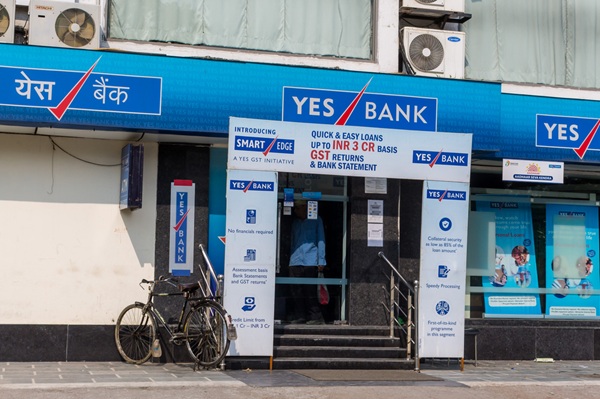
- YES BANK - Supreme Court rules against the 2020 write-off of AT-1 bonds worth 84 billion rupees.
- JIO FINANCIAL SERVICES July-September 2026 income, excluding dividend income, up 132% YoY. Jio Credit profit up 140%. Its AUM up 154%.
- TECH MAHINDRA declares an interim dividend of 15 rupees/share. Approves 1:1 bonus issue, subject to approvals. July-September 2026 PAT up 6.7% QoQ to 15.86 billion rupees from 14.86 billion rupees. Revenue up 3% to 161.802 billion rupees from 157.12 billion rupees.
- ANGEL ONE declares an interim dividend of 1.40 rupees/share. July-September 2026 net profit up 44.7% QoQ to 3.349 billion rupees from 2.314 billion rupees. Revenue flat at 14.269 billion rupees vs 14.297 billion rupees.
Must Read
- SC Blames RBI, Govt for Slip-up, But Who Pays for YES Bank AT-1 Verdict
- The RBI’s Explanation Should Not Follow the Confusion
- A Better Close Does Not Guarantee Better Settlement
- Is Quick Commerce Making FMCG Brands Pay for Their Own Customers
- India's Growth Rebalancing: A Patchwork of Crisis Responses, Not a Strategy
- Sebi writes to Irdai to include insurance data in consolidated statement
- Jio eyes big share of India's digital economy: Akash Ambani ahead of IPO
- When India said 'no' at WTO: A stand that still protects food security
- States must assess resource needs before approving data centres: NITI Aayog
- India's September unemployment rate at 5 %
- India customs scrutiny diverts Niger soybeans to Asia at steep discounts, sources say
- Trump says he is talking to Russia and China about denuclearization
(*Compiled from various media sources)
See you tomorrow with another edition of The Morning Edge.
Have a great trading day
More From BasisPoint