.png)


Sanjay Mansabdar brings over 30 years of global experience in derivatives trading and product design, including senior roles at J.P. Morgan, Bank of America, and ICICI Securities.
August 3, 2026 at 4:22 AM IST
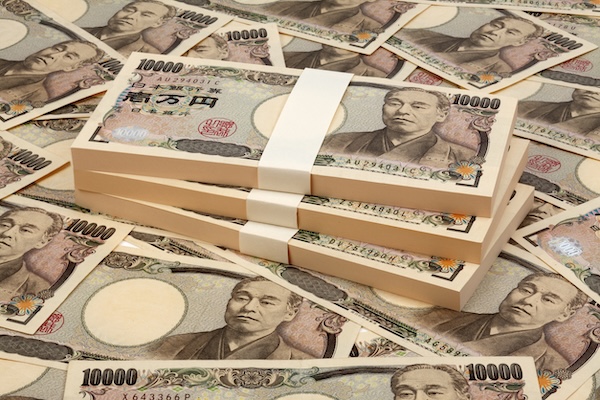
Intervention by the Bank of Japan in the dollar/yen market last week, at the Ministry of Finance’s direction, has raised the spectre of a renewed unwinding of the yen carry trade. With the US also intervening to buy yen, it is worth asking what this could mean for risk assets globally.
First, the facts.
On Thursday, the BoJ spent about $50 billion selling dollars to buy yen. Dollar/yen quickly fell from around 163 to 159, but the move was short-lived, as BoJ interventions generally have been, and the pair soon returned to around 161. The more durable move came on Friday, when the US Treasury intervened through the Exchange Stabilisation Fund to support the Japanese currency. News of the action emerged after a photographer captured a note on the Treasury Secretary’s notepad reading “Buy Yen 5-10 bil”. The Treasury bought yen against the euro rather than the dollar, sending the dollar/yen down to 157.
This coordinated and somewhat convoluted intervention, involving the euro, deserves attention. The prospect of coordinated action implies greater firepower than the BoJ can deploy alone and, at the very least, points to greater volatility in currency markets. It also raises the question of whether the intervention will be backed by a Plaza Accord-style policy shift, with wider consequences. As of Sunday, the intervention was said to be “ongoing”, lending weight to that possibility.
The yen has been very weak, trading beyond 160 to the dollar for several weeks. Japan depends heavily on imported food and energy, with the latter bill aggravated by higher oil prices since the Hormuz crisis, and the weaker currency has translated into significant inflationary pressure. The usual policy response would be to raise interest rates, which Japan has been doing since 2024 after exiting its negative rate policy. Zero or negative rates had been in place since the start of this century and were themselves partly a consequence of the policies that followed the Plaza Accord.
That conventional response is no longer straightforward.
A key constraint is the stock of Japanese government bonds, or JGBs, which amounts to around 230% of Japan’s GDP, compared with about 60% in India.
Sharp rate increases would drive bond prices down, inflicting large losses on banks, pension funds and insurers, while complicating the Takaichi government’s fiscal plans. Japan also initially welcomed the inflation that appeared in 2022 after decades of deflation and economic stagnation. That long period had produced zero and then negative interest rates, turning the yen into a funding currency for the carry trade. Raising rates too quickly risks killing Japan’s nascent revival, while a large-scale reversal of the carry trade could cause ructions in already volatile markets. The BoJ has therefore been raising rates slowly and in a well-telegraphed manner.
Why, then, is the US on board, and why is it using euro/yen as the channel for intervention? The third part of the problem is the AI trade, which has dominated asset returns over the past year and favoured US equities.
Capacity shortfalls across the AI complex have led to an enormous capital expenditure boom in the US, adding to inflationary pressure. The scale of that spending has prompted heavy issuance of both equity and debt, with hyperscalers now competing with the US government for bond investors’ money. US government bond yields are at multiyear highs even without rate increases.
Three Federal Reserve governors publicly dissented from the decision to hold rates steady last week, calling for increases instead, which means pressure for higher US rates is building.
In this environment, further sales of US Treasuries, as Japan liquidates some of its holdings to raise dollars for intervention, could put additional long-term pressure on yields. Japan holds about $1.1 trillion of US Treasuries. If other central banks follow and intervene, the pressure on US interest rates will increase at the margin.
Several markets, including dollar/yen, Korean equities, US equities, oil and gold, are already at extremes. A spike in US interest rates could therefore prick the leverage-driven bubble in these assets, with the economic consequences that follow when such bubbles burst. A reversal of the carry trade would also remove the cheap funding that has fuelled these positions. Like Japan, the US cannot afford a rapid rise in rates. Given President Donald Trump’s past criticism of Powell and of the Fed’s decision to hold rates steady, it plainly does not want one either.
Hence the need for US intervention, and the decision to act through the euro. No dollar leg means no direct implications for US rates or the dollar, or so the thinking appears to run. In any case, directly buying yen against the dollar is likely to deliver only temporary relief while US rates are expected to rise.
What are the Implications for Risk Assets?
Whether the AI capital expenditure boom is a bubble remains hotly debated, and bubbles are notoriously difficult to identify in real time. What can be said with some confidence is that the scale of spending appears difficult to justify by expected returns. Several markets have already moved sharply. Gold, silver and bitcoin have corrected by as much as 50% in recent months. Large numbers of Korean speculators have been wiped out as the country’s equities fell 40% in a few weeks.SpaceX is down 50% from its peak. A hedge fund with the unfortunate name Situational Awareness, pursuing a long-AI, short-software trade, has been liquidated after losing 67% in one month. Private credit markets have also essentially frozen.
In such an environment, an unwind of the carry trade is likely to inflict significant damage on risk assets, while coordinated policy changes in the manner of the Plaza Accord would raise further questions about an already fragile and extended economic environment. It is worth recalling that when the US adjusted its policies in the 1920s to help Britain with its sterling gold standard problem, it pricked the stock market bubble that culminated in the Great Depression. History need not repeat itself, but investors would do well to consider the risks.
More From BasisPoint