.png)

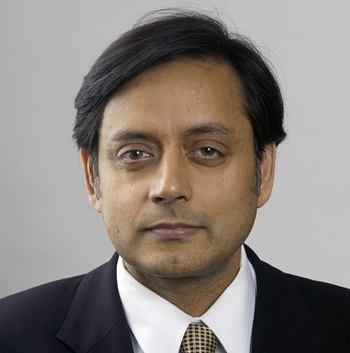
Shashi Tharoor, an MP of the Indian National Congress, was re-elected to the Lok Sabha for a fourth successive term, representing Thiruvananthapuram.
November 6, 2026 at 6:31 AM IST
Following a summer of discontent, India has entered an autumn of political crisis. During a scorching June and July, a youth-led movement, backed by Rahul Gandhi’s opposition Congress party, took to the streets to demand education reform. So potent was the movement that the central government, led by the Bharatiya Janata Party (BJP), was forced to make significant concessions, including the resignation of Union Education Minister Dharmendra Pradhan. But Indians are not finished: they have now set their sights on the electoral system.
At the epicenter of the upheaval is the Election Commission of India. For decades, the independent ECI was viewed as one of India’s most resilient democratic institutions. It won respect, domestically and internationally, for conducting the world’s largest electoral exercise, and emerging democracies often turned to it for advice. Today, however, it faces allegations of systemic bias, procedural opacity, and large-scale voter disenfranchisement.
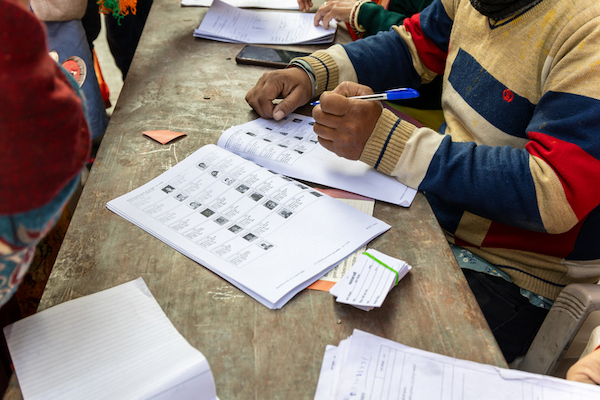
The controversy erupted in the spring, after the ECI carried out a “special intensive revision” of the electoral rolls in five states that went to the polls in April. Of course, it is standard practice to update the voter registry periodically, deleting the names of people who have died, relocated, or migrated. But this “intensive” exercise was far more sweeping than usual: 9.1 million names were removed in the state of Bengal alone.
The backlash was swift, with the opposition accusing the ECI of incompetence, malfeasance, or worse. It was also justified. Millions of voters had been flagged by automated systems over dubious “logical discrepancies,” such as inconsistent spellings of voters’ names across forms. Deletions were not verified adequately, and they disproportionately affected marginalised communities, rural migrant laborers from poorer states, and the urban working class.
Making matters worse, those who were removed from voter rolls were not given sufficient procedural recourse. While 3.4 million deleted Bengal voters appealed the decision, the ECI had time to hear only about 82,000 petitions before the next election—and of those, 91% were found to be valid. In other words, the bulk of the ECI’s mass deletions were wrong, but they were not corrected before the vote.
This cast doubt on the election results, especially given that they represented a sharp departure from past outcomes. The ruling BJP swept West Bengal for the first time, winning a staggering 207 of 294 seats in the legislative assembly. Though few claim that the deletions alone determined the outcome, the episode left India’s opposition seething.
Opposition parties claimed vote theft (vote chori) and accused the BJP of improperly manipulating the ECI. As critics have pointed out, recent legislative changes pushed through by the BJP gave the executive branch a decisive majority on the panel selecting ECI members. This fundamentally compromised the ECI’s institutional neutrality and operational independence.
Subsequent revelations raised further concerns about the conduct of the ECI’s revision. Illegal modifications had been made to a crucial voting document (Form 6), and a document challenging voter eligibility (Form 7) had been filed en masse. Moreover, new centrally-administered software had prevented local Electoral Registration Officers from correcting errors, resulting in discrepancies that led to deletions from voter rolls. The scale of the disenfranchisement was immense: more than 130 million names were struck off voter rolls in total.
The controversy was deepened by administrative opacity—the ECI initially refused to publish disaggregated data regarding voter-roll changes—and reports of internal dissent within the ECI. It appears that two commissioners objected to the unilateral decision-making of the chief election commissioner, Gyanesh Kumar, such as in pushing through controversial procedural changes.
All this gave India’s youth—already frustrated by systemic failures, unemployment, and corruption—a new target. Protests against the ECI, spearheaded by the Congress-led INDIA bloc, swept the country throughout September and October, with major cities facing continuous rallies, sit-ins, and attempts to march on key administrative buildings, including the Supreme Court and ECI headquarters. The protesters’ demand is straightforward: Kumar must resign.
Law-enforcement authorities have sought to suppress the protests with water cannons, heavy barricading, and bans on public gatherings near frequent protest venues. They have temporarily detained high-profile opposition figures and prominent student leaders. But, despite the pressure, the protesters have remained both peaceful and resolute. In fact, what began as localised demonstrations have developed into a sustained national political campaign, driven by student movements, opposition parties, trade unions, and civil-society groups.
Opposition figures, including Gandhi, have also filed petitions with the Supreme Court, which itself has been accused of paying insufficient attention to the irregularities revealed over the summer. They are seeking judicial intervention to halt the electoral revision, mandate the reinstatement of deleted voters, and restrain Kumar from performing his official duties pending an independent inquiry.
In the meantime, the ECI is trying to cover its tracks: it has stopped arbitrary deletions in other states, permitting voters whose inclusion has been challenged to remain on the rolls pending appeals. But it is still refusing accountability, insisting that the revisions are routine measures. Likewise, the BJP government has rejected all allegations of voter manipulation, characterising the demonstrations as politically motivated efforts to undermine national institutions. It is even conducting campaigns in defense of the ECI.
But, as with this summer’s education protests, concessions will likely prove unavoidable. The demonstrations have inflamed Indian politics, and the convergence of youth-driven protests with the formal political opposition has called into question public trust in state power. It is hard to see this crisis being defused without Kumar’s resignation. With thousands of protesters gathering in New Delhi as November begins, his position appears untenable.
Copyright: Project Syndicate, 2026.
www.project-syndicate.org
More From BasisPoint