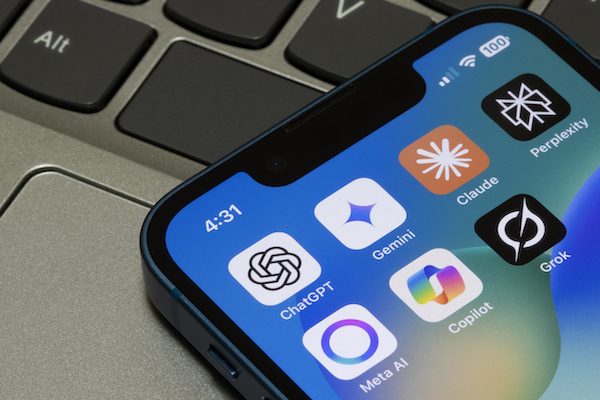
On August 10, Meta’s boss Mark Zuckerberg penned a 6,500-word essay proposing what AI’s superintelligence ought to be doing: shift the power of AI from the hands of a few to everyone. Titled “The Future is for Everyone”, the essay proposed “a philosophy based on individual empowerment as the source of prosperity, invention as the primary purpose of superintelligence, and balance of power as the foundation of safety.” He also announced the launch of an open-weight model called Muse Glimmer and pledged to open the weights of Meta’s larger model, Muse Spark 1.2. The advantage of an open-weight model is that it allows users to download, modify and host the model as they wish—something that proprietary models don’t allow.
A little more than two weeks earlier, Nvidia’s leather-jacketed CEO, Jensen Huang, had made a similar pitch, writing with others that America’s “AI leadership will be judged not by one frontier AI model, but by whether the United States builds a strong, open ecosystem that diffuses into every sector. This is essential for creating opportunities for innovation and prosperity across the country.”
While it may seem like both Zuckerberg and Huang et al were speaking against the dominance of OpenAI and Anthropic LLMs, the reality is that each is pitching in their self-interest. Huang benefits when there is more widespread use of AI (greater demand for compute means greater demand for Nvidia chips), and Zuckerberg gains when proprietary models yield ground to others, including Meta, which has struggled to get its AI act together.
To be fair, neither Dario Amodei of Anthropic nor Sam Altman of OpenAI has spoken against open-weight models in general. Their criticism and warnings have been centred around one particular kind of open-weight model: the cheaper Chinese ones. An American open-weight model with similar cost structures is less of a threat to both Anthropic and OpenAI than the cut-rate Kimi and DeepSeek. Hence, the allegations of ‘distillation’ of proprietary models (getting Claude to pass on its knowledge to a smaller model so that the latter is nearly as good without equivalent training) against the Chinese models.
AI for India
In this high-stakes game of chess between the US and China, where does India stand? How should it approach the debate of open-weight vs proprietary AI? With American companies (Nvidia is reportedly building its own open-weight, trillion-parameter LLM, Nemotron 4, to rival others) launching open-weight models that Indian users can download and customise, should we bother building our own LLMs at all? India never built a computer operating system like Windows or iOS, and we’ve done fine as users. Should we allow that with AI?
These are important questions, and the answer doesn’t lie in either outright rejection of foreign open-weight or proprietary models in favour of Indian LLMs, or abandonment of India’s quest for sovereign AI models. The answer has to be more nuanced because AI isn’t just any other technology or software capability. It’s a thinking technology unlike the dumb software programs we have used so far. Its ability to replace human cognition and effort represents the most profound invention mankind has made. In the years ahead, the country with the most powerful AI ecosystem—and not military—will be the new superpower. An LLM provider being forced to switch off a powerful model (like Anthropic was for Fable 5 and Mythos 5) for non-American users is no longer a potential threat; we’ve lived it. Therefore, LLMs made for India by India are a must.
Yet, India cannot afford to wait for its indigenous AI stack to be in place before it starts exploiting the power of AI. The hardware and the cloud parts are the hardest challenges in the stack to crack. But India can compete effectively in the LLM and applications space.
A Hybrid Approach
The way to do so would be to adopt a hybrid approach that combines various open-weight, proprietary and indigenous models to extract the most value from the AI investment. In fact, Nvidia just released an open-source model-routing library called NeMo Switchyard that automatically directs tasks to the most appropriate model. This approach mirrors what software services companies have long done: implemented and managed curated applications and systems for their enterprise clients. In the case of AI, this means a company would use a frontier model (the fastest and best horse) for the hardest tasks; the cheaper, but not-as-good, open-weight model would do a lot of the grunt work (not deep thinking, for instance), and an Indian LLM/SLM would manage tasks that require local context. Designing an optimal hybrid architecture is where the IT services companies would come in.
Of course, regulatory requirements would determine the hybrid approach in some sectors. Government departments, for instance, may opt for an American open-weight model running on local infrastructure and data centres. This keeps all data within India. An Indian bank’s BPO division, for example, would need to tailor its AI architecture to meet RBI’s regulations. The payment and account data that RBI requires to stay within India cannot be shipped off to a frontier model humming away on a server in, say, Virginia. And the DPDP rules let New Delhi decide where personal data may and may not travel.
So, anything that touches an account—a balance information, a transaction, a KYC record—would run on an American open-weight model hosted in India, inside the bank’s own data centre. But the everyday work is a different matter. Answering a routine query in Hindi or Tamil, transcribing a call, pulling off a scanned form are all grunt work, where an Indian model like Sarvam earns its keep. At roughly ₹4 per million tokens of input and ₹16 for output (for Sarvam-105B), it does the job at a fraction of frontier prices, and in languages the American models still stumble over. The BPO can confine the use of a frontier model—a Claude or a GPT—to addressing the genuinely hard problems: drafting a thorny dispute resolution or financial modelling. And the bank's own crown jewels—its products, its rules, its customer history—stay in house, fed to whichever model is on duty. No single vendor, American or Indian, ever becomes indispensable.
Interestingly enough, an American open-weight model doesn’t cost much more than a Chinese open-weight model in terms of tokens. As a consequence, the choice depends on licence terms, ease of integration with legacy systems, compliance friction, and strategic dependency—that is, whether India finds American or Chinese dependency more acceptable.
Riding American open-weight models today and building India’s own LLMs tomorrow may seem like contradictory moves. They are not. One simply precedes the other. It’s important for India not to become complacent. The sheer ease of downloading a capable model from Meta or Nvidia must not lull India into indefinite tenancy, the way cheap foreign software did. India should rent because it needs to at the moment. But, at the same time, build it must. Because with AI, import dependency will cost more than just dollars.
.png)