.png)

What Makes a Nation Difficult to Coerce?
From Kargil to hybrid warfare, national resilience is the ability to absorb shocks, recover quickly and retain the freedom to act when deterrence fails.

Lt Gen Syed Ata Hasnain is Governor, the State of Bihar, and Former Commander of India's Srinagar-based Chinar Corps.
September 7, 2026 at 4:08 AM IST
Military strategy has traditionally devoted enormous attention to deterrence. Can an adversary be persuaded that the costs of aggression will outweigh the gains? Can military capability, political signalling and the threat of retaliation prevent him from acting?
There is another question. What happens when deterrence fails and the adversary acts anyway? Deterrence is about preventing an adversary from acting. Resilience is about what happens when he acts despite it. Can the nation absorb the setback, recover quickly and continue to make its own choices? That is the real test of strategic resilience.
Geography, military capability, economic depth, energy and food security, technology and diplomacy all contribute. Yet something less tangible also matters: the determination of a society and its leadership to reject defeatism, adapt and recover.
When Coercion Fails
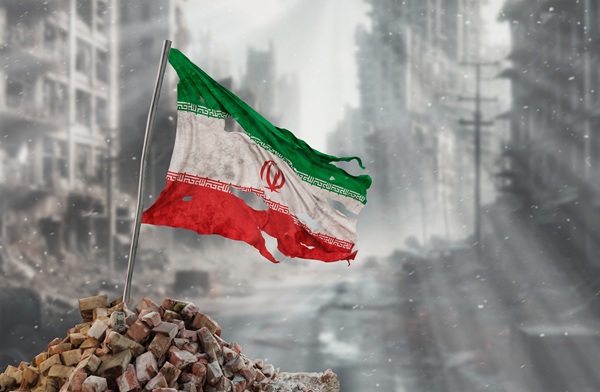
Iran is perhaps among the most instructive contemporary examples. For decades it has faced sanctions, diplomatic isolation, covert action, military pressure and restrictions on access to technology and finance. The economic costs have been considerable, but pressure has not automatically produced political compliance.
Iran invested in indigenous military capabilities, alternative economic relationships and instruments designed partly around survival under pressure. Whatever one's assessment of its policies, its experience demonstrates that the ability to impose pain is not necessarily the ability to secure compliance.
Russia adapted to sweeping sanctions after its invasion of Ukraine through alternative markets, domestic substitution and relationships outside the Western economic system. Ukraine represents another form of resilience. Despite invasion, territorial loss and immense destruction, it retained political cohesion, regenerated military capability and mobilised international support.
India And The First Reverse
India's military history provides powerful illustrations.
In 1965, Lt Gen Harbaksh Singh's conduct of operations in the western theatre became an enduring example of command resilience. Faced with a dangerous situation in Punjab and instructions to contemplate withdrawal towards the Beas, his determination to hold firm represented something larger than an operational decision. An adverse battlefield situation was not to be allowed to become a psychology of defeat.
Kargil in 1999 illustrates both coercion and counter-coercion. Gen Pervez Musharraf's plan achieved surprise. Pakistani troops occupied positions vacated by India during winter and gained the enormous tactical advantage of dominating heights. Had India accepted that reversing the occupation would be too costly, the strategy might have succeeded.
The weakness lay in what came next. Pakistan appeared inadequately prepared for India's determination to recover the positions and for the scale of military and diplomatic effort it was willing to employ. India reinforced its forces, massed artillery, used air power, reorganised logistics and accepted the considerable cost of fighting uphill at extreme altitude. Diplomatic pressure simultaneously narrowed Pakistan's room for manoeuvre.
Musharraf had a plan for creating the crisis but seemingly no convincing Plan B once India refused to accept the situation. Kargil thus offers a larger lesson: a coercive strategy cannot end with the success of its opening move. It must anticipate what happens when the adversary refuses to be coerced.
Ladakh in 2020 demonstrated the same principle differently. China's actions created a major military challenge at extreme altitude. India rapidly mobilised troops, armour, equipment and logistics and demonstrated its ability to sustain large forces through Himalayan winters. Surprise had created an initial disadvantage; it had not created an uncontested fait accompli.
From Resilience To Response
India's experience with Pakistan over the last decade adds another dimension. Resilience cannot simply mean acquiring a greater capacity to suffer.
Prime Minister Narendra Modi's approach increasingly emphasised that major acts of terrorism emanating from Pakistan could not be absorbed, condemned and then allowed to disappear into diplomatic memory. There had to be consequences.
The cross-LoC surgical strikes after Uri in 2016 were important beyond the physical damage inflicted. Even a limited, one-off strike could convey strategic intent by demonstrating the political willingness to cross a threshold Pakistan had come to regard as an Indian restraint. Balakot after Pulwama in 2019 carried the proposition further, while the response after Pahalgam reinforced the growing uncertainty surrounding India's likely reaction to another major terrorist attack.
Pakistan therefore has to calculate more carefully whether an act of terrorism can remain insulated from an Indian military response. That uncertainty matters. Resilience becomes more credible when the adversary knows that the state can both withstand the initial blow and impose consequences. The post Operation Sindoor situation is providing a similar setting.
Building National Resilience
Military capability is only one element of national resilience. Economic depth, energy and food security, technology, communications, critical infrastructure, diplomacy and societal cohesion determine how well a nation can withstand coercion. These capabilities cannot be assumed to work together effectively when a crisis arrives; they must be tested.
National-level wargaming should therefore extend well beyond military headquarters. Political leaders, bureaucrats, diplomats, intelligence professionals, economists, technologists, industry and infrastructure managers need to periodically confront simulated crises together. A border confrontation could coincide with cyber attacks, energy disruption, financial pressure, disinformation, sabotage or attacks on critical infrastructure. Wargaming identifies vulnerabilities, tests institutional coordination and, most importantly, generates alternative courses of action before a real crisis removes the luxury of time.
This becomes especially important in hybrid warfare, where coercion may occur at varying levels of intensity without crossing a clearly defined threshold of conflict. The purpose may be to create cumulative pressure and confusion while avoiding a conventional response.
India's recent experience has demonstrated an increasing capacity to withstand such pressure while retaining the option to respond. An adversary must therefore consider not only India's military strength but its ability to absorb disruption, mobilise different instruments of national power and impose consequences.
Wargaming should consequently become part of the working philosophy of every agency involved in national security. Hybrid warfare seeks advantage in the spaces between peace and war; national resilience must be strongest precisely there. A resilient nation prepares to be surprised—and to find the right response.
Resilience Beyond The Battlefield
The principle is equally visible in civil life.
Disaster management cannot prevent every earthquake, cyclone or landslide. Preparedness is judged by what happens after impact; whether communications survive, institutions function, emergency services respond and essential systems recover.
Businesses face much the same test. Some with enormous resources have disappeared because they could not adapt to technological change; others have recovered from severe reverses because they recognised changing circumstances and found new opportunities.
Individuals, too, demonstrate resilience by accepting that a setback has occurred without allowing it to determine everything that follows. Mental resilience is ultimately the refusal to surrender agency. Nations are no different.
When Resilience Becomes Deterrence
No nation can prevent every act of coercion. The real test of national strength is whether adversity can force a change of course. If a nation can absorb the blow, recover, retain its freedom of choice and remain capable of imposing consequences, the adversary must reconsider the value of coercion. That is when resilience itself becomes deterrence.
More From BasisPoint