.png)


Dr K. S Sujit, Professor at the School of Business and Management, Christ University, Bangalore
October 6, 2026 at 5:57 AM IST
The UPI merchant fee may sit on the retailer’s bill, but that does not settle who will ultimately bear it. From October 15, the 0.4% charge on eligible payments above ₹2,000 will give merchants a new cost to absorb, recover or work around. The response at the checkout could prove more complicated than the rules suggest.
Anyone who has haggled in an Indian electronics market knows that a payment method can become part of the price negotiation. The question now is whether the familiar “cash or card?” will acquire a new variant: “cash or UPI?”
The Convenience Premium
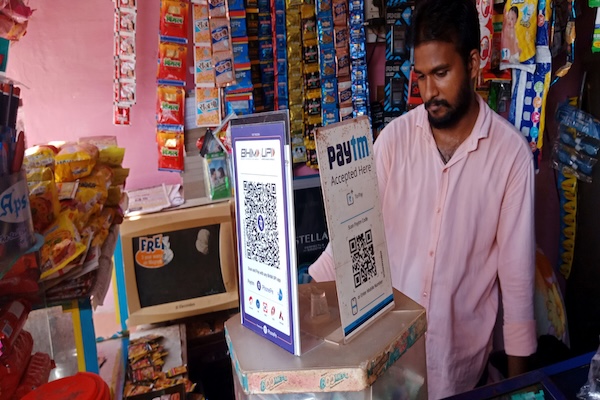
UPI has become embedded in everyday commerce. Consumers increasingly expect to scan a code for everything from a ₹20 cutting chai to an ₹80,000 television. That familiarity gives merchants a reason to retain UPI even when acceptance carries a cost.
For many consumers, particularly in urban India, the convenience of UPI has become difficult to substitute. But convenience alone does not determine who pays. Merchants’ ability to recover the fee will depend on competition, their margins and customers’ willingness to switch payment methods.
Many retailers operate in competitive markets with thin margins. A 0.4% Merchant Discount Rate may seem small, but every rupee counts. A ₹10,000 eligible UPI payment incurs a ₹40 MDR. An 18% Goods and Services Tax applies to the MDR amount itself, not the full transaction value, adding ₹7.20 for a total payment-processing charge of ₹47.20. While eligible GST-registered businesses can claim input tax credit on the GST component, for merchants ineligible for ITC, it becomes a permanent additional cost.
Payment Bargain
The argument over payment costs has a long retail history. Buyers of appliances or electronics may recall being offered different prices for cash and card, with merchants citing card acceptance fees as a reason for the difference.
Some transactions also came with the separate question of whether a bill would be issued. That concerned tax compliance, not merely the cost of accepting a payment. Cash transactions remain subject to the same applicable invoicing and tax obligations.
Zero-MDR UPI reduced one source of friction: merchants could accept a digital payment without the acceptance charge associated with cards. It also created a transaction trail, although digital payment alone does not guarantee that a sale is correctly reported for tax purposes.
The new fee could revive payment-linked bargaining: “Cash or UPI?” Some merchants may offer cash discounts; others may absorb the cost or spread it across their prices. Cash, however, brings its own costs of handling, security and reconciliation. Avoiding MDR does not necessarily make it the cheaper option overall.
Also, thresholds and exemptions protect smaller payments and eligible merchants. They also create incentives to reshape how transactions are presented. The following are possible responses, rather than evidence of practices already becoming widespread.
The Personal Transfer Route
Person-to-person transfers remain free of MDR, subject to applicable transaction limits. That could encourage some merchants to direct business payments towards personal accounts rather than official merchant QR codes.
For the customer, an instruction to pay a personal number may look innocuous. For the business, it can weaken reconciliation and oversight. Where employees divert receipts to their own accounts, the problem extends beyond fee avoidance to the risk of misappropriation. A commercial receipt does not become a genuine personal transfer merely because it reaches a personal account.
The Split-Payment Temptation
Payments up to ₹2,000 remain outside the MDR charge. That creates an incentive to divide a larger purchase into several smaller payments rather than process it once.
Whether such splitting is permitted, detected or treated as circumvention will depend on the framework and its enforcement. Repeated payments also add inconvenience for customers and reconciliation work for merchants. The saving may be small, but the incentive is worth anticipating.
The QR Code Carousel
Eligible small merchants receiving up to ₹100,000 a month through UPI QR payments retain zero-MDR treatment. The challenge is to ensure that a larger business cannot claim the same benefit simply by scattering receipts across accounts.
Multiple QR codes may serve legitimate business purposes. But where their purpose is to fragment one merchant’s receipts to obtain an exemption, banks and payment providers will need to assess the underlying business rather than each code in isolation.
The “Essential” Disguise
Specified categories, including agriculture, railways, telecom, fuel and insurance, qualify for a concessional flat ₹5 MDR on eligible transactions above ₹2,000.
The difference in charges creates an incentive for misclassification. Banks and payment aggregators will need to verify that a merchant’s category reflects its actual business. Deliberate misrepresentation would be a breach of the rules, rather than an inventive response to them.
Enforcement will require more than a warning at the counter. Banks and payment providers will need to identify unusual payment patterns, examine commercial activity flowing through personal accounts and keep merchant classifications accurate. They must also avoid treating every repeated small payment or additional QR code as evidence of evasion.
UPI’s scale requires continuing investment in infrastructure, security and reliability. MDR is intended to contribute to that funding. To support broader digital inclusion, the framework proposes directing an amount equivalent to 5% of MDR collections towards a dedicated fund to promote UPI acceptance and encourage sustained usage among small merchants.
The funding question is legitimate. So is the question of how that cost is distributed. A fee formally charged to merchants may ultimately be absorbed by retailers, recovered through prices or influence customers’ payment choices. The outcome will vary across businesses.
As October 15 approaches, the test is whether the framework can fund the network while preserving the ease of acceptance that made UPI ubiquitous. The rules name the merchant as the payer. The checkout will reveal where the burden finally lands.
More From BasisPoint