.png)


Phynix is a seasoned journalist who revels in playful, unconventional narration, blending quirky storytelling with measured, precise editing. Her work embodies a dual mastery of creative flair and steadfast rigor.
September 21, 2026 at 3:35 AM IST
Dear Insighter,
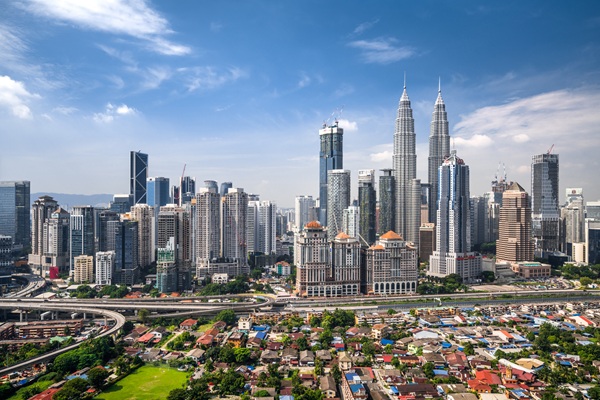
The first thing that hit me in Kuala Lumpur was the silence.
Not the absence of life. The city hums, buses run and street vendors call out. But there is an absence of assault. No horns blaring at 11am. No trucks rattling windows. No construction drills competing with a car alarm.
For someone who has lived all their life in Mumbai, where overstimulation is the default setting and your nervous system learns to vibrate at a frequency you didn’t choose, this quiet is disorienting. Almost… rude.
I kept waiting for the noise to start. It never did. And strangely, that unsettled me more than the chaos ever has.
It reminded me of those hauntingly beautiful Asian or European films with no background score, only footsteps, breathing and a kettle whistling somewhere. Real sounds. It looks sad somehow. Deeply interesting and enriching, yes, but sad. Because silence forces you to sit with yourself. And when you’ve spent your whole life running from pothole to deadline to local train, sitting still feels like failure.
Kuala Lumpur bustles and thrives. But it doesn’t throb the way Mumbai does. For someone who has spent a lifetime feeding off chaotic energy, where even despair gets carried along by forward momentum, that absence feels like deprivation.
But perhaps discomfort with quiet isn’t really about noise. It is about what silence reveals. When the external chaos stops, you start hearing the internal kind.
And right now, there is plenty we are missing.
Take bond markets. Michael Debabrata Patra notes that government bond yields globally are at levels not seen in decades. Japan’s 10-year yield has touched 3% for the first time since 1996, the UK’s 30-year yield is at its highest since 1998, and the 10-year US Treasury is flirting with 5%. India, despite its outlier status and strong fundamentals, is seeing an unusual tightening in longer-term yields even as short-term rates fall under a liquidity overhang.
Sanjay Mansabdar asks the uncomfortable question: are Indian interest rates simply too low? When the government bond yield, the benchmark for every other rate in the economy, sits below what growth and inflation imply, leverage expands, asset prices inflate, capital flows out and the rupee comes under pressure. The taxation bias favouring debt over equity does not help. But the deeper problem is that an artificially low hurdle rate can distort the entire economy.
And then there is transmission. Abhishek Dey examines the RBI’s 125 basis points of rate cuts in 2025 and finds that transmission was anything but mechanical. Fresh loan rates stopped falling after the repo rate settled at 5.25%, while outstanding loan rates continued to edge down. Deposit rates fluctuated. The relationship between policy rates and what banks actually charge or pay became messy.
So when Dhananjay Sinha argues that the RBI must begin hiking rates as inflation accelerates, the question is not simply whether the central bank will act. It is whether the plumbing works well enough for the signal to reach the tap.
Speaking of taps that do not reach, Sharmila Kantha finds something quietly devastating in the ASUSE data. India has 79.25 million enterprises, but only about 10 million employ anyone. Most are one-person operations running at subsistence level.
Rudra Sensarma points to GST data as part of the solution. Drawing on Joseph Stiglitz and Andrew Weiss’s work on information asymmetry, he argues that GST filings have become a digital credit history for millions of firms. The handwritten bahi-khata that no bank could read has become GSTR-1 and GSTR-3B, reconciled against e-invoicing trails. But the smallest firms remain invisible.
And then there is gold. Vivek Kaul puts the numbers into perspective. Gold loans stood at ₹9.1 trillion in July 2026, up 235% from July 2024, and now account for 9.3% of retail loans. Of the ₹23.8 trillion increase in outstanding retail loans over those two years, gold loans contributed ₹6.4 trillion, or almost 27%.
Banks and NBFCs may celebrate the growth. But when the categories accounting for around 80% of the workforce have seen real incomes shrink, pledging family gold is not necessarily clever leverage. It can be a distress signal. The family chest is emptying, and we are calling it growth.
Babuji K examines the RBI’s proposed amendments to NBFC credit facilities, including a ban on revolving credit products. The objective is understandable: prevent evergreening, where struggling borrowers continually redraw against the same facility. But without a tenor floor or transition period, the rules could push MSMEs and thin-file borrowers towards informal lenders.
Sagari Gupta raises a related question about the RBI’s draft KYC amendments, which cap bank-initiated freezes on suspected cyber-fraud accounts at 60 days. The debate has focused on how quickly innocent customers get their money back. K. Srinivasa Rao makes a similar point about bank profitability. NIM is only the visible tip of the iceberg. Asset-liability management is what sits underneath. India’s average NIM of 3.3–3.75% looks healthy against a global average of 1.63%, but a NIM-centric approach can encourage short-term risk-taking at the expense of long-term stability.
Rahul Ghosh, meanwhile, sees another story emerging. Bank credit-to-GDP, stuck around 52% for 15 years, has climbed to about 62% in three years. Several East Asian economies entered prolonged high-growth periods after crossing roughly 60%. Combined with improving total factor productivity, Ghosh argues, that could point to a structurally stronger growth phase.
Rajeev Verma, reading the WTO Trade Policy Review, notes that India’s trade-to-GDP ratio moderated to 45% in 2024, while the merchandise deficit stood at 7.3% of GDP, partly offset by a 4.8% services surplus. The challenge is no longer whether India should participate in global trade, but how it builds competitiveness.
G. Chandrashekhar takes that argument into agriculture. India is the world’s largest rice exporter and second-largest wheat producer, yet imports 6–7 million tonnes of pulses and 15–16 million tonnes of vegetable oils annually, costing more than $20 billion in foreign exchange.
Sharmila Chavaly looks at another national ambition: nuclear power. The 500 MWe Prototype Fast Breeder Reactor at Kalpakkam achieved first criticality on 6 April 2026, a genuine engineering milestone. But, as Anil Kakodkar has argued, demonstrating that India can build a fast reactor is not the same as demonstrating that it can build a fast-reactor economy.
Indra Chourasia asks what exactly investors are pricing in the NSE IPO. At an indicated valuation of ₹4.42 trillion, NSE would trade at 42.88 times trailing earnings, above most global exchange groups. The bullish case rests partly on India’s financialisation: demat accounts have risen from 80 million in 2021 to 237.7 million by August 2026. But volume growth alone does not establish durability. For an exchange, trust is not an ESG appendix. It is the foundation.
Then there is Tata. R. Sridharan argues that RBI’s push to list Tata Sons does not necessarily have to destroy the Tata ethos. International structures such as Hershey show how family or institutional influence can coexist with a listed company. Chandrika Soyantar examines the Shapoorji Pallonji angle. With the SP Group holding 18.37% of Tata Sons and facing a refinancing clock, the Cargill-Mosaic model offers a possible reference point. But after RBI’s rejection, it is no longer an alternative to listing so much as a potential bridge for the SP Group.
And The Independent Director invokes Sisyphus. Noel Tata, unlike Camus’s mythical figure, cannot simply find meaning in pushing the boulder forever. There are shareholders, succession questions and fiduciary responsibilities. The metaphor becomes less about endless repetition and more about two people pushing the same rock in different directions, towards a summit whose destination is still being negotiated.
Rakesh Khar turns to Volkswagen’s 51%-owned joint venture with JSW Group. India’s auto market has humbled global manufacturers before. Consumers demand aggressive pricing, low maintenance costs and fuel efficiency, and ownership changes cannot erase decades of market history. In Relinquishing the Wheel, he pushes the question further: can back-end efficiencies and better regulatory engagement alter Volkswagen’s position without underestimating the strength of Maruti Suzuki, Tata Motors and Mahindra & Mahindra?
Anil Katia and Ganga Narayan Rath examine UPI’s new Merchant Discount Rate. The headline rate is 0.40% on P2M transactions above ₹2,000, capped at ₹300. The Parliamentary Standing Committee on Finance has put UPI’s annual costs at about ₹207 billion against a government budget of ₹20 billion. For a kirana with a 5% margin, a ₹12 charge on a ₹3,000 transaction consumes 8% of the margin. Worse, the ₹2,000 threshold creates an obvious incentive to split transactions.
R. Sridharan takes the conversation somewhere stranger: AI and human extinction. His counterpoint to the usual doom narrative is that an AI dependent on human-built infrastructure may have an incentive to keep humans alive. Power systems, data centres and physical infrastructure do not maintain themselves. The risk, he argues, may be less extinction than domestication. And if nuclear powers once built a hotline to manage existential risk, perhaps AI deserves a similar institutional response.
The geopolitical pieces return us to the question of how countries navigate competing pressures. Rajesh Ramachandran examines India’s response to US Senator Richard Blumenthal’s sanctions bill and the implications for India-US relations and energy security. Rajesh Mahapatra looks at the BRICS summit and its 140-paragraph New Delhi Declaration. The communiqué preserved common ground on restraint, dialogue and multilateral reform, while avoiding enforceable positions on some of the most divisive geopolitical questions.
And finally, Sujit Kumar brings us back to Mumbai. Every monsoon, we measure reservoirs, rainfall, drains and pumping stations. The BMC’s 2026–27 budget is ₹809 billion, including ₹18 billion for stormwater drainage and ₹180 billion in climate capital expenditure. Tracks have been raised, pumping stations installed and desilting undertaken. But Kumar asks the question that matters after the water has receded: what does recovery look like?
The harder questions sit quietly underneath.
Perhaps the lesson is that when you step outside your own city, you finally hear what it has been trying to tell you. The quiet is loud when you’ve lived in chaos. Maybe that is the point.
Until next time, yours in the uncomfortable quiet.
Phynix
Also Read:
- Five Trends in India’s Latest Trade Numbers by Ajay Srivastava: Headline export growth hides a reliance on pricey oil and import-heavy electronics rather than deeper domestic value addition.
- Warsh Starts With a Hike, but Keeps the Fed’s Next Move Open by Dhananjay Sinha: The Fed’s first hike since 2023 confirms Warsh’s hawkish start while leaving markets to guess the next move from data.
- Replacing Powell with Warsh Didn't Work, At Least Not Yet by R. Gurumurthy: Trump swapped the Fed chair, but inflation still gets a vote—and this time it voted for a hike.
- Micron: When Scarcity Creates Rent, and Everyone Wants a Share by R. Gurumurthy: AI scarcity made Micron spectacularly profitable; the real question is how long the rent lasts before competition eats it.
- When Regulators Might Be Right but the Timing Might Still Be Wrong by R. Gurumurthy: A rule can be legally sound and economically rational, yet still be undone by the passage of time.
- Fraudsters Do Not Need Better AI Than Us by Srinath Sridharan: Criminals win through incentive, speed and adaptation—India’s digital defences must learn to see the whole fraud stack.
- The Himalayas Need an Accord Beyond Geopolitics, and the Alpine Convention Can Show the Way by Prakash Nanda: Avalanches and floods don’t respect borders, so a Himalayan convention must be decoupled from geopolitical rivalries.
- The Retailer We Don’t See by Minari Shah: Dark stores power ten-minute delivery; now the question is whether quick commerce can make food safety visible at scale.
- The Conference Boom Needs a Measure Beyond Footfall by Srinath Sridharan: India knows how to convene; the next test is whether its conferences deepen engagement or merely magnify spectacle.
- When Being Good is Not Enough: Kindness is childhood; adulthood is owning the small promises, responsibilities and consequences when something goes wrong.
- In Search of the Lesser Florican by Maneet Pal Singh: The elusive bustard’s decline mirrors India’s vanishing grasslands—what cranes are to wetlands, floricans are to grasslands
Beyond this Newsletter
The BasisPoint app brings you our latest insights, analysis and updates as soon as they are published.
Download the BasisPoint app from Google Play or Apple’s App Store and stay connected to the ideas shaping India’s economy, policy and markets.
You can also follow us on WhatsApp Channel:
https://whatsapp.com/channel/0029Vb6wYey3wtb36FzRg52S
More From BasisPoint