.png)


Nishat Anjum is a journalist and researcher. Beyond financial markets, her work explores the possibilities for peace in contemporary societies.
October 31, 2026 at 6:15 AM IST
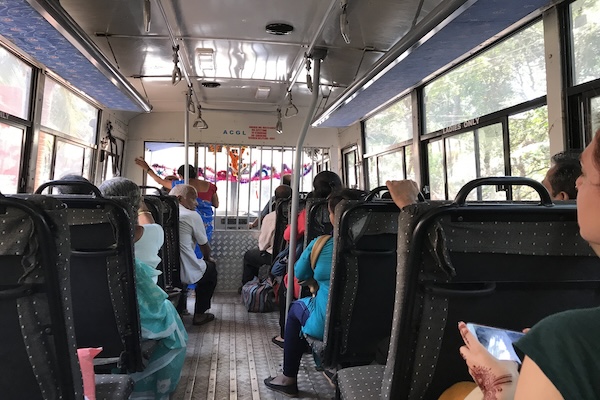
Free bus rides for women have a curious place in Indian politics. When a government introduces them, opposition parties can be quick to question the cost. Come election time, however, the same benefit can become something worth promising voters.
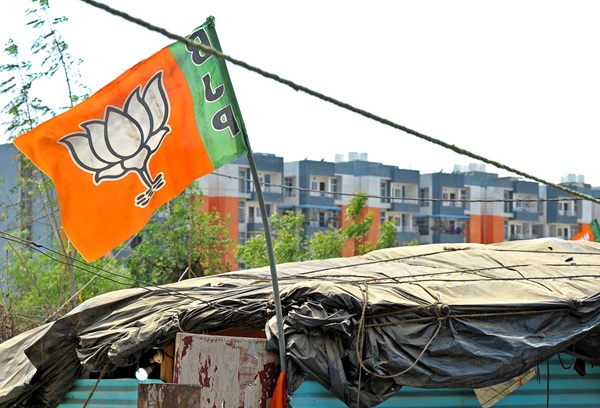
Delhi offers an example. In 2019, both the BJP and Congress questioned the Aam Aadmi Party government's proposal for free Metro and bus travel for women. By the 2025 Assembly election, however, the BJP was promising to continue free bus rides for women.
The proposals were not identical, and questions about the financial sustainability of public transport are legitimate. But the contrast says something about how these schemes are discussed: as an expensive giveaway in one political setting and a desirable public benefit in another.
Somewhere between the criticism and the election promises, another question tends to get lost. What if free public transport is not just a subsidy, but also a way of getting more women into the workforce?
India's October Monthly Economic Review offers an interesting statistic. According to the National Household Travel Survey for 2025–26, only 41.9% of female workers travel at least one kilometre to work, compared with 61.9% of male workers.
In rural India, nearly 65% of women workers walk to their workplaces. Women also spend less on commuting than men, averaging ₹533 a month against ₹835.
At first glance, that might suggest women have cheaper journeys. But spending less on transport does not necessarily mean that getting to work costs them less.
It could also mean that the jobs they can realistically take are closer to home. This is where the idea of the pink tax becomes relevant.
The term is usually associated with women paying more for certain products and services. But there is also a pink tax on mobility, and it is rather less obvious than the price difference between two products on a supermarket shelf.
A woman may pay the same bus fare as a man, yet face a very different calculation about whether she can use that bus.
Is the stop within walking distance? Is the road to it well-lit? Will the service still be running when she finishes work? Is there another way home if she has to stay late?
If the answers are uncertain, a cheaper journey may not be a practical option at all. A woman might choose a more expensive cab over a bus, take a longer route to avoid an isolated stretch, or limit herself to jobs that allow her to return home before dark.
The extra cost may show up in her transport bill. But it may also show up in the opportunities she gives up.
Research by the World Bank on commuting in Mumbai found that women were more dependent on walking and public transport, while men were more likely to use personal vehicles. When women needed alternatives, they often relied on more expensive options such as auto-rickshaws and taxis.
The researchers described this as an implicit pink tax on mobility. Women could spend as much time commuting as men, yet reach fewer economic opportunities because they travelled using slower modes of transport.
The cost of a commute, then, is not just the fare or the time spent travelling. It is also the range of jobs that the journey puts within reach.
Consider two jobs, one close to home and another offering better pay but requiring a longer commute. For someone with a personal vehicle and few restrictions on working hours, the choice might be relatively straightforward.
For someone dependent on public transport, concerned about returning late and responsible for most of the work at home, the better-paying job may not be the better option after all.
That brings us to another constraint that rarely features in discussions about transport subsidies: the work women do before leaving for work and after returning home.
India's 2024 Time Use Survey, also cited in the October Monthly Economic Review, found that women spent an average of 236 minutes a day on unpaid domestic services, compared with just 24 minutes for men. Women also spent 47 minutes on unpaid caregiving, against 13 minutes for men.
These are averages across the surveyed population, rather than only those who performed such activities. Even so, the difference is striking.
A commute of an hour each way might appear manageable in isolation. But add cooking, cleaning, childcare or caring for elderly family members, and the calculation changes. The time available for travelling farther to work may already be spoken for.
What if the commute disappears?
There is, of course, another solution to the problem of commuting: work from home.
No crowded buses, no expensive cab rides, no worrying about getting back after dark. Surely that makes life easier? It can. But there is a catch.
Working from home removes the journey to the office. It doesn't necessarily remove the work waiting at home.
A 2025 study published in Feminist Economics, examining housework among dual-earning urban Indian couples during the pandemic, found that while both men and women took on more domestic work, women continued to shoulder more of the routine, time-sensitive tasks.
Lockdowns were an unusual period, with schools closed and domestic help often unavailable, so the findings cannot be applied to every remote-working arrangement today.
But when women already shoulder substantially more domestic work and caregiving, flexibility can also create the expectation that they will accommodate everyone else's needs around their working day.
A saved commute might mean more time for paid work. Or it might become more time for cooking, cleaning and caregiving.
Working from home may solve the problem of getting to work, but not necessarily the problem of having enough uninterrupted time to do it. Even when the commute disappears, the second shift doesn't.
Can free transport make a difference?
None of this means that free bus travel is economically insignificant. A 2026 study by researchers at IIT Bombay found that free bus schemes increased women's participation in paid work, particularly in districts where restrictive social norms placed greater limits on their mobility.
The benefit may extend beyond money saved on tickets. When more women use public transport, travelling outside the home may become easier and more socially acceptable for others as well.
But the evidence is not entirely one-sided. Another study published in The Economic Journal found that although free travel reduced women's transport expenses, it did not significantly increase overall female employment in the short run. The effects varied across groups of women.
Lower fares can remove one barrier without removing all the others. A free bus ticket does little about the poorly lit walk to the bus stop, a service that ends before a shift does, or the unpaid work waiting at home.
And the fiscal question cannot be dismissed. Free travel has a cost, and governments need to consider whether they can sustain the expenditure without compromising the quality, frequency and reliability of transport services.
A free bus that arrives infrequently, is overcrowded or does not connect residential neighbourhoods with workplaces may be of limited use to someone trying to hold down a job.
The question is what governments are trying to achieve through free transport, whether they are achieving it, and whether the same resources could deliver better results if combined with safer streets, reliable services and last-mile connectivity.
The jobs that don't appear in the survey
The latest travel survey also comes with an important limitation. Its figures describe the commuting patterns of people who are already working, and count travel of at least one kilometre. They do not establish why women travel shorter distances, or tell us how many women have missed employment opportunities because a journey was too expensive, inconvenient or unsafe.
A woman who never applied for a job because she could not get home safely after a late shift will not appear in the statistics on commuting workers. Neither will the higher-paying job someone decided against because it would leave too little time for responsibilities at home.
Those invisible decisions may be among the most important parts of the story. India spends considerable time discussing how to increase women's participation in the workforce. We talk about education, skills, wages, job creation and the need to bring more women into formal employment.
All of these matter. But a job can exist, and a woman can have the qualifications to do it, without that job being practically accessible to her.
The distance between home and work is not measured only in kilometres. It is also measured in money, time, safety and the responsibilities waiting at either end of the journey.
That is what makes the political debate around free travel somewhat incomplete. Whether the scheme is being criticised as a subsidy or celebrated as an election promise, the discussion often begins and ends with the ticket price.
But the more useful question is what that ticket makes possible, and what remains impossible even after the fare has been removed.
A bus ticket can be made free overnight. The unpaid work waiting at home, the poorly lit walk to the bus stop and the restrictions on travelling after dark are considerably harder to remove.
More From BasisPoint