.png)


Lt Gen Syed Ata Hasnain is Governor, the State of Bihar, and Former Commander of India's Srinagar-based Chinar Corps.
August 17, 2026 at 6:04 AM IST
When I was invited to address Patna Law College, a 117 years old iconic institution, I chose to dwell on a subject that I believe could become increasingly consequential for the legal community in the years ahead. The nature of economic growth and the galloping pace at which technology is entering everyday lives of citizens and fundamentally changing the way society functions, businesses operate and systems of work evolve.
India is entering a period in which the legal profession could change as profoundly as the economy itself. As the country grows, Indian businesses globalise, technology accelerates and competition for resources intensifies, the demand for lawyers will not merely increase in volume. It will change in character.
Global Footprints
This will create enormous opportunities for young lawyers. But it will also demand a different kind of lawyer. The lawyer of tomorrow cannot afford to be legally literate alone. He or she will need some understanding of economics, technology, international relations, finance and public policy. The boundaries between these disciplines are already becoming porous.
Consider intellectual property. Patents and trademarks were once largely associated with protecting inventions and brands. Today, intellectual property sits at the heart of technology competition, pharmaceuticals, semiconductors, entertainment and global commerce. Technology-transfer agreements, licensing arrangements and ownership of data can become strategic matters for both companies and countries.
The same applies to international trade. Countries that are friendly and strategically aligned can still become adversaries in a commercial dispute. Differences over tariffs, market access, investment, taxation, technology or contractual obligations can take companies and governments into arbitration and litigation. The relationship may remain friendly at the political level while lawyers argue fiercely over rights and liabilities.
That is not a contradiction. It is the reality of an interconnected world.
There is also a larger question emerging around international law. The world has built institutions and legal mechanisms to regulate relations between states, but the effectiveness of law ultimately depends on compliance and enforcement. What happens when a court or tribunal delivers a decision but the political will to enforce it is weak? What happens when national interest collides with an international obligation? China’s example of non-execution of the ICJ judgment in the South China Sea dispute is a case in point.
These are not abstract questions for future lawyers. They are becoming part of the strategic environment in which India will operate.
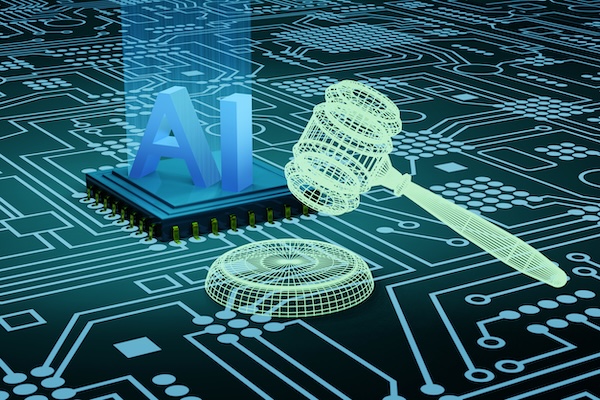
Law and AI
If an AI system produces an erroneous legal conclusion, who is responsible? If an image, video or voice can be synthetically created, how does a court establish authenticity? If an algorithm makes a decision affecting a person's rights, can that decision be challenged and explained?
The answer to one question is becoming clear; lawyers cannot afford to remain spectators to technological change. AI may not replace lawyers. But lawyers who understand AI may replace lawyers who do not.
The transformation of criminal law may be even more dramatic. The traditional criminal could be physically located, identified through witnesses or documents, and linked to a crime through tangible evidence. The criminal of the digital age may operate anonymously across borders, use encrypted communications, synthetic identities, cryptocurrency and artificial intelligence, and leave behind evidence that itself may have been manipulated.
The investigation therefore becomes more difficult even before a case reaches court. What is the source of the digital evidence? Has it been altered? Who had access to the device or account? Can metadata establish authenticity? Can a deepfake be distinguished from genuine evidence?
India's own legal framework is already adapting to this reality. The Bharatiya Sakshya Adhiniyam, 2023 expressly recognises electronic and digital records and provides a framework for their admissibility. The Bharatiya Nagarik Suraksha Sanhita also provides mechanisms for obtaining electronic communications and devices that may contain digital evidence. The law is beginning to recognise that the digital world is not an adjunct to the real world; it is now part of the evidentiary world of the courtroom.
Digital Age
For centuries, the mental picture of justice has been a courtroom, lawyers appearing before a judge and parties waiting for a decision. That model will remain essential for many disputes. But not every dispute needs to travel through the entire judicial process. Online Dispute Resolution, or ODR, can combine mediation, negotiation, arbitration and technology to resolve suitable disputes remotely. It can reduce cost, overcome geographical barriers and allow parties to communicate remotely and at their convenience. India has already examined ODR as a way of expanding access to justice and reducing the burden on courts.
The digital age will therefore change not only the evidence presented before courts, but also the way disputes are prevented, negotiated and resolved. A good lawyer of the future may sometimes earn professional respect not by taking a dispute to court, but by preventing it from reaching court.
This is particularly relevant to commercial law. In a world of complex contracts, the quality of drafting, risk allocation, dispute-resolution clauses and early intervention can determine whether a disagreement becomes a manageable commercial problem or a prolonged international dispute.
There is another dimension that will become increasingly important, resource scarcity. As populations grow and resources come under pressure, disputes over water, energy, critical minerals, food, land, maritime resources and access to technology are likely to increase. Such disputes may begin as economic disagreements, become diplomatic problems and eventually reach courts, tribunals or arbitration panels.
The lawyer will therefore increasingly find himself or herself at the intersection of law, economics and national interest.
Yet there is one thing that cannot be outsourced to technology or changed by economic growth; the character of the lawyer, his ethical orientation.
The more complex the legal environment becomes, the more important integrity, independence, judgement and fairness will become. Technology can assist a lawyer, but it cannot provide wisdom. Artificial intelligence can analyse information, but it cannot substitute for professional responsibility. Legal knowledge is essential, but so is the ability to understand the human consequences of applying the law.
This is why institutions such as Patna Law College have a responsibility beyond producing graduates who can pass examinations. They must produce professionals who can understand a changing world.
Patna Law College was born in 1909. The world in which its students will practice law in the coming decades could scarcely have been imagined then. Their task is not merely to inherit that legacy. It is to extend it.
The lawyer of tomorrow will need to understand the courtroom, but also the boardroom; the statute book, but also the algorithm; the national legal system, but also the international system. That is the challenge before India's young lawyers. It is also an extraordinary opportunity.
(This is an essay based upon the author’s address to the Faculty, Alumni and the Students of the 117-year-old Patna Law College, on its Foundation Day.)
More From BasisPoint