.png)

Ten Arms, One Leap: Why Humans Keep Betting on a Better Tomorrow
Durga pooled her powers, Delhi’s youth took to the streets, and the RBI hiked. Why every act of progress is a leap of faith, even a 25 bps one.

Phynix is a seasoned journalist who revels in playful, unconventional narration, blending quirky storytelling with measured, precise editing. Her work embodies a dual mastery of creative flair and steadfast rigor.
October 12, 2026 at 3:23 AM IST
Dear Insighter,
Every October, India stages its annual festival of contradictions. In one lane, a pandal rises overnight out of bamboo and tarpaulin, where a goddess with ten arms is about to dispatch a buffalo demon. In the next, someone is fasting for nine days. Navratri or Durga Puja, call it what you like. The plot is the same: good beats evil.
But have we ever wondered why the gods couldn’t beat Mahishasura alone? They pooled their powers, handed over their weapons and bet everything on a force that didn’t exist until they created it. That is less a victory over evil than a leap of faith with a gold-plated trident. Nobody knew it would work. They only knew that not trying was worse.
Humans are strange risk-takers. We quit stable jobs for ideas scribbled on napkins. We confess feelings to people who might laugh. Somebody, somewhere, looked at an oyster and thought, yes, I’ll eat that. Hope is just risk with better branding.
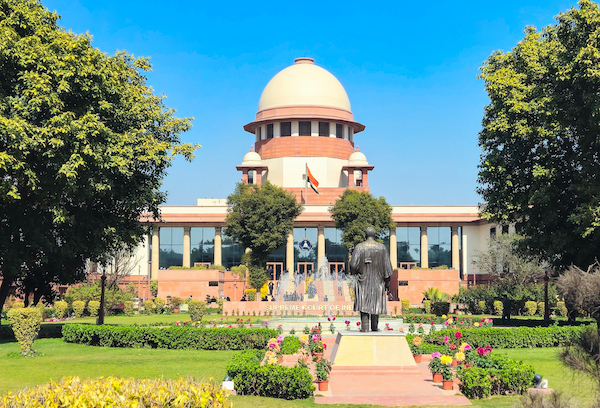
That willingness to act without knowing the outcome extends well beyond mythology, although the stakes, motivations and consequences are rather different in the affairs of ordinary mortals. Consider the youth-led protests unfolding in Delhi. The Cockroach Janta Party, with student groups and civil society leaders, called a protest demanding the resignation of Election Commissioner Gyanesh Kumar. Critics accuse him of overseeing a voter-roll revision that has deleted 130 million names, which they say helps the BJP and disenfranchises minorities. Thousands of police barricaded roads, the internet and public transport were shut, and thousands were detained, many before reaching the site. The three CJP leaders were released on Sunday on condition that they not “breach peace” for a year, and have vowed to carry on.
Whatever you make of the cause (and the authorities’ side deserves its hearing), there is something astonishing here. The movement named itself after the one creature nobody invites and nobody can evict. And when it takes 25,000 police to stop young people from walking somewhere, you have rather conceded that walking matters.
There are no divine certainties in democratic politics, only competing convictions and the willingness to test them in public. Whether such protests achieve their aims is another matter. But their very existence says something about the faith people continue to place in collective action.
A voter roll is, at heart, a ledger of trust, and trust is what every institution runs on and haggles over. Chandrika Soyantar notes that the RBI has refused Tata Sons’ request to surrender its core investment company registration, even as its board begins steps towards listing. Repaying its own debt wasn’t enough to check out. Her point is firm but fair: Tata Sons isn’t entitled to leave, but it should be able to see what it must demonstrate, and the RBI should turn this case into a clear methodology, not a one-off.
Brand trust is a different animal. Krishnadevan V observes that Piyush Pandey’s face now graces Pidilite’s annual report, a salute to the man who made Fevicol’s strength funny enough for India to remember. But ads reach the homeowner; the carpenter decides whether the thing holds. With construction chemicals now 22.6% of standalone sales, growing at 20.3%, the walls must hold on site, not just in a jingle.
Nor can anyone borrow trust from an inspector. Rahul Ghosh argues that an inspection is not an assurance, citing a US judge who said bank examinations are not beacons to light the path of erring directors. Krishnadevan V makes a sibling point for World Investor Week: investors can read the small print, but they cannot do everyone else’s homework, whether it’s a revised GDP series, a chairman’s cryptic resignation or a closing auction that wobbles at expiry. Indra Chourasia adds that ease of doing business cannot become ease of ignoring investors. Only 6% of survey respondents knew SEBI’s grievance mechanism, yet SCORES logged 61,788 complaints in 2025-26. Protection, she says, must be judged by outcomes, not announcements.
Srinath Sridharan carries that logic into insurance. IRDAI’s reset must put the consumer inside the economics, he writes, noting that corporate-agency remuneration grew 125% between 2022-23 and 2024-25 while new premiums grew 28%. Talking to Rajesh Mahapatra on Tracking Trends, he asks whether the regulator has teeth as well as paper, warns against strangling the economics of reaching smaller towns, and offers his “LIP framework” of lending, investing and protecting: three needs, three regulators, walls kept sacrosanct. Mahapatra’s quip that the industry now seems to want insurance from its own regulator lands rather well.
Investors, meanwhile, are in a mood. Vivek Kaul recalls a young millennial asking if this is a bear market because “it just feels like one.” The Sensex is down over 16% from its September 2024 peak across 740-plus days, which is long and shallow, not a bear. If this is a bear market, he says, he is Amitabh Bachchan. R. Gurumurthy, in satirical mode, offers the alternative: everyone has a theory, from planetary cycles to foreign lobbies to America’s nervous breakdown, while the investor has losses. His strategy is to sit in cash, having run out of things to believe.
Arvind Mayaram offers a less cosmic diagnosis of the foreign selling, which crossed $35 billion by September. It is partly a wage story: the wage share of value added in organised manufacturing slid from 22.2% to 13.7%, so record profits keep landing on balance sheets, not in factories. Ganga Narayan Rath and Chirayu Sharma find the PLI factories real but modest, with ₹367.54 billion disbursed, 1.46 million jobs against 6 million promised, and electronics value addition at 18–23% against 35–40%. Deba Prasad Rath and Rewanth Raichooti ask whether Telangana can reach $3 trillion by 2047. It needs 16% growth it has never sustained; business as usual lands near $1.2 trillion.
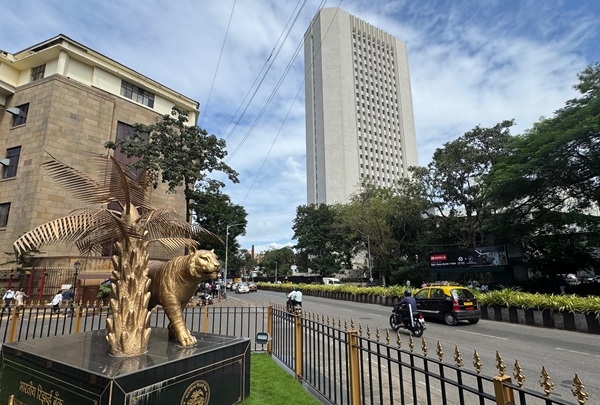
Which brings us to the week’s main act: the RBI’s 25 bps hike, taking the repo rate to 5.50%. Radhika Piplani calls it a pragmatic hike with a hawkish tail. The hike was the least informative part, she says; the shift to “calibrated tightening” was the signal. Sachchidanand Shukla says we now live in a “5% world”, with the US 10-year at 5.3%, and acting early beats looking late and defensive. Sakshi Gupta expects another 50–75 bps, taking the repo to 6–6.25%, while Sameer Narang thinks 6% should do, for now, since core inflation is unchanged at 4.4%. Dhananjay Sinha is less soothed: the RBI still understates inflation, with the Indian crude basket up from $82 in July to $116 in September. Kalyan Ram says the RBI is making haste slowly, direction settled but urgency not, and notes the 4–2 split on stance. On Tracking Trends he asks whether the rupee’s fall judged the hike’s size or its message.
Then the rupee itself. The BasisPoint Groupthink editorial argues it needs resolve, not reprimands. A governor musing on irrational markets doesn’t help an importer with a bill due next month, and a 20% cash reserve on hedges above $2 million may make prudent risk management dearer. As the old maxim goes, markets can stay irrational longer than you can stay solvent. The rupee touched ₹96.80.
For those wondering how a hike actually travels, Michael Debabrata Patra’s masterclass traces it: the call rate first, then swaps, bills, loans, bonds, and finally expectations, wages and demand. Anuj Agarwal reminds us that for companies the bigger risk is larger than 25 bps, with WPI near 10% against CPI at 4.8%. Abhishek Dey’s numbers add a footnote: credit, up 17.9%, is outrunning deposits, up 17.2%. And Siraj Hussain tells Mahapatra that cutting yellow pea duties just before rabi sowing could hurt chana growers, even as food prices shape the RBI’s next move.
Every hike, every rule, every duty cut, every march is a bet placed before the evidence is fully in. The RBI acts before inflation settles in. Regulators reform before trust collapses. Farmers sow before the rain says yes. And young people walk towards barricades, wagering that a voice raised on a street can reach a room with closed doors. Nobody gets proof first.
Until next week: hedge your currency, never your conviction.
Phynix
Also Read:
- UPI’s Next Challenge: Can India Keep Digital Payments Sustainable? by D. Tripati Rao: UPI made digital payments feel free; now India must figure out who pays for the plumbing without pushing merchants back to cash.
- The UPI Checkout Test: Who Will Bear the Merchant Fee? by K. S Sujit: The rulebook says merchants will pay the new UPI fee, but at the checkout, pricing, choices and quiet jugaad may decide who actually does.
- US Green-Card Freeze: Limited Immediate Impact, Larger Risks for Indian IT by Ajay Srivastava: The freeze may not hurt Indian IT today, but it signals a colder immigration climate that could reshape how the industry delivers work.
- The India-Pakistan Cold War by Shashi Tharoor: India’s stalemate with Pakistan is not a pause before talks but a deliberate disengagement—until Islamabad verifiably dismantles the terror networks it has nurtured.
- Securing the Siliguri Corridor in an Age of Hybrid Threats by Lt Gen Syed Ata Hasnain: The narrow gateway to India’s Northeast faces a new kind of siege, where disruption may achieve what an army once threatened.
- How a Prolonged Iran War Could Strengthen the US Energy Position by Yashveer Singh: A longer Iran conflict could rattle energy supplies, redirect Asian demand toward America and hand Washington a stronger hand in global energy trade.
- Why Climate Finance Is Becoming a Sovereign Debt Problem by Arvind Mayaram: Climate finance is colliding with fiscal and monetary risk, and the countries that need resilience most may be borrowing their way deeper into the trap.
- Seeing the Human in the Crowd by Kirti Tarang Pande: A French mayor’s defence of protesting students asks whether empathy survives when those in power stop recognising themselves in the crowd.
More From BasisPoint