.png)

Krishnadevan is Editorial Director at BasisPoint Insight. He has worked in the equity markets, and been a journalist at ET, AFX News, Reuters TV and Cogencis.
August 12, 2026 at 12:15 PM IST
The Reserve Bank of India recently retained Tata Sons in its Upper Layer category for large non-bank finance companies, while its application to surrender its core investment company registration remains under review. That designation carries enhanced regulatory scrutiny and, a requirement to list within three years. The timing makes Chandrasekaran’s decision not to seek another term as Chairman of Tata Sons more than a private boardroom event.
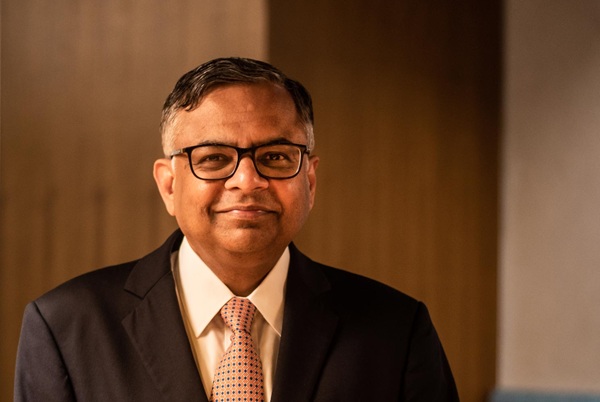
N Chandrasekaran will serve until February 2027, but he has withdrawn from the contest for another term after six months without a resolution on his proposed five-year extension. Tata Trusts had supported the extension. Tata Sons’ nomination committee and board had recommended it. Yet one board member did not support the proposal when it came up in February, and Chandrasekaran has now decided not to be in the fray.
He has turned a private deadlock over his own future into a public succession deadline.
Tata Sons must now show that its owners can replace an unusually powerful professional chairman without weakening strategic continuity, capital discipline or the group’s ability to make large decisions.
The task is harder because the group must settle two linked questions at once. Who runs Tata Sons after Chandrasekaran, and how should a holding company of this scale answer to the investors whose wealth it influences but who have no direct vote in it.
Tata Sons has no public shareholders in the conventional sense. Tata Trusts own about 66% of it and therefore hold decisive influence over the chairman, board and broad direction of the group. Yet Tata Sons is not a sealed private company whose choices concern only its owners. It is the promoter and principal holding company of more than 30 group businesses. Tata group’s 26 listed companies have an aggregate market capitalisation of ₹26 trillion as on August 12.
These businesses generate the dividends, market value and financial capacity that support Tata Sons. Their minority shareholders cannot select the holding company’s chairman. They nevertheless bear the effects when Tata Sons directs capital towards an airline turnaround, an electronics factory, a digital venture or an acquisition.
That is why the absence of visible succession planning carries a wider cost than Tata’s owners may have anticipated.
A listed-company investor can judge an operating chief against sales, margins, debt and market share. It is harder to judge a promoter holding company when its decision-making rules remain private. Investors can see that Tata Motors needs capital for new products, or that Tata Power faces a large investment cycle, but they cannot see how Tata Sons weighs those demands against Air India’s continuing needs or Tata Digital’s losses.
The market therefore prices a governance question indirectly. It watches whether projects get approved, delayed, scaled back or quietly abandoned. It watches whether managers can obtain funds after presenting a convincing business case, or whether they must first navigate an unclear hierarchy of trustees, directors and senior executives.
The Trusts have every reason to demand sharper discipline. Air India cannot consume capital indefinitely because it carries national prestige. Tata Electronics cannot rely on policy enthusiasm if customers, technology and production schedules fail to align. Tata Digital must establish whether each sale earns money before it receives more funding. These are ordinary demands of ownership, not evidence of interference.
The difficulty begins when the owners can block a proposal but do not state the terms on which they will support the next one.
A successor with a clear mandate could operate within agreed spending limits, return targets and review dates. A split structure could also work, with a non-executive chair representing the Trusts and a chief executive running Tata Sons. Earlier reports suggested consideration of a chair, a chief executive and managing director, and a deputy chief executive. Such a model needs firm decision rights, not a larger meeting calendar.
Without them, business heads will respond rationally. They will bring smaller projects, avoid investments requiring patient capital and favour decisions that are easiest to defend rather than those most likely to create value. That would make Tata more cautious without making it more accountable.
The RBI’s Upper Layer classification adds pressure because it recognises that Tata Sons is large and interconnected enough to warrant greater oversight. Listing would not settle disputes within Tata Trusts or guarantee a strong successor. The Trusts could retain control after an initial public offering. Yet a listed Tata Sons would face market-based valuation, regular disclosure and direct scrutiny from investors who currently own only the operating companies beneath it.
Tata now needs to decide its leadership structure, capital rules and listing strategy together. A private holding company can retain control. It cannot expect public markets to ignore the cost when that control cannot produce a decision.
More From BasisPoint