.png)
RBI Wants a Listing, Noel Wants the Tata Ethos — Both Are Possible
Rather than get into an ugly and long-drawn-out fight, Tata Trusts and Tata Sons should look to international examples to comply with regulatory requirements while keeping the group’s ethos anchored.

R. Sridharan is a seasoned business journalist who has worked in India and the US.
September 18, 2026 at 1:09 PM IST
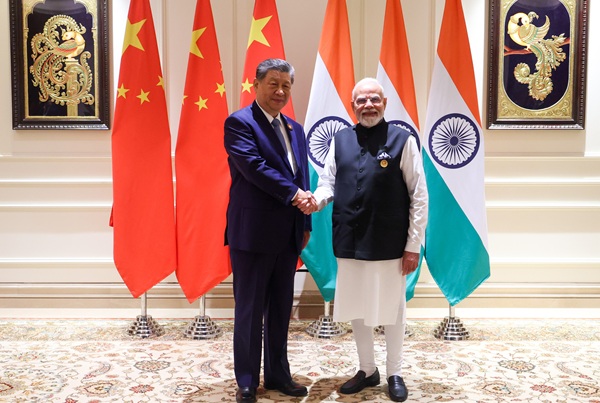
The dispute between Tata Trusts Chairman Noel Tata and Tata Sons Chairman N. Chandrasekaran is no longer a private disagreement over governance. It’s a public spectacle playing out in full media glare. If it deepens, it risks becoming a structural problem for one of India’s biggest and most important business groups.
At the heart of the boardroom dust-up is Noel Tata’s desire for the family to retain its say in how the group is run, with an eye on both the bottom line and the social impact of its businesses, and the Reserve Bank of India’s directive that group holding company Tata Sons be listed. As an upper-layer non-banking financial company, Tata Sons comes under the RBI’s purview.
Tata has argued that the group was conceived as “national service carried on through business” and that it is its unique ownership structure that has allowed Tata Sons to act in ways that a purely bottom-line-driven model would not have supported. Tata Sons, however, sees listing as a fait accompli in the wake of the RBI’s summary rejection of its request for deregistration as a core investment company.
Ownership vs Management
Tata’s concerns, while legitimate, are exaggerated. It is entirely possible to create a structure that ensures the family’s influence and ethos prevail across the group without falling foul of regulatory requirements. In fact, acting now to create a new structure would help ensure Tata’s longevity for decades to come.
Tata Trusts — Sir Dorabji Tata Trust and Sir Ratan Tata Trust — could remain the single-largest shareholder bloc of Tata Sons, albeit with a reduced stake, while retaining effective influence through an appropriately designed governance and ownership structure.
The key to effective control would be to ensure a mix of primary and secondary share sales in Tata Sons. That is, existing shareholders, including Tata Trusts and Shapoorji Pallonji Group, could sell part of their holdings alongside an issuance of new shares by Tata Sons.
Any merchant banker can come up with an appropriate mix that calibrates Tata Trusts’ need for effective control, SPG’s need for liquidity and SEBI’s minimum public shareholding requirement. Any other structure — for instance, creating new or shell companies where Tata Trusts’ ownership is parked to circumvent the RBI’s CIC criteria — will almost certainly meet with the central bank’s disapproval.
As part of this process, the Trusts could publish a formal governance charter setting out the principles of Tata Sons ownership. The charter, incorporated into the Articles of Association of Tata Sons, could insist, for instance, that Tata Sons preserve the ethos of long-term value creation; continue funding hospitals, educational institutions and research from its dividend income; support legitimate long-term business investments of group companies; and maintain arm’s-length governance of operating companies for the benefit of its shareholders as well as those of its operating companies.
Investors buying into the Tata Sons IPO would do so fully aware of its mandate.
To minimise friction, the Trusts could also spell out what Tata Sons can and can’t do without their consent. The charter could identify a limited set of reserved matters on which the Trusts would retain consent rights, particularly decisions affecting the charitable ownership structure or fundamental principles of the group.
The decisions the Trusts would not interfere with could include ordinary capital allocation, ordinary acquisitions, annual budgets, executive appointments, company-specific investment decisions and all other routine business decisions. This would ensure fairness to the new shareholders of Tata Sons, since they are entitled to expect that the businesses they indirectly own will be managed with due regard to return on capital.
The capital allocation principles can also be laid down by the Trusts to balance business imperatives with dividend distribution and philanthropy.
Tata Sons currently has nine board seats. The number could be increased to accommodate a larger number of eminent independent directors, besides Tata Trusts’ nominees. This would also sit well with the central bank.
In addition, a clear separation of functions between Tata Trusts and Tata Sons would strengthen the mandate of each. The Trusts would limit themselves to charitable activities, while Tata Sons would own and invest in businesses, receive dividends, allocate capital and pay dividends to the Trusts.
This arrangement would allow Tata Sons not to subordinate its responsibility for managing group companies to the philanthropic goals of the Trusts. After all, the structure isn't merely about satisfying the RBI; it is about creating a clearer separation between ownership and management.
A Global Template
The Tata Group isn’t the first business house to grapple with the issue of ownership versus management. Business families around the world have confronted this issue and come up with elegant solutions within their respective regulatory frameworks.
The one model I would like to cite is that of Novo Nordisk, the Danish pharma giant. Novo Nordisk and Novonesis, both listed companies, are controlled by the Novo Nordisk Foundation, which is required by its charter to maintain controlling voting rights in the two companies. The Foundation exercises this ownership through Novo Holdings, its wholly owned investment company.
The Foundation itself has two broad objectives: first, to further Novo’s commercial and research activities and, second, to fund philanthropic and societal goals. In the case of the Tatas, the business and philanthropic activities could be separated between Tata Trusts and Tata Sons.
The Wallenbergs of Sweden, the Heineken group of the Netherlands and the Hershey group of the US are other examples. The investment company of the Wallenbergs, Investor AB, is publicly listed in Sweden and is controlled by the Knut and Alice Wallenberg Foundation.
In the case of Heineken, a step-down holding structure allows the family to retain control while both the holding company and the operating company remain publicly listed. The family owns L’Arche Green, which owns about 53% of Heineken Holding, which, in turn, owns 50% of the operating company, Heineken NV. Both Heineken Holding and Heineken NV are listed.
In the case of Hershey, its founder died heirless and bequeathed his vast fortune to the eponymous Milton Hershey School Trust. However, it is the Hershey Trust Company, acting as trustee for the Milton Hershey School Trust, that exercises voting control over the listed The Hershey Company.
Therefore, there are enough ways for Tata Trusts to retain control of the group and preserve its founding ethos, while meeting the RBI’s requirement to list Tata Sons.
It’s also a good idea to ensure continuity of leadership at Tata Sons by allowing Chandrasekaran to see through the listing and the new operating arrangement between the holding company and the Trusts.
In other words, the larger objective should be to ensure that the regulatory dispute does not become a prolonged governance struggle that distracts one of India’s most consequential business groups from creating value, investing for the long term and continuing its philanthropic commitments.
It’s the least that the custodians of Jamsetji Nusserwanji Tata’s 158-year-old legacy owe him and the country he loved.
More From BasisPoint