.png)

November 19, 2026 at 11:51 AM IST
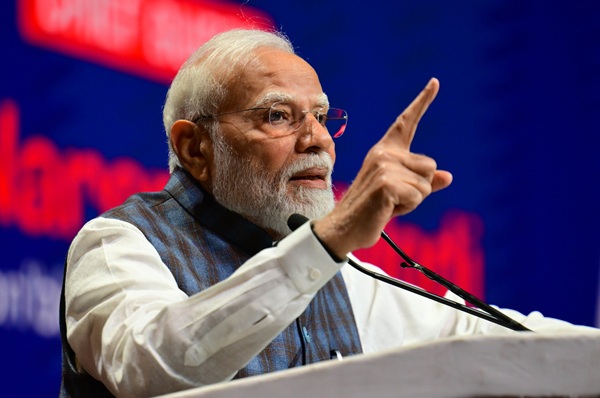
Prime Minister Narendra Modi on Thursday criticised Indian companies for failing to adequately raise wages and expand employment despite tax relief and policy support, and urged industry to shed its risk aversion, invest in new sectors and compete more aggressively in global markets.
Addressing the centenary celebrations of FICCI, Modi questioned whether businesses had used the benefits of government reforms to improve employee compensation and create jobs.
“Did you increase the salaries of your employees? Did you increase the number of employees?” a government release quoted Modi as asking industry leaders, after referring to income tax relief intended to boost household purchasing power.
He said the government had reduced the basic corporate tax rate, provided income tax relief, simplified refunds and lowered taxes on several products through GST reforms. The measures had increased purchasing power and supported demand, he said, questioning whether businesses had responded with adequate investment and employment generation.
Modi also criticised industry's reluctance to venture beyond established businesses, arguing that dependence on India's large domestic market had weakened the incentive to innovate, improve quality and compete internationally.
He said companies could no longer assume their products would sell simply because India had a market of 1.4 billion consumers.
The Prime Minister urged businesses to make long-term investment decisions with an emphasis on domestic manufacturing capabilities and reducing dependence on imported intermediate goods.
He cited pharmaceuticals as an example, noting that India remained a major exporter of finished medicines but continued to import active pharmaceutical ingredients, bulk drugs and intermediates worth billions of dollars annually.
Modi also questioned why India exported iron ore while importing finished steel, and why an aluminium-producing country continued to depend on imported specialised alloys and products.
He asked manufacturers to invest in technologies and production facilities capable of replacing such imports and improving value addition.
Agriculture was another area where Modi said corporate India's reluctance to invest was holding back opportunities.
He said India's share of global agricultural exports remained around 2%-2.5%, despite the country's large agricultural production base.
Indian companies were hesitant to invest in agriculture, he said, urging them to develop food-processing capacity, reliable procurement systems and products tailored to overseas demand.
The Prime Minister also called for greater investment in machinery, hand tools, power tools, irrigation equipment and other engineering products, including those aimed at markets in developing economies.
He questioned whether Indian companies had developed adequate strategies to take advantage of the country's free trade agreements.
Modi said trade agreements had opened access to major global markets, but industry needed to invest in understanding overseas consumers, developing products suited to their requirements and building distribution networks.
He also criticised the distinction businesses often made between products intended for domestic consumers and those described as export quality.
Indian consumers deserved products meeting the same quality standards as overseas buyers, he said.
While acknowledging the government's responsibility to improve the business environment, Modi invited industry leaders to communicate their remaining concerns and suggest additional reforms.
He said the government was willing to consider proposals from businesses, but companies must respond by increasing investment, strengthening manufacturing capabilities and seeking opportunities beyond the domestic market.
The Prime Minister said India was expected to maintain economic growth of around 7%, while merchandise exports had reached a record of nearly $50 billion in October.
He urged companies to use the country's economic momentum to build globally competitive businesses rather than remain dependent on existing products and assured domestic demand.
More From BasisPoint